Southern Thailand endured a day of coordinated violence on Friday, June 19, when separate bomb attacks targeted police units in two neighbouring provinces, leaving 11 officers wounded and reigniting concerns about militant activity in the country's most volatile region. The incidents underscored the persistent security challenges facing authorities in an area where separatist insurgency has simmered for decades, claiming thousands of lives since 2004.
The first attack struck at 8.10am in Yala province's Thanto district, where assailants detonated an explosive device targeting a patrol unit composed of border police and officers from a teacher protection programme. The blast occurred along the Ban Pulo Saniyae–Ban Sakai road in Ban Rae sub-district as the uniformed personnel carried out routine operations in the province. Six officers sustained injuries in the explosion, though the severity varied considerably among the casualties.
Two of the wounded sustained particularly grave injuries that demanded immediate specialist intervention. Corporal Kittisak Saksang suffered extensive facial trauma from shrapnel fragments, while Corporal Poraphat Wongruaydee experienced blunt force injuries to his chest that compromised his respiratory function. Despite the severity of his injuries, Wongruaydee remained conscious and alert, allowing medical personnel to assess his condition accurately during initial evacuation. The four other injured officers received medical attention for minor to moderate wounds at Thanto Hospital before being discharged or stabilized for observation.
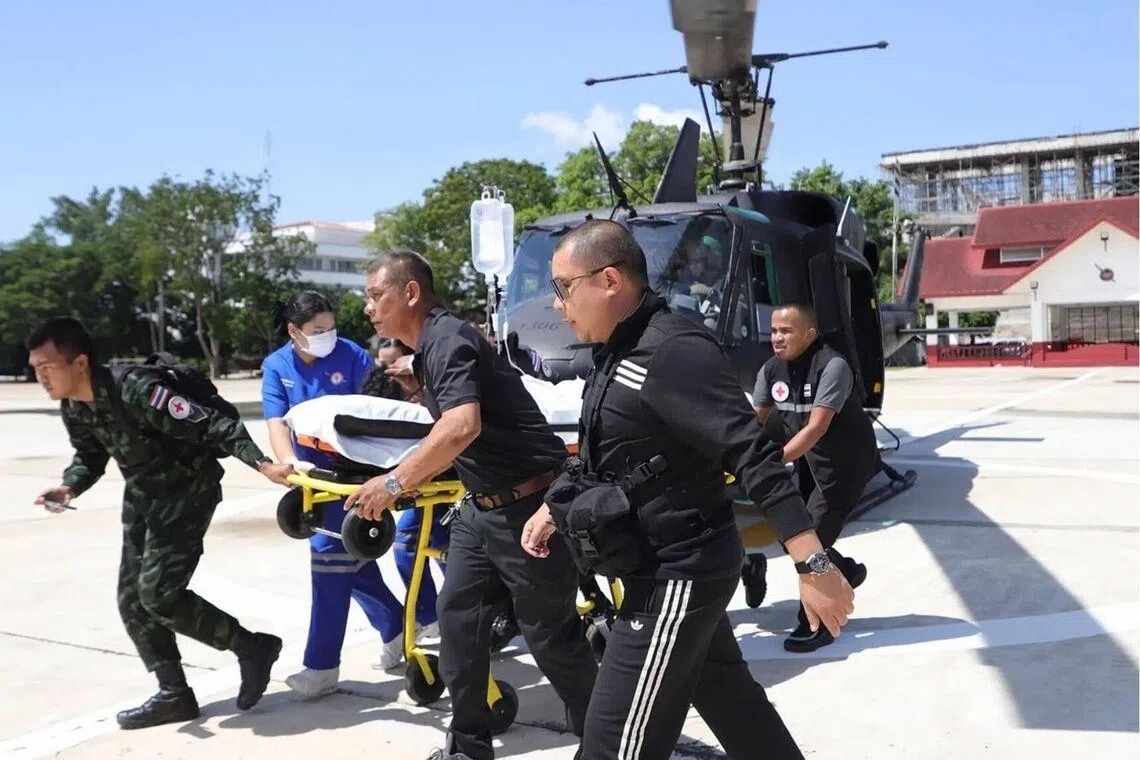
The condition of Wongruaydee deteriorated sufficiently to require transfer by helicopter to Yala Regional Hospital, a facility better equipped to manage thoracic trauma. Medical staff determined that he needed emergency surgery to address blood accumulation in the space surrounding his lungs, a life-threatening condition that demanded rapid intervention. The hospital subsequently issued an urgent appeal for blood donations of all types, reflecting the seriousness of his medical situation and suggesting other patients may also require transfusions during treatment. This appeal highlighted the strain that major incidents place on medical infrastructure in Thailand's southern provinces, where facilities often operate with limited resources compared to urban centres.
Meanwhile, explosive ordnance disposal teams and forensic investigators descended on the attack site to collect evidence and prevent secondary incidents. Security personnel established cordons around the area, and authorities heightened vigilance throughout the district as they grappled with the implications of the coordinated strike. The incident suggested a level of organization and planning that pointed toward militant groups rather than isolated criminal actors.
Less than three hours later, a second bombing claimed another five victims when a bomb detonated near Ban Khuan Yi in Pattani province's Mayo district. This attack targeted the Pattani Police Special Operations unit as officers returned from establishing a security checkpoint in the locality. The timing and location suggested the militants may have conducted surveillance or possessed advance knowledge of police movements, a capability that underscores persistent intelligence challenges for Thai security forces in the region.
The five injured officers—Sergeants Anuchit, Bunyawat, Wisitphon, Aphisit and Sumit—all experienced chest injuries consistent with blast trauma. While none appeared to suffer injuries as grave as those inflicted in the Yala attack, the injuries still warranted hospitalization and observation at Mayo Hospital. The pattern of chest injuries across both incidents suggests the explosives were designed to inflict maximum harm when detonated in close proximity to personnel, a tactic consistent with previous insurgent attacks in the region.
The geographic proximity of the two attacks—occurring within hours and separated by roughly 80 kilometres—raises questions about whether the incidents were coordinated or merely coincidental. Southern Thailand's insurgency has historically operated through decentralized cells with varying degrees of coordination, making attribution challenging. However, the timing and methodologies used in both attacks suggest at minimum a shared tactical approach among perpetrators, whether formally coordinated or simply reflecting common practices within insurgent networks.
These incidents occur within a broader context of persistent violence in Thailand's southernmost provinces, where a Muslim-majority population has long harboured grievances regarding historical integration into the Thai state. The conflict has claimed an estimated 7,000 lives since 2004, though casualty figures remain contested. While violence has moderated from peaks reached in the mid-2000s, attacks on security forces remain regular occurrences, particularly in rural areas where state presence remains contested.
For Malaysia and the broader Southeast Asian region, developments in southern Thailand carry significance beyond Thailand's borders. Cross-border networks linking militant groups in southern Thailand with counterparts in Malaysia's Sabah and Sarawak states have long concerned security analysts. Moreover, the conflict has generated refugee populations and trafficking networks that affect neighbouring jurisdictions. Malaysian authorities maintain close intelligence-sharing arrangements with Thai counterparts precisely because of these transnational dimensions.
The attacks also reflect evolving tactical approaches by militant actors in the region. The targeting of teacher protection units alongside regular police suggests insurgents view educational institutions and their defenders as legitimate targets in their broader struggle. This targeting strategy potentially destabilizes efforts to normalize civilian life and economic activity in affected areas, perpetuating cycles of poverty and grievance that fuel recruitment into militant networks.
Thai authorities announced they would intensify investigations to identify and prosecute perpetrators, though such efforts face significant practical obstacles in a region where local populations sometimes shield militants from security forces. The immediate establishment of security cordons and forensic collection at both sites represents standard procedure, though investigators in Thailand's southern conflict zone acknowledge that witness cooperation often proves limited. Establishing accountability in these circumstances requires both investigative capability and sufficient local confidence in the justice system—both factors that remain contentious in the region.
The incidents underscore why security in southern Thailand remains a critical national priority. Despite years of counterinsurgency operations, military intervention, and negotiations with various militant factions, the fundamental drivers of conflict remain partially unresolved. Economic disparities, cultural grievances, and political representation issues continue to provide fertile ground for militant recruitment and operations, suggesting that security incidents may continue regardless of tactical successes in individual operations or arrests of specific operatives.

