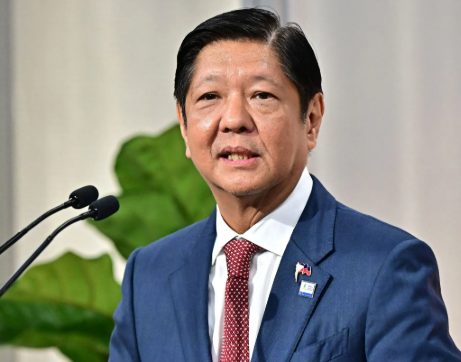
Security operations intensified across Manila's government district on Monday following twin bombing incidents that unfolded within hours of each other, casting a shadow over Philippine President Ferdinand Marcos's scheduled State of the Nation address. The first blast occurred just after midnight at the entrance of the Department of Justice building, resulting in no reported injuries despite creating visible damage including a cracked vehicle windshield and scattered debris. Authorities subsequently discovered what they believed to be a second unexploded device near the Philippine Senate building before dawn, prompting specialized bomb disposal teams to secure the site.
National police chief Jose Melencio Nartatez Jr characterized the timing and nature of both incidents as potentially coordinated, suggesting to reporters that the two events shared a common origin or motive. "There is a big possibility or probability that the two are related," he stated, acknowledging that despite established contingency protocols for managing bomb threats and actual explosions, the early morning detonation had circumvented security measures. The admission reflected serious concerns within the Philippine National Police about vulnerabilities in protecting critical government infrastructure, particularly given that law enforcement agencies maintain dedicated units specifically trained to intercept such threats before they materialize.
Detailed information about the initial explosion's force remained limited in the immediate aftermath, with Manila police spokesman Philipp Ines telling international media outlets that investigators had not yet assessed the device's destructive capability. The reluctance to provide specifics appeared deliberate, as authorities continued securing the scene and gathering forensic evidence. Security personnel and investigators were observed photographing the damaged area and collecting fragments for analysis, a standard protocol that nonetheless underscored the serious nature of the incident. The visual evidence visible in media images suggested a relatively contained blast, though definitive conclusions awaited technical assessment.
The second suspected device presented investigators with a different operational challenge. A tow truck driver discovered the object on a street adjacent to the Senate building shortly before 8:30 in the morning and immediately notified security personnel. Specialist bomb disposal teams conducted a careful extraction and analysis, removing materials that included a blasting cap, timing mechanism in the form of a clock component, and a glass jar containing brown powder—all consistent with rudimentary explosive construction. Regional police spokeswoman Hazel Asilo declined to provide estimates regarding the destructive potential the second device might have generated, maintaining operational security during the ongoing investigation.
The incidents occurred against a backdrop of considerable political turbulence within the Philippines. Vice President Sara Duterte was actively engaged in an impeachment proceeding that had captured intense public and media attention, creating divisions within the political establishment and raising questions about internal state security during periods of institutional stress. Simultaneously, Philippine society had been roiled by a separate corruption scandal involving fraudulent flood control projects, an affair that had eroded public confidence in government probity and triggered broader scrutiny of state institutions. These intersecting crises created a charged political atmosphere in which security lapses carried heightened symbolic significance.
The timing of the bombing incidents—positioned to disrupt or destabilize the president's flagship annual address to the nation—suggested potential political motivations, though investigators cautioned against premature conclusions regarding perpetrators or objectives. The State of the Nation address represents a crucial moment in the Philippine political calendar, when the president frames the government's priorities and legislative agenda while commanding national media attention. Any disruption to such an address carries significant political weight, capable of undermining public confidence in executive authority and governmental competence. Security services faced considerable pressure to prevent any escalation or additional incidents during the remainder of the day.
The Philippine National Police acknowledged that standard threat assessment protocols had been insufficient to prevent the midnight blast, a candid admission that carried implications for confidence in national security operations. Police acknowledged possessing contingency arrangements for managing bomb-related threats and actual bombing incidents, yet something had "got past us," in the words of the national police chief. This gap between institutional capacity and operational reality suggested either inadequate resource allocation, intelligence failures, or sophisticated evasion of security measures by those responsible. The discovery of the second device only hours later raised questions about whether coordinated efforts remained underway or whether additional threats might emerge.
For Malaysian observers and analysts, the Manila incidents offered troubling reminders about the vulnerabilities that plague even relatively robust state security apparatus in the Southeast Asian region. The Philippines, like Malaysia, must balance openness and democratic accessibility with protection of critical infrastructure and government personnel. The incidents also highlighted how political polarization and institutional crises can create environments where security protocols become strained and enforcement becomes inconsistent. Regional security experts frequently note that periods of heightened political tension—whether involving impeachment proceedings, corruption scandals, or electoral disputes—correlate with elevated risks of destabilizing incidents.
The investigation's progression would likely determine whether the incidents represented isolated actions by fringe actors or components of a broader campaign targeting Philippine governance. Forensic analysis of the recovered materials, particularly the timing mechanisms and explosive composition, could potentially connect the devices to known extremist groups, common criminal networks, or politically motivated actors. International cooperation through regional intelligence-sharing mechanisms might supplement Philippine investigative efforts, particularly if evidence suggested transnational dimensions. The coming weeks would be critical in establishing facts and preventing any recurrence.
President Marcos proceeded with his State of the Nation address as originally scheduled, signaling that security forces had contained the immediate threat and that governmental operations would continue uninterrupted despite the morning's dramatic events. The decision to proceed reflected both confidence in security measures and determination to project stability during a politically delicate moment. Yet the underlying questions remained: how the devices had been positioned at such sensitive locations, who had placed them, and whether additional threats persisted in Manila's government district. These answers would shape the public's perception of state capacity to maintain order during an era of mounting political tension.

