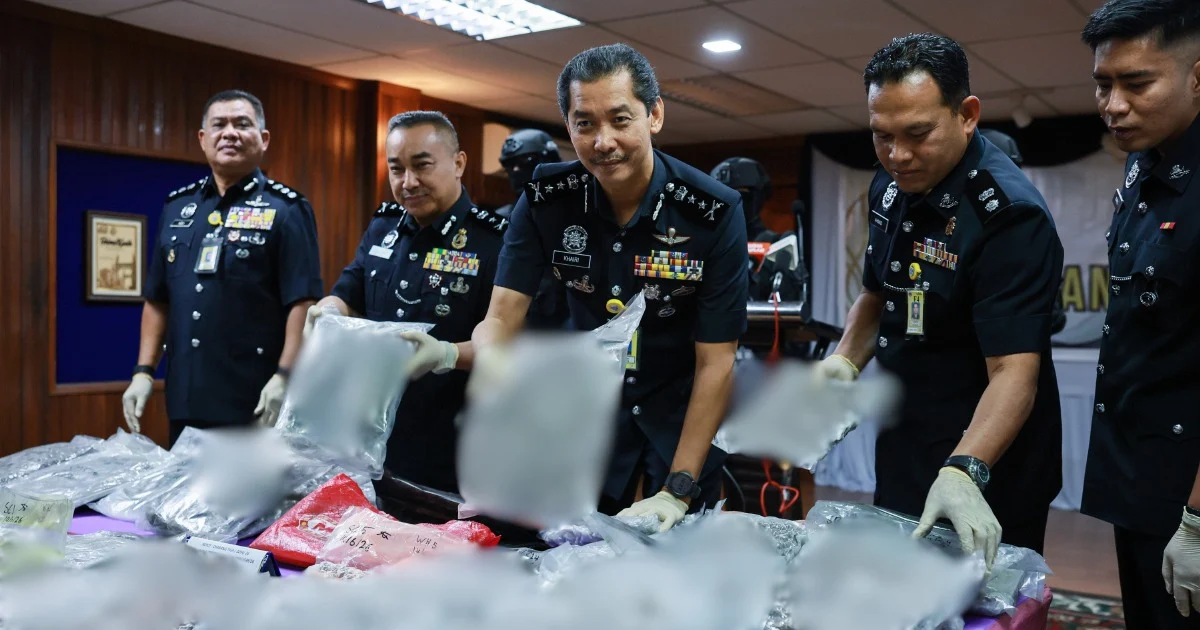
Police in Kuala Terengganu have taken two brothers into custody following an investigation that identified their residential property in Kampung Duyong Besar as a substantial storage and distribution point for illicit drugs. The operation resulted in the seizure of narcotics estimated at RM1.76 million, representing one of the more substantial drug hauls in the region in recent months.
The suspects are alleged to have exploited their private residence as a strategic cache for storing controlled substances before distribution to lower-level dealers across Terengganu and neighbouring states. This pattern of operation—converting domestic properties into pharmaceutical storage facilities—has become increasingly common among mid-tier drug syndicates seeking to evade detection while maintaining central distribution hubs. The choice of a residential location rather than commercial premises reflects the evolving sophistication of drug trafficking networks, which deliberately target ordinary neighbourhoods to blend into community environments.
Investigations leading to the arrests appear to have built momentum over weeks of surveillance and intelligence gathering. Police conducted the operation at Kampung Duyong Besar, a locality near Kuala Terengganu's city centre, suggesting that trafficking operations have penetrated established residential areas rather than remaining confined to peripheral locations. The proximity of the suspected drug cache to residential concentrations raises public health concerns, as such distribution hubs frequently attract secondary criminal activity including violence and territorial disputes between rival syndicates.
The RM1.76 million valuation reflects current street-level pricing for various narcotic classifications in Malaysia's market. This monetary assessment typically encompasses multiple drug types rather than a single substance, indicating that the operation involved either a diverse chemical inventory or substantial quantities of a primary target drug. For context, narcotics seizures of this scale represent only a fraction of total drug traffic experts estimate flows through Malaysian territory annually, suggesting enforcement operations capture perhaps five to fifteen percent of active supply chains.
Terengganu has experienced fluctuating patterns in drug-related crime over recent years, with enforcement agencies reporting concentrated trafficking corridors connecting to ports and highway networks. The state's geographical position along the eastern corridor of Peninsular Malaysia, combined with its maritime access points, makes it a natural transit zone for international drug smuggling operations funnelling substances southward toward Singapore and Malaysia's western states. This latest bust demonstrates that law enforcement maintains active investigation capacity despite resource constraints affecting many district-level operations.
The arrest of both brothers simultaneously suggests that investigators had established probable cause linking both individuals to the enterprise, rather than suspecting one party of unwitting involvement. This joint prosecution approach typically indicates clear evidence of conspiracy—such as shared lease documentation, multiple witness statements, or communications records establishing collective knowledge and intentional participation. Malaysian courts have established consistent precedent that mere residency in a property where drugs are discovered does not constitute automatic guilt, requiring demonstrable participation or knowledge elements.
Police operations targeting residential distribution nodes require careful coordination to secure evidence before suspects destroy materials or warn downstream associates. The successful seizure of RM1.76 million in narcotics before physical destruction or removal speaks to either rapid-response execution or sustained surveillance that prevented prior dispersal. Preliminary investigation phases will now focus on tracing supply chains upward to identify source providers and downward to establish distribution networks and street-level dealers.
This enforcement action arrives amid broader Malaysian police initiatives targeting upper-tier trafficking operations rather than focusing exclusively on street-level users and couriers. The shift toward mid-market suppliers and storage facilities reflects strategic recognition that dismantling distribution infrastructure produces greater cumulative impact than processing thousands of individual possession cases. However, resource allocation between enforcement, rehabilitation, and prevention continues to generate debate among policy advocates and criminal justice professionals.
The brothers' detention triggers standard investigative procedures including forensic examination of the property, analysis of financial records, and interviews with detained individuals. Malaysian narcotics law provides substantial penalties for possession with intent to distribute, with sentences varying according to drug classification and quantity. Individuals convicted of trafficking offences involving RM1.76 million in substance value typically face extended incarceration, mandatory minimum periods before parole eligibility, and substantial financial penalties or asset forfeiture.
Community implications extend beyond the two arrested individuals, as residents of Kampung Duyong Besar may experience heightened police presence, community advisory activities, and neighbourhood dialogue sessions aimed at preventing future exploitation of residential areas by trafficking networks. Law enforcement agencies increasingly recognize that engagement with local residents, business operators, and community leaders provides valuable intelligence for identifying suspicious activity patterns before major operations become necessary.
This case underscores the persistent challenge facing Malaysian enforcement agencies in combating narcotics trafficking across domestic territory. While individual operations generate positive media coverage and demonstrate enforcement capability, systemic approaches addressing demand reduction, treatment accessibility, and border security weaknesses require sustained governmental commitment and inter-agency coordination extending beyond police operational capacity.

