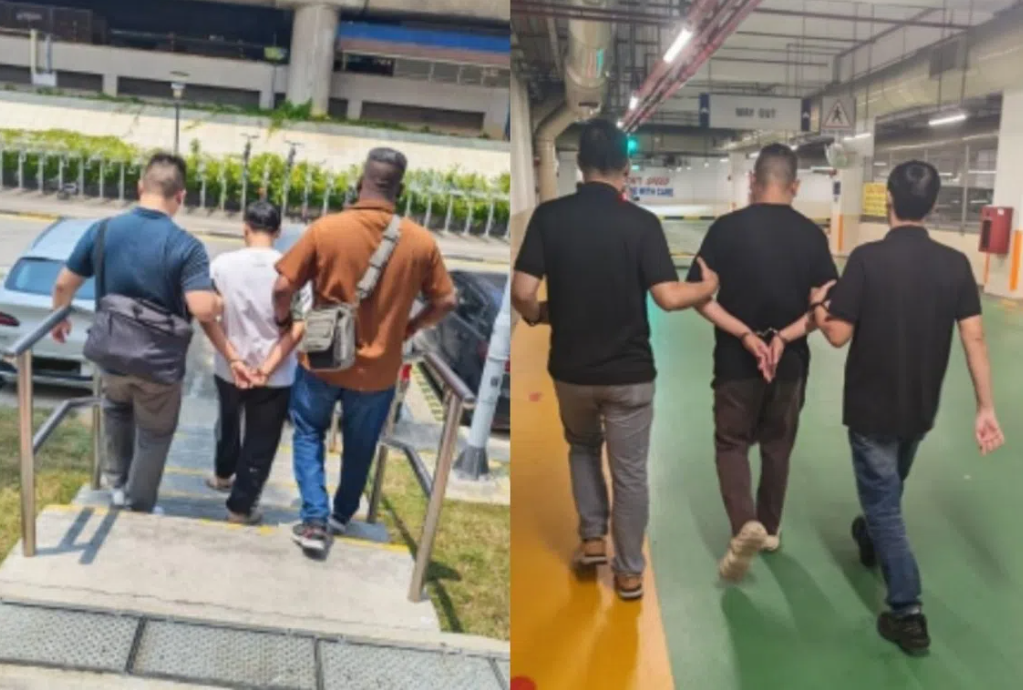
Singapore authorities have arrested two Malaysian men working in the mobile phone retail sector for their role in a sophisticated identity fraud operation that compromised the accounts of over 170 individuals. The suspects, aged 25 and 47, were detained on Tuesday, August 25, following investigations into a scheme that weaponised stolen Singpass login credentials to establish fraudulent digital payment accounts without victims' knowledge or consent. The operation represents a concerning intersection of retail sector vulnerability and fintech infrastructure abuse that has implications for cross-border fraud networks operating throughout Southeast Asia.
The modus operandi exploited the trust customers place in service staff during routine transactions. In documented instances, the suspects leveraged customer interactions—such as helping buyers update details when purchasing SIM cards—as opportunities to obtain Singpass login information. Once secured, they used these credentials to establish LiquidPay accounts, a digital wallet and payment service operated by Singapore-based fintech company Liquid Group. The abuse of Singpass, Singapore's primary digital identity authentication system managed by the Government Technology Agency, reveals critical weaknesses in how personal authentication credentials can be harvested in physical retail environments where customers may let their guard down during seemingly innocuous transactions.
Investigations uncovered the scale of the operation: more than 160 unauthorized LiquidPay accounts were created using the fraudulently obtained Singpass credentials. These accounts subsequently became conduits for receiving proceeds from various scam schemes operating across Singapore. Police confirmed that at least 20 Singapore citizens and work permit holders have been investigated for registering the fraudulent LiquidPay accounts, which collectively received S$110,063 in illicit funds since early March 2026. The structure suggests an organized syndicate where the Malaysian retail workers functioned as account creation specialists within a larger criminal ecosystem, providing infrastructure that allowed upstream scammers to launder money through digital channels.
The investigation emerged from collaboration between Singapore's Cyber Command unit and the Singpass Trust & Safety team, underscoring how fintech fraud increasingly requires coordination between law enforcement and government digital service providers. This cooperative approach has become essential as criminals develop increasingly sophisticated methods to compromise government authentication systems. The operation demonstrates that organized crime groups now view government digital identity infrastructure not as secure repositories but as exploitable resources that can be weaponised for financial crime when access is obtained through social engineering in retail settings.
For Malaysia, this case carries significant implications. The involvement of Malaysian nationals in facilitating a transnational fraud operation highlights how criminal networks recruit individuals from neighbouring countries to conduct ground-level crimes while remaining partly insulated from direct law enforcement action. Malaysian authorities have growing interest in such cases, as their citizens' participation in cross-border scam infrastructure reflects both organised crime recruitment patterns and the vulnerability of retail workers to involvement in criminal schemes, often through coercion or inadequate compensation.
The legal consequences facing the arrested men are substantial. They face charges under Singapore law for assisting another to retain benefits from criminal conduct, an offence carrying imprisonment up to 10 years, fines reaching S$500,000, or both. These penalties reflect Singapore's aggressive stance toward fraud facilitators rather than merely the downstream users of compromised accounts. Additional investigations continue into Singpass users who voluntarily surrendered their account credentials, an offence itself attracting maximum penalties of three years' imprisonment and S$10,000 in fines—indicating authorities are pursuing the entire chain of culpability from account compromise through money laundering.
The case illuminates the vulnerability of the fintech sector to identity fraud schemes. LiquidPay, like other digital payment platforms, relies on accurate identity verification during account creation. When authentication depends on Singpass credentials obtained through deception, the entire verification framework collapses. This vulnerability is not unique to Singapore's systems; it reflects a broader Southeast Asian challenge where rapid fintech adoption has outpaced robust identity verification infrastructure and consumer education about credential protection.
From a regional perspective, the operation demonstrates how mobile phone retail businesses have become critical nodes in fraud networks. These shops provide legitimate customer touchpoints where individuals willingly provide personal information and authentication details. Criminal operators have systematically identified and exploited this environment. The retail sector across Malaysia, Singapore, and throughout Southeast Asia now faces pressure to implement stronger protocols protecting customer data and preventing staff access to sensitive credentials during routine service transactions.
The S$110,063 in scam proceeds flowing through fraudulently created accounts suggests multiple upstream scam operations—possibly romance fraud, investment schemes, or phishing operations—all converging on the infrastructure created by the Malaysian workers. This reveals how individual fraud schemes in Singapore may depend on Malaysian-based facilitation, creating investigative challenges that cross-border cooperation must address. Neither Singapore nor Malaysian authorities can effectively combat such operations working in isolation.
The case also reflects evolving criminal sophistication in exploiting government digital services. As Southeast Asian nations invest heavily in digital government infrastructure and digital identity systems, they simultaneously create new targets for organized crime. The incident serves as a warning that Singpass and similar systems across the region require not just technical security but also operational safeguards protecting against social engineering and institutional vulnerabilities in private sector businesses that interface with government authentication systems.
Broader implications extend to consumer protection and digital literacy. Many individuals may not fully understand the risks of sharing authentication credentials with service personnel, even during legitimate transactions. Public education campaigns across Malaysia and Singapore must emphasize that government authentication details should never be shared with third parties, regardless of context. Financial institutions and government agencies must also implement transaction monitoring systems capable of detecting unusual patterns in newly created accounts, as the creation of over 160 accounts through fraudulent credentials should theoretically trigger automated alerts.
As both countries pursue investigations and prosecutions, the case underscores how transnational fraud requires coordinated regional responses. Malaysian authorities will likely increase scrutiny of nationals facilitating similar operations, while Singapore continues strengthening fintech regulatory frameworks and identity verification protocols. The arrest marks progress, but the scale of the operation—170 compromised accounts, 160 fraudulent wallets, multiple scam schemes—suggests this represents only a portion of broader criminal networks operating across Southeast Asia's increasingly interconnected digital economy.

