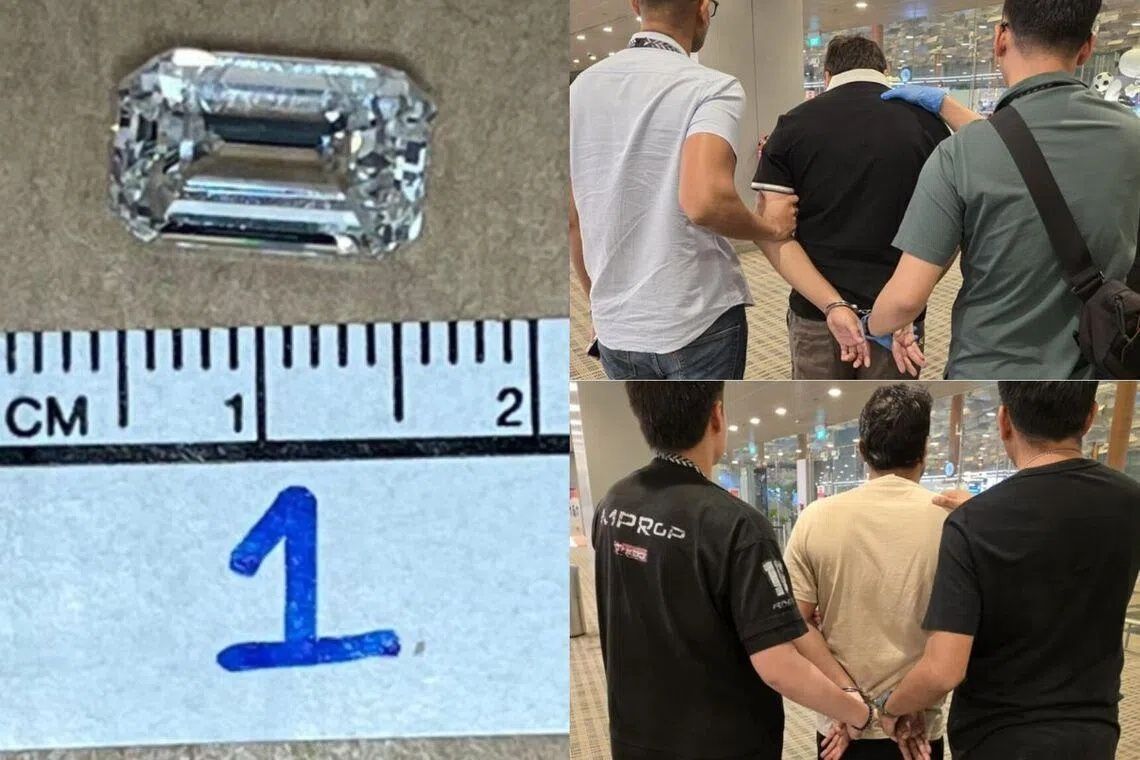
Two men aged 30 and 42 have been apprehended in connection with the theft of a high-value diamond from a jewellery store in Singapore's Chinatown district. The theft occurred on June 19, with police responding to a call for assistance at a premises on Kreta Ayer Road at 3.40 in the afternoon. Officers from the Central Police Division quickly mobilised to investigate the incident, which involved the disappearance of a gemstone worth more than S$235,000—a sum representing substantial financial loss for the retailer and a significant investigation priority for law enforcement.
The swift apprehension of the suspects demonstrates the effectiveness of Singapore's integrated law enforcement response. Using a combination of traditional investigative techniques and modern surveillance capabilities, police identified the two men through ground enquiries, witness interviews, and analysis of CCTV footage from multiple camera systems. The perpetrators were located and detained at Changi Airport Terminal 3 on the same day, preventing them from potentially leaving the jurisdiction. The recovered diamond was secured as evidence and returned to authorities, allowing for verification of the stolen item.
According to preliminary investigations, the modus operandi employed by the suspects followed a carefully orchestrated pattern. Both men had positioned themselves as genuine customers interested in purchasing the diamond, gaining entry to the store and building credibility with staff. While examining the gemstone in detail, they executed a sleight-of-hand switch, substituting the authentic diamond with a counterfeit replica. The substitution was designed to exploit the momentary inattention that occurs during customer transactions, a vulnerability that has been exploited by professional theft networks in luxury retail environments globally.
What initially aroused suspicion was the suspicious behaviour of the pair after the switch. Rather than proceeding with a purchase as would be expected from genuine customers, they abruptly departed the premises without completing any transaction. This departure triggered heightened alertness from the shop assistant, who conducted routine checks on inventory or merchandise shortly after their exit. Upon closer examination, the assistant detected the discrepancy between the authentic diamond and the fake replacement, immediately alerting management and triggering the police response that would lead to the arrests.
The legal implications facing the two men are substantial. Both have been charged with theft in dwelling with common intention, a serious offence under Singapore law that reflects the coordinated nature of the crime. If convicted, each defendant faces a potential custodial sentence of up to seven years, in addition to financial penalties. The charge of acting with common intention establishes that this was a premeditated operation involving cooperation and planning between the two suspects, rather than a spontaneous opportunistic theft.
Singapore's law enforcement authorities have utilised the incident as an opportunity to strengthen public awareness about sophisticated theft techniques targeting the luxury retail sector. Police issued a formal advisory to all shop owners engaged in selling high-value items, emphasising the need for heightened vigilance against similar schemes. The statement specifically highlighted the threat posed by theft involving sleight of hand—a technique requiring considerable dexterity and practice, often associated with experienced criminals operating in organised theft networks that may span multiple jurisdictions across the region.
The incident reflects broader security challenges facing retailers in major commercial hubs throughout Southeast Asia. The Chinatown district, as one of Singapore's most visited shopping and cultural areas, attracts both legitimate tourists and opportunistic criminals. High-value jewellery stores in such locations present attractive targets for theft rings that operate across borders, particularly those with access to sophisticated replacement materials that can briefly deceive even trained retailers. The swift police response in this case serves as a reminder that comprehensive security measures—combining staff training, surveillance systems, and procedural safeguards—are essential for protecting inventory.
For Malaysian readers and business operators in the region, this case offers important lessons about diamond and jewellery security. The technique of substitution theft requires only brief access to merchandise and minimal physical disruption, making it particularly difficult to prevent without comprehensive countermeasures. Retailers across Malaysia should consider implementing similar advisory measures, including regular staff training on identifying suspicious customer behaviour, the use of secure display cases that limit unsupervised access, and the installation of high-resolution surveillance systems with clear sightlines to merchandise examination areas.
The police statement emphasising zero tolerance for such crimes indicates Singapore's commitment to maintaining the security credentials essential for its position as a global financial and commercial hub. Luxury retail represents an important component of Singapore's economy, and protecting this sector from organised theft maintains consumer confidence and supports legitimate businesses. The rapid investigation and arrest demonstrate the sophisticated capabilities of Singapore's law enforcement agencies, capabilities that extend to inter-agency cooperation and border control operations that caught the suspects before they could exit the country.
The case also underscores the importance of international cooperation in combating organised retail crime. Theft networks operating across borders often utilise the same techniques in multiple jurisdictions, suggesting that the individuals arrested may have been involved in similar operations elsewhere in the region. Intelligence sharing between law enforcement agencies in Singapore, Malaysia, and other Southeast Asian nations can help identify patterns and prevent future incidents. The successful recovery of the stolen diamond demonstrates that even when theft occurs, determined investigation can result in full restitution of valuable property.
Looking forward, this incident will likely influence security practices across the jewellery retail sector throughout Southeast Asia. Stores will review their procedures for handling high-value merchandise, train staff to recognise sophisticated substitution techniques, and invest in enhanced surveillance and security measures. The availability of convincing counterfeit diamonds presents a particular challenge, as the replica must withstand at least cursory examination to succeed in the theft. This suggests that perpetrators may have invested significantly in sourcing high-quality fakes, indicating operation of a more sophisticated theft network than simple opportunistic shoplifting.

