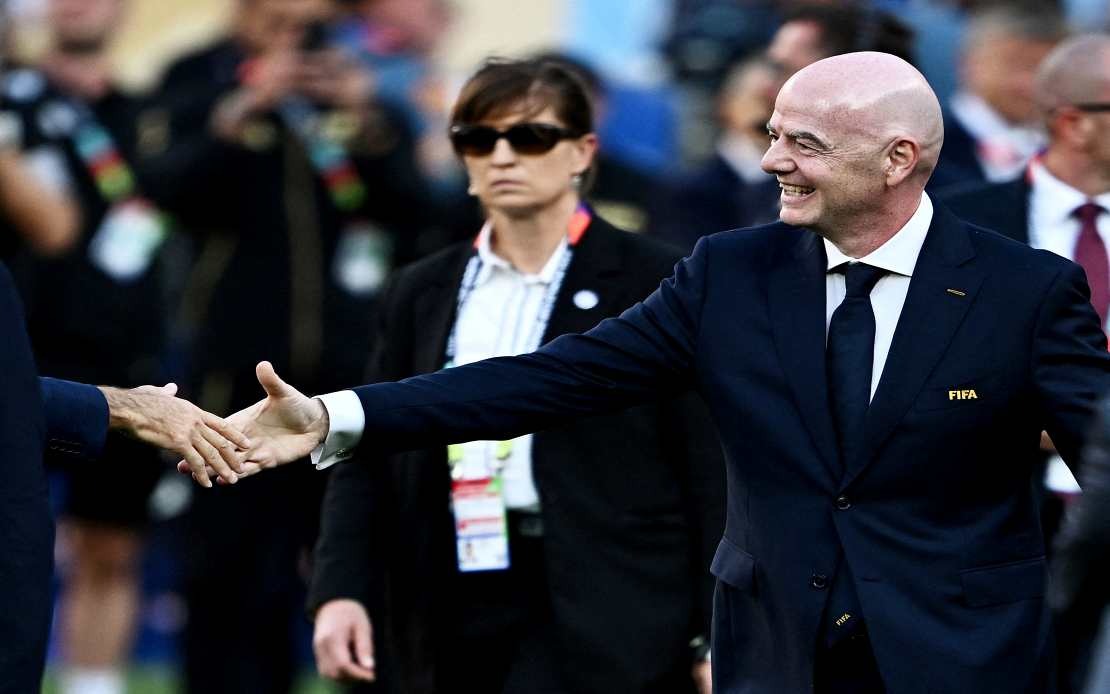
The Union of European Football Associations has escalated its dispute with FIFA by serving formal written notice to President Gianni Infantino that it is actively considering legal proceedings, including potential lawsuits and regulatory complaints. The stern warning, documented in a letter quoted by The Telegraph, marks a dramatic intensification of the conflict that erupted over FIFA's abandoned scheme to monetise its media and commercial rights through a private equity arrangement.
The contentious proposal, announced in early August, would have generated approximately US$4.2 billion by selling roughly 20 per cent of a newly created entity to handle FIFA's commercial operations, encompassing broadcasting and sponsorship rights for marquee tournaments including the World Cup. The initiative attracted particular scrutiny when reports emerged suggesting that investment vehicles controlled by Joshua Kushner, brother of Jared Kushner and a prominent figure in US business circles, were positioned to acquire a significant stake in the restructured entity.
The financial implications for FIFA's leadership proved substantial enough to warrant the plan's aggressive pursuit. The commercial rights sale would have substantially increased the FIFA president's annual compensation from 3 million euros to 30 million euros—a tenfold increase that drew widespread criticism from football's governing bodies across Europe and beyond. This lucrative restructuring formed the core rationale behind FIFA's push to move forward despite mounting opposition from continental confederations and member associations.
UEFA's response was swift and unequivocal. Within days of FIFA's announcement, the European confederation declared that all its member associations would boycott FIFA competitions until the controversial offer was completely withdrawn. This collective action represented an unprecedented show of unity among European football federations and positioned the union as the primary institutional obstacle to FIFA's commercial ambitions. The scale of the threatened boycott—potentially affecting qualifying matches and tournaments—underscored the genuine leverage wielded by UEFA in global football governance.
Infantino capitulated to this pressure by Saturday evening, announcing that FIFA had abandoned the plan entirely following the escalating controversy. However, his capitulation did not resolve the underlying tensions or address UEFA's fundamental concerns about governance and accountability. The withdrawal, while technically meeting UEFA's boycott demand, came too late to prevent the fracture in the relationship between the two bodies or to restore confidence in FIFA's institutional decision-making processes.
Even with the project's termination, UEFA moved to hold FIFA accountable for having proposed the scheme in the first place. The formal letter demanding document preservation represents a critical escalation, as it signals UEFA's commitment to pursuing claims beyond the immediate commercial dispute. By demanding that Infantino and FIFA identify, locate, and preserve all documentation and electronically stored information related to the failed initiative, UEFA is laying groundwork for potential litigation that could examine the decision-making processes, governance failures, and internal communications that led to the controversial proposal.
The legal notice specifically references "the FFE plan proposed by Fifa and all related matters," indicating that UEFA's investigation and potential claims extend far beyond the commercial rights sale itself. This broader language suggests the confederation may be examining questions of due process, consultation failures, conflicts of interest, and procedural irregularities in how FIFA leadership pursued such a transformative proposal without adequate consultation with regional confederations. For Malaysian readers and Southeast Asian football stakeholders, this governance dispute has implications for how FIFA conducts future major policy decisions that affect member associations globally.
The document preservation demand carries particular weight in establishing a foundation for arbitration and regulatory complaints. By creating a contemporaneous record of UEFA's legal intentions, the formal notice triggers preservation obligations that protect evidence and prevent destruction of materials that might support subsequent claims. This strategic move demonstrates UEFA's sophisticated approach to the dispute, combining immediate pressure tactics with long-term legal positioning. The confederation is essentially signalling that while it accepted FIFA's reversal of the commercial rights plan, it intends to pursue accountability for the attempt itself.
The implications of this standoff extend throughout world football's governance structure. Regional confederations worldwide are observing how UEFA leverages its institutional power and the sheer economic weight of European football to constrain FIFA's authority. For Asian football, which operates through the Asian Football Confederation, this dispute underscores the ongoing tension between FIFA's centralised authority and the confederations' regional autonomy and economic interests. FIFA's failure to adequately consult with continental bodies before proposing such a significant restructuring exposed fundamental weaknesses in its governance procedures.
Infantino's proposed compensation increase, while officially part of a broader commercial restructuring, remains the focal point of UEFA's anger. The vast expansion of the FIFA president's salary—from 3 million euros annually to 30 million euros—appeared to critics as naked self-enrichment disguised as corporate restructuring. This perception damaged Infantino's credibility and provided UEFA with a compelling narrative for its members about governance failures at world football's governing body. For Malaysian football administrators and Southeast Asian football federations, the episode demonstrates how lack of transparency in major policy decisions can rapidly erode institutional legitimacy.
The legal proceedings UEFA is considering could take multiple forms, ranging from arbitration under FIFA's own dispute resolution structures to formal complaints lodged with regulatory bodies overseeing international sports governance. The confederation's dual-track approach—threatening both legal action and regulatory complaints—suggests it is preparing for scenarios where FIFA might defend itself through internal arbitration mechanisms. UEFA's willingness to pursue external regulatory channels indicates a readiness to operate outside FIFA's institutional framework if necessary, a significant challenge to FIFA's autonomous governance model.
UEFA's statement regarding loss of confidence in FIFA's leadership signals that the dispute transcends the immediate commercial proposal. The confederation's insistence on holding "those responsible" accountable suggests potential calls for governance reforms or even leadership changes at FIFA. For Southeast Asian football stakeholders, this institutional turbulence at the global level creates both risks and opportunities, as regional confederations may gain leverage in future negotiations while also facing uncertainty about FIFA's strategic direction and financial stability. The unresolved tension between FIFA's autonomous authority and the confederations' collective power will likely shape football governance for years to come.

