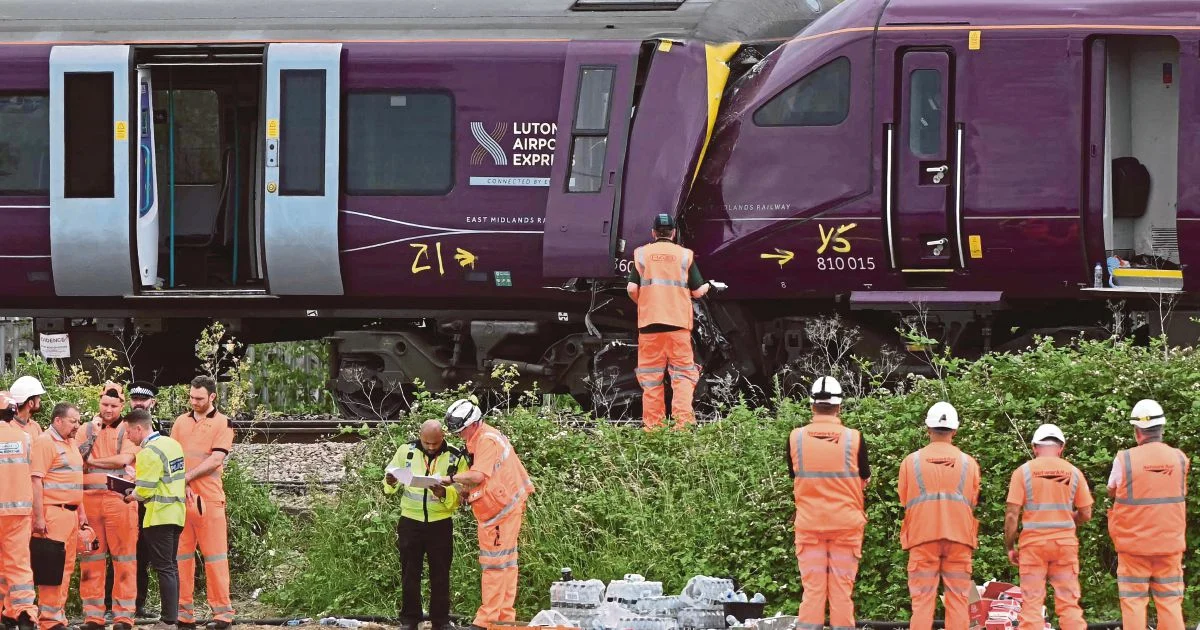
A fatal train collision that occurred north of London has left authorities scrambling to understand how the incident unfolded, with a driver losing his life and dozens of passengers requiring hospital treatment. The crash, which has triggered a full investigation by UK accident specialists, marks another significant rail incident in a country where such accidents have become increasingly scrutinised by safety regulators and the travelling public alike.
The immediate aftermath of the collision saw emergency services responding to the scene near Bedford, with rescue teams working to extract passengers from damaged carriages. Of the 28 people hospitalised following the crash, nine remain in critical condition, highlighting the severity of the impact and the serious injuries sustained by those aboard. The scale of casualties underscores the potentially catastrophic consequences when train safety systems fail or when human error occurs at high speeds.
For Malaysian readers, this incident carries particular relevance as Southeast Asian nations continue to expand their own railway networks. Malaysia's own railway infrastructure, including the newer Mass Rapid Transit systems and planned high-speed rail projects, operates under different regulatory frameworks than the UK, yet shares the same fundamental challenge of maintaining safety across complex transportation systems. The lessons emerging from this investigation may inform discussions around rail safety protocols being developed across the region.
The investigation into the collision will likely examine multiple factors, including signal systems, train speeds, driver alertness, and maintenance records. UK accident investigators have established a reputation for thorough post-incident analysis, often producing detailed reports that become models for safety recommendations across the international rail industry. These findings typically influence how other nations approach their own rail safety standards.
The incident raises broader questions about rail infrastructure maintenance and modernisation in the UK, where aging networks run alongside newer technologies. Similar tensions exist in Southeast Asia, where rapid urbanisation has driven investment in new transit systems while older networks continue to operate. The collision serves as a cautionary reminder that transitional periods in rail infrastructure can present elevated risks if oversight and investment do not keep pace with system expansion.
For families and employers of those injured and the family of the deceased driver, the collision represents a personal tragedy with far-reaching emotional consequences. The incident also impacts public confidence in rail travel, a concern shared globally but particularly acute in developed nations where public transportation is expected to meet the highest safety standards. In Malaysia and the wider region, maintaining passenger confidence in rail systems remains crucial as these modes of transport are promoted as safer alternatives to road travel.
The response from emergency services in the Bedford area reflects well-developed protocols for major transportation incidents in the UK. By contrast, this case also highlights the importance of having comprehensive emergency response frameworks, something Southeast Asian nations continue to strengthen as rail networks expand. The coordination between rescue teams, hospitals, and investigative authorities provides a template relevant to countries developing their own emergency management capabilities.
Medial response to those injured has placed significant demand on local healthcare facilities, a consideration that extends to any mass casualty incident in transportation. For rapidly developing rail systems in Southeast Asia, ensuring adequate hospital capacity and trauma expertise in regions where new rail lines are being constructed represents an ongoing planning challenge. The incident demonstrates why infrastructure projects must include not only the transportation system itself but also surrounding emergency response capacity.
The driver's death raises particular concerns about operator safety and working conditions. Train drivers across the world operate under varying levels of fatigue regulation and support systems. Questions may emerge about whether the driver was adequately rested, whether cabin design provided appropriate protection during collision, and whether warning systems alerted operators sufficiently in advance of the hazard. These considerations carry implications for how driver welfare is managed on new rail projects across Southeast Asia.
As the investigation proceeds, the UK's Civil Aviation Authority and rail accident investigation board will likely publish preliminary findings within weeks, with a final comprehensive report following months later. This transparent reporting process has become standard in developed nations and increasingly is being adopted elsewhere. Malaysia's own rail operators and regulators may examine this case's findings as they continue developing incident reporting and safety improvement protocols.
The collision also serves as a reminder of rail system interdependencies, where failures in one component—whether signalling, scheduling, or operator communication—can cascade into major incidents. Modern rail networks function as complex systems where technology, human factors, and infrastructure maintenance must operate in concert. This systems-based perspective has become increasingly important for operators worldwide, including in Southeast Asia, where expanding networks demand sophisticated safety management.
Looking forward, the incident will likely inform discussions among rail operators and safety regulators across Europe and globally about best practices in collision avoidance systems, operator training, and emergency response. For regional neighbours, the detailed investigation findings will provide valuable data for benchmarking their own systems and identifying potential vulnerabilities before expansion of their rail networks places more passengers at risk.

