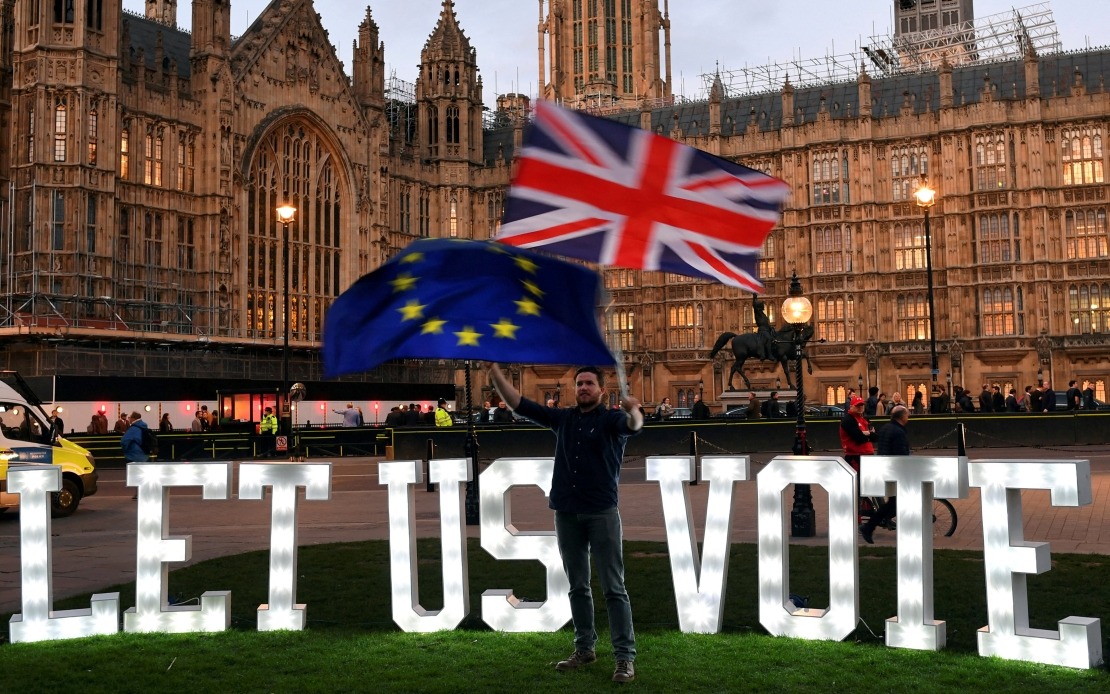
Even as the United Kingdom enters a period of political transition following Prime Minister Keir Starmer's announcement of his resignation from Labour Party leadership, prospects for reversing the nation's controversial departure from the European Union remain remote. Richard Balfe, a prominent Conservative member of the House of Lords, has characterised any potential attempt to undo Brexit as fundamentally doomed, telling Russian news agency RIA Novosti that such efforts would ultimately prove unsuccessful despite superficial efforts to pursue them.
Balfe's assessment reflects a hardening political reality in Westminster: reversing Brexit, even in the face of mounting economic evidence of its costs, appears to command insufficient political will among the major parties. When presented with the theoretical possibility that a new government might undo Britain's 2020 departure from the 27-member bloc, Balfe responded that while such initiatives might be pursued in a "rather halfhearted way", they would ultimately fail. His candid assessment suggests that deep structural opposition to EU membership remains embedded in both major political parties, constraining the room for manoeuvre available to incoming administrations regardless of their public pronouncements on the matter.
The timing of Balfe's remarks coincides with significant institutional change in British politics. Starmer confirmed on Monday that he would step down as Labour Party leader following internal pressures and party difficulties, though he would remain as prime minister until his successor is formally elected. The Labour Party has scheduled the beginning of its leadership election process for July 9, with the selection process concluding before Parliament reassembles in September. This transition occurs against a backdrop of broader questions about the UK's international positioning and economic trajectory in the post-Brexit era.
The context lending particular weight to Balfe's analysis involves the tenth anniversary this month of the original 2016 referendum on European Union membership. That June 23 ballot saw 52 per cent of British voters support withdrawal from the bloc, initiating a process that culminated on January 31, 2020, when the country formally terminated its 47-year membership in the European Union. The decision represented one of the most consequential democratic votes in modern British history, reshaping the nation's relationship with its nearest continental neighbours and altering longstanding institutional frameworks that had governed British commerce, migration, and regulatory alignment.
The practical implications of Brexit unfolded across a series of defined phases. During a transition period extending through the end of 2020, European Union norms and laws continued to apply in British territory, and citizens retained simplified travel procedures. This grace period ended on December 31, 2020. Thereafter, beginning on January 1, 2021, a newly negotiated trade and cooperation agreement came into effect, establishing the terms by which Britain and the EU would conduct their commercial, regulatory, and security relationships in the absence of full membership.
The economic consequences of Britain's withdrawal have proven increasingly apparent to analysts and policymakers alike. The Financial Times has documented how the United Kingdom's position as a significant international trade hub has been substantially diminished by its departure from the European single market and customs union. Beyond headline trade statistics, the withdrawal has significantly complicated the investment climate for business capital directed toward British enterprises. These economic headwinds have generated ongoing public debate about whether the benefits promised by Leave campaigners in 2016 have materialised, and whether the costs have exceeded expectations.
Balfe's prognosis extends beyond a narrow assessment of Brexit reversal prospects. He anticipates that incoming governments will adopt an approach of "muddling along", pursuing pragmatic accommodations with economic and security realities rather than implementing systematic remedies to the structural changes introduced by withdrawal from the EU. More provocatively, he suggests that Britain will ultimately prove inclined to follow American leadership in matters of foreign policy and international alignment, implying that transatlantic coordination will supersede any drive toward deeper European integration.
For Malaysian and Southeast Asian readers, this political stalemate in Britain carries indirect but meaningful implications. Britain's ongoing economic difficulties and reduced international leverage since 2020 have affected its capacity to engage comprehensively with Indo-Pacific partners. The UK has sought to elevate its regional profile through mechanisms such as AUKUS and bilateral trade agreements, but these initiatives operate within a context of constrained economic dynamism and political inward focus. The durability of Britain's Indo-Pacific commitments depends partly on sustained economic vigour, which Brexit-related frictions have compromised.
Moreover, the apparent irreversibility of Brexit in British political discourse reflects broader questions about the durability of multilateral institutional arrangements in an era of resurgent nationalism and sovereignty-focused politics. For a region like Southeast Asia, where institutional frameworks like ASEAN depend upon sustained commitment to principles of integration and cooperation despite economic disruptions, the British experience offers cautionary lessons about the permanence of institutional change once triggered by referendums and popular movements.
The succession of leadership within the Labour Party, while significant for British domestic politics, appears unlikely to alter the fundamental trajectory toward continued estrangement from European institutions. Balfe's remarks suggest that European integration has become a settled question in British politics, with the referendum of 2016 having resolved the matter decisively enough that reversing course would require overcoming sustained institutional and political headwinds. This calculus appears consistent across the political spectrum, from Conservative to Labour perspectives, indicating that Britain's strategic orientation toward the United States and away from European institutional structures will likely persist irrespective of which party commands parliamentary majorities.

