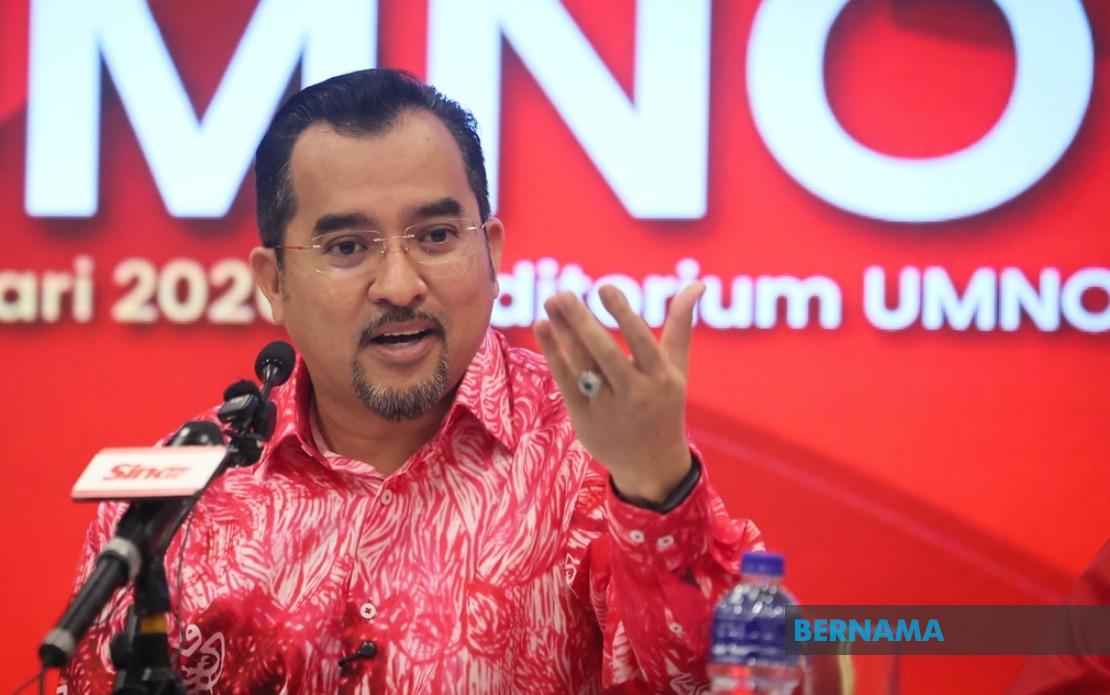
The departure of UMNO Supreme Council member Datuk Dr Mohd Puad Zarkashi from the party has been attributed to his disappointment over his son not being selected as a candidate for the Rengit state assembly seat, according to party secretary-general Datuk Dr Asyraf Wajdi Dusuki. The revelation comes after Mohd Puad announced his resignation from UMNO on June 25, citing a desire for greater freedom of expression. Asyraf Wajdi addressed the matter publicly through social media, providing the party's perspective on what prompted the prominent figure to sever his decades-long association with Malaysia's oldest political party.
According to Asyraf Wajdi's account, Mohd Puad had written extensively to party leadership threatening both to exit UMNO and launch public attacks against the organisation if officials did not honour his request to field his son as the Rengit candidate. The secretary-general acknowledged that while Mohd Puad's son possesses youth and considerable leadership potential, the party must evaluate numerous criteria when making candidate selections. This statement underscores a fundamental tension within UMNO between rewarding loyal senior members and maintaining merit-based or strategically sound candidate decisions. The timing of this dispute proves particularly sensitive given that Johor's state legislative assembly had been dissolved on June 1, with elections scheduled for July 11, leaving minimal window for such internal conflicts to be resolved.
Asyraf Wajdi explicitly rejected Mohd Puad's allegations that the Johor palace exercises controlling influence over Johor UMNO or that it orchestrated the dissolution of the state assembly. He characterised these claims as slanderous, defending both the institution and the party's autonomous decision-making processes. This rebuttal addresses a persistent undercurrent of concern within Malaysian politics regarding the intersection between traditional monarchical authority and party management. The secretary-general's firm denial suggests UMNO leadership views such insinuations as potentially destabilising, particularly during a critical pre-election period when party unity carries strategic importance.
The dispute between Mohd Puad and party leadership appears to follow an established pattern. Asyraf Wajdi revealed that during Datuk Seri Najib Tun Razak's presidency, Mohd Puad had similarly threatened to leave UMNO if he were not renominated as Member of Parliament for Batu Pahat. This recurring behaviour suggests a consistent approach by Mohd Puad to leverage his senior status within the party to secure preferred outcomes for himself and his family. Whether such threats represent genuine grievances rooted in perceived unfair treatment or represent political theatre remains open to interpretation, but the pattern indicates deep-seated frustration with how UMNO rewards seniority and manages internal power dynamics.
Asyraf Wajdi made explicit that UMNO functions as a meritocratic political organisation rather than a hereditary institution prioritising family advancement. This statement carries weight given contemporary Southeast Asian concerns about dynastic politics dominating democratic processes. By drawing this distinction, the secretary-general sought to establish that UMNO selects leaders and candidates based on capability and strategic considerations rather than familial connections alone. However, critics might note that many senior UMNO figures have indeed leveraged party positions to advance family members' political careers, suggesting that while the official doctrine emphasises merit, practical implementation may operate differently.
The secretary-general further emphasised that UMNO's overarching mission—championing race, religion, and national interests—must supersede individual aspirations or disappointments. This formulation reflects UMNO's foundational identity as a Malay-Muslim communal party with significant historical responsibility for Malaysia's political trajectory. Asyraf Wajdi's argument suggests that allowing personal grievances to influence party loyalty or permit public criticism would undermine institutional coherence at a moment when UMNO seeks to present itself as a stabilising political force. The statement also implicitly warns other party members against leveraging positions or threatening departures to extract concessions, signalling that UMNO will not negotiate under pressure from within its own ranks.
The incident occurs within a broader context of Malaysian politics characterised by leadership transitions, coalition realignments, and questions about party unity. UMNO, historically dominant during the Barisan Nasional era, has experienced fragmentation and internal power struggles in recent years. Defections, whether prompted by genuine ideological disagreement or personal disappointment, contribute to perceptions of institutional vulnerability. Mohd Puad's departure, regardless of its underlying causes, represents a loss of experienced party machinery and potential damage to UMNO's image as a cohesive organisation capable of managing internal disputes discreetly.
The timing of this public dispute amplifies its political significance. With Johor elections imminent and nomination day scheduled for June 27, UMNO's leadership needed to project unity and strategic clarity regarding candidate selection. Instead, the party found itself defending its candidate selection process and addressing accusations of external interference. Such public controversy potentially complicates UMNO's campaign narrative and provides opposition parties with material to question how comprehensively UMNO leadership commands party loyalty. Malaysian voters often view internal party chaos as an indicator of organisational weakness, which could influence voting behaviour in tight contests.
Mohd Puad's decision to resign and subsequently criticise party decisions represents a calculated political move that permits him greater freedom to comment on UMNO's direction without internal discipline mechanisms constraining his expression. By departing voluntarily, he positions himself as principled rather than marginalised, potentially attracting sympathetic media coverage. His subsequent public statements may either attempt to resolve grievances behind the scenes or foreshadow further criticism depending on how party leadership treats his concerns. The availability of alternative political platforms—whether through cross-party alliances, media commentary, or involvement in civil society—provides departed politicians with continued influence despite losing formal party membership.
The candidate selection process itself reflects broader questions about how Malaysian political parties balance competing priorities. Senior members believe seniority and loyalty warrant consideration for preferred positions; younger potential candidates argue that fresh leadership offers electoral advantages; and party strategists calculate which selection maximises electoral viability. These tensions exist within most major Malaysian parties but become particularly acute during periods of intra-party uncertainty. How UMNO resolves such conflicts may determine whether the party maintains cohesion or experiences further defections that could reshape Johor's political landscape.
Looking forward, this incident provides insight into UMNO's internal governance during a transitional period. The party faces choices about whether to strengthen internal discipline mechanisms to prevent future public disputes or adopt more accommodating approaches toward senior members' ambitions. Malaysian political observers will monitor whether this defection signals isolated dissatisfaction or represents a broader pattern of discontent that could undermine UMNO's electoral performance. The outcome of the July 11 Johor elections will partially reflect voters' assessment of UMNO's internal coherence and whether leadership disputes genuinely indicate institutional problems or merely represent manageable personality conflicts inevitable within large political organisations.

