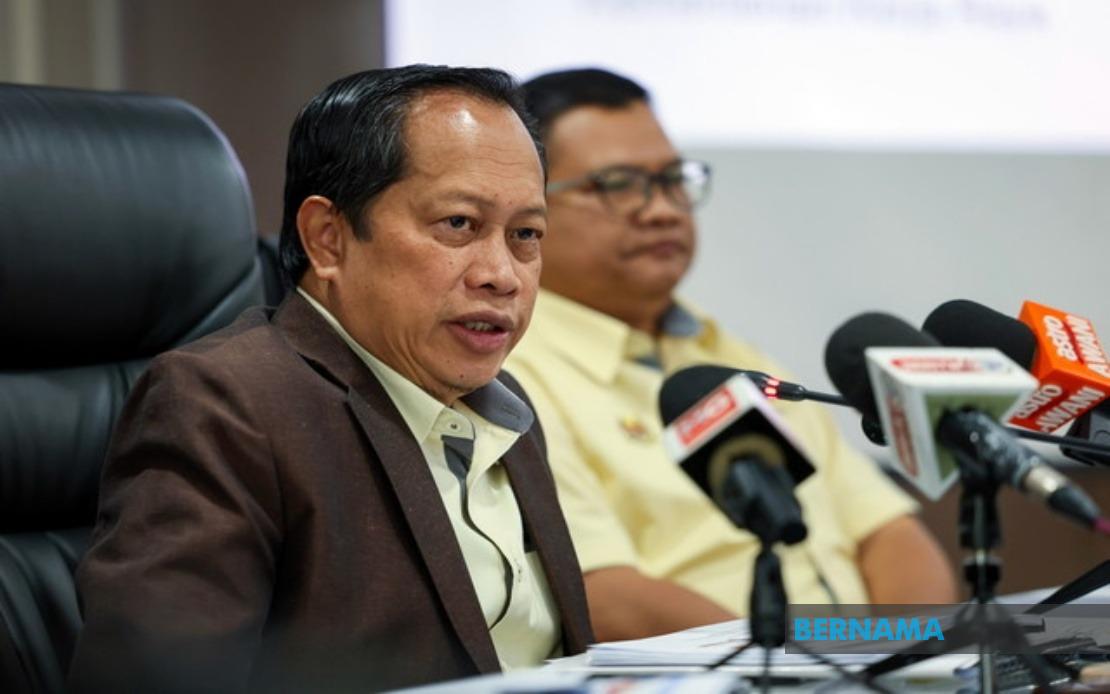
The United Malays National Organisation will hold a pivotal leadership meeting on August 28 to determine its approach to the forthcoming Melaka state election, with particular focus on whether the party should seek alliances with competing political blocs or mount a solo campaign through its Barisan Nasional vehicle. The gathering, to be presided over by UMNO president Datuk Seri Dr Ahmad Zahid Hamidi, represents a crucial juncture for the party as it weighs competing strategic interests in a state where it currently holds substantial but not commanding legislative control.
According to UMNO Supreme Council member Datuk Seri Dr Ahmad Maslan, the August 28 conclave will deliberate on the optimal pathway to secure a decisive victory for Barisan Nasional in Melaka while simultaneously considering the broader political ramifications of any alliance decision. The Deputy Works Minister emphasised that no binding determination has yet been reached, despite mounting speculation and public commentary from various quarters regarding potential cooperative arrangements. The party leadership remains actively evaluating multiple scenarios, each carrying distinct implications for UMNO's positioning within Malaysia's fractured political landscape.
The deliberation gains urgency given the December 31 expiration of the current state government's mandate, which necessitates electoral action within a defined timeframe. Melaka's political composition currently reflects a complex multi-party arrangement, with Barisan Nasional commanding 21 of the state assembly's 28 seats following the fifteenth state election, Pakatan Harapan holding five seats, and Perikatan Nasional occupying two. This numerical dominance, however, masks deeper structural complexities that demand strategic consideration.
Particularly noteworthy is the constitutional arrangement of Melaka's state executive council, which incorporates members from Pakatan Harapan alongside the dominant Barisan Nasional contingent. This configuration mirrors the federal-level Unity Government framework established in Kuala Lumpur, demonstrating how national political accommodations have percolated into state-level governance structures. The mirroring of federal arrangements in state administration creates compelling incentives for maintaining existing partnerships, yet equally presents opportunities to reset state-level equations.
Dr Ahmad Maslan's statement acknowledged the proliferation of media speculation and informal discussions among UMNO figures in Melaka regarding potential alliances with both Pakatan Harapan and Perikatan Nasional. These discussions reflect genuine uncertainty within party ranks about the optimal strategic calculus. Some faction favour maintaining cooperative arrangements with Pakatan Harapan to preserve federal stability and leverage the legitimacy associated with the Unity Government framework. Others contend that Barisan Nasional's comfortable numerical superiority in Melaka provides sufficient foundation for independent electoral contestation, potentially allowing UMNO to reclaim unilateral control of the state administration.
The Perikatan Nasional dimension introduces further complexity, as that coalition led by Prime Minister Anwar Ibrahim's political rivals represents both a competitive threat and a potential alliance partner. Some UMNO strategists view cooperation with Perikatan Nasional as a mechanism for consolidating opposition to Pakatan Harapan's influence, while others regard such an arrangement as destabilising to federal-level political equilibria. The August 28 meeting must navigate these crosscurrents while maintaining internal party cohesion.
Dr Ahmad Maslan underscored that the party hierarchy expects all UMNO members and affiliated organisations to respect whatever resolution emerges from the Supreme Council deliberation, signalling the leadership's determination to enforce party discipline on this question. This emphasis on compliance reflects awareness that public disagreement among UMNO figures regarding electoral strategy could fragment the party's presentation to voters and diminish its competitive effectiveness. The implicit warning carries particular weight given historical instances of UMNO internal divisions producing damaging electoral consequences.
The Deputy Works Minister also articulated a principle that Barisan Nasional's electoral approach must remain contextualised to specific state circumstances rather than mechanically replicating a national template. This conceptualisation acknowledges that different state contexts may warrant divergent strategies, even as UMNO remains bound to overarching national positioning. Melaka's particular demography, leadership structures, and political history thus merit individualised assessment rather than top-down imposition of predetermined approaches.
For Malaysian political observers and regional analysts, the August 28 meeting carries significance extending well beyond Melaka's borders. The decision reached will furnish important signals regarding UMNO's long-term commitment to federal Unity Government arrangements with Pakatan Harapan, or conversely, the party's appetite for repositioning itself within alternative coalitional frameworks. Should UMNO opt for independence or Perikatan Nasional cooperation in Melaka, this could presage broader recalibration of national political alignments heading into subsequent electoral cycles.
The Melaka election timing also positions the state as a potential bellwether for voter sentiment in the lead-up to federal elections that must occur by mid-2025. Electoral outcomes in Melaka could accordingly influence internal UMNO confidence calculations regarding its electoral prospects at the national level and its strategic attractiveness to potential alliance partners. A decisive Barisan Nasional victory through any mechanism would bolster UMNO's negotiating position within whatever coalition structure dominates subsequent national politics, whereas a disappointing result could constrain party leadership's freedom of manoeuvre in future deliberations.
The August 28 meeting thus represents far more than a routine procedural gathering to endorse predetermined positions. Rather, it constitutes a genuine strategic inflection point where UMNO must reconcile competing imperatives spanning immediate electoral considerations, medium-term coalitional positioning, and longer-term party survival in an increasingly volatile Malaysian political environment. The resolution reached will reverberate through subsequent months and potentially reshape the broader calculus of Malaysian politics.

