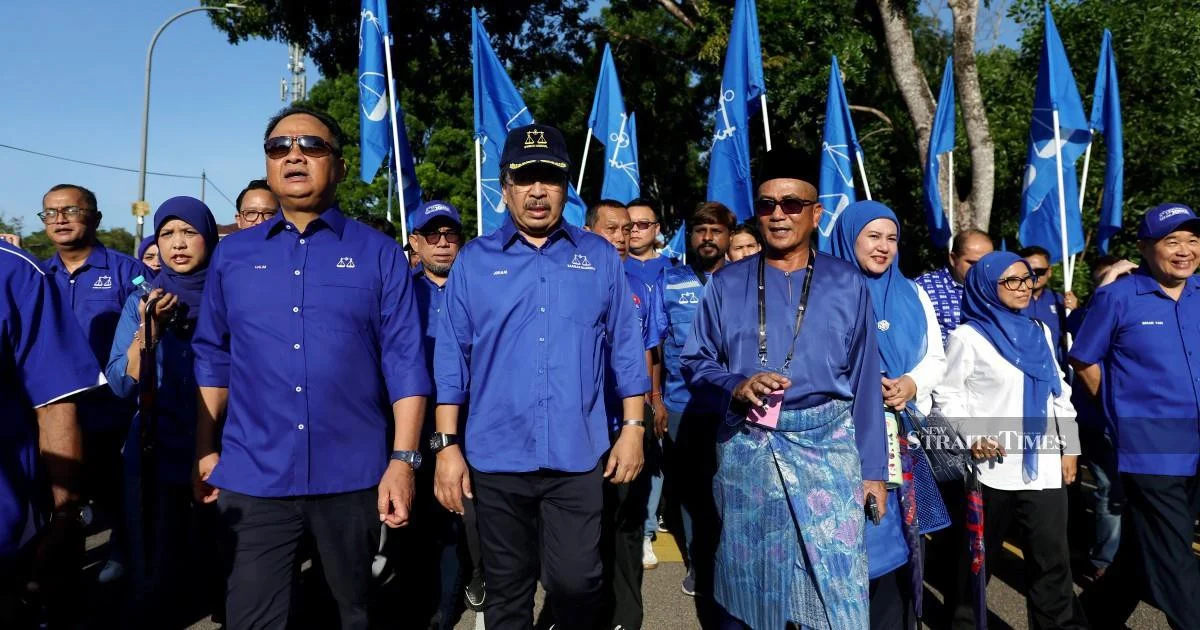
Umno vice-president Datuk Seri Johari Abdul Ghani made his presence felt in Johor by visiting the Taman Pelangi Indah community hall, where he rallied support for the Barisan Nasional candidate vying for the Tiram seat. The visit underscores the coalition's determination to retain one of its traditional strongholds in the state as it prepares for electoral contests that will shape the political landscape of the peninsula's southern region.
The mobilisation of senior party leadership for grassroots campaigns reflects a calculated strategy within Barisan Nasional circles. By deploying figures of Johari's standing—a senior Umno official with significant organisational influence—the coalition seeks to energise party machinery and reassure supporters that it remains committed to contesting every seat competitively. Such shows of strength are particularly important in constituencies where opposition gains or voter volatility pose genuine challenges to traditional power bases.
Tiram's importance within Johor's political economy cannot be understated. As a constituency that has historically favoured BN candidates, any softening of support in the seat would signal troubling shifts in voter sentiment across similar suburban and semi-urban areas. The decision to dispatch Johari for a personal appearance suggests internal party assessments may have identified either complacency among supporters or intensifying pressure from rival political forces seeking to breach the coalition's structural advantages.
Umno's vice-presidency carries organisational weight within the party hierarchy, positioning Johari as someone capable of mobilising resources and coordinating campaign activities at scale. His visit to Taman Pelangi Indah serves multiple tactical purposes: demonstrating to local party functionaries that the national leadership takes the contest seriously, conveying reassurance to undecided voters that the candidate enjoys high-level backing, and generating media attention that extends the campaign message beyond those physically present.
The Johor state political arena has evolved considerably in recent years, with voter preferences becoming less predictable than they were historically. The emergence of competitive opposition challengers, demographic shifts in urban constituencies, and broader disaffection with governance narratives have created openings for parties willing to challenge BN's assumed dominance. Constituencies like Tiram, which sit at the intersection of traditional support networks and newer suburban growth, represent precisely the terrain where elections are won or lost.
Community halls such as Taman Pelangi Indah function as vital infrastructure for political mobilisation in Malaysia's electoral system. These venues allow parties to gather supporters in intimate settings conducive to persuasion and feedback, rather than relying solely on broadcast messaging. The physical presence of senior figures in such spaces carries symbolic weight—it suggests that those leading the party believe the community's concerns warrant direct attention and high-level engagement.
For Barisan Nasional more broadly, maintaining electoral competitiveness in Johor remains strategically essential. The state delivers a significant parliamentary delegation and controls substantial resources through its state apparatus. Loss of key constituencies to opposition parties would not only reduce BN's seat count but could reshape coalition mathematics at the national level, particularly in closely contested electoral cycles where marginal gains determine government formation.
Johari's campaign appearance also reflects internal BN coordination mechanisms. As a vice-president operating within Umno's formal structures, his support for specific candidates conveys endorsement from the party hierarchy, which can carry weight with members responsible for turning out votes. The venue choice and timing of such visits are typically coordinated through party machinery to maximise impact and ensure messaging consistency across multiple campaign events.
Voter behaviour in constituencies adjacent to state capitals like Johor Baru often incorporates significant urban professional and service-sector components alongside traditional rural constituencies. These mixed electorates respond to different appeals than uniformly rural or urban seats, requiring campaigns that address employment, infrastructure, and cost-of-living concerns while maintaining traditional community networks. BN's ability to speak to these diverse constituencies simultaneously remains a key competitive advantage, though maintaining that balance requires consistent high-level attention.
The election timeline in Malaysian states typically builds intensity through such grassroots visits, where senior leaders deploy to constituencies deemed pivotal or at-risk. Johari's presence at Taman Pelangi Indah slots into a broader campaign calendar designed to ensure no seat is conceded without substantial demonstration of institutional commitment and resource deployment. Such visible leadership activities serve also to strengthen internal party discipline, signalling to lower-ranking officials that performance in assigned constituencies matters to those holding highest office.
Moving forward, the outcomes in constituencies like Tiram will provide critical indicators of whether BN's traditional electoral machinery remains capable of mobilising supporters at necessary intensity levels, or whether structural voter realignment in Johor requires the coalition to develop fundamentally different campaign approaches for coming electoral cycles.

