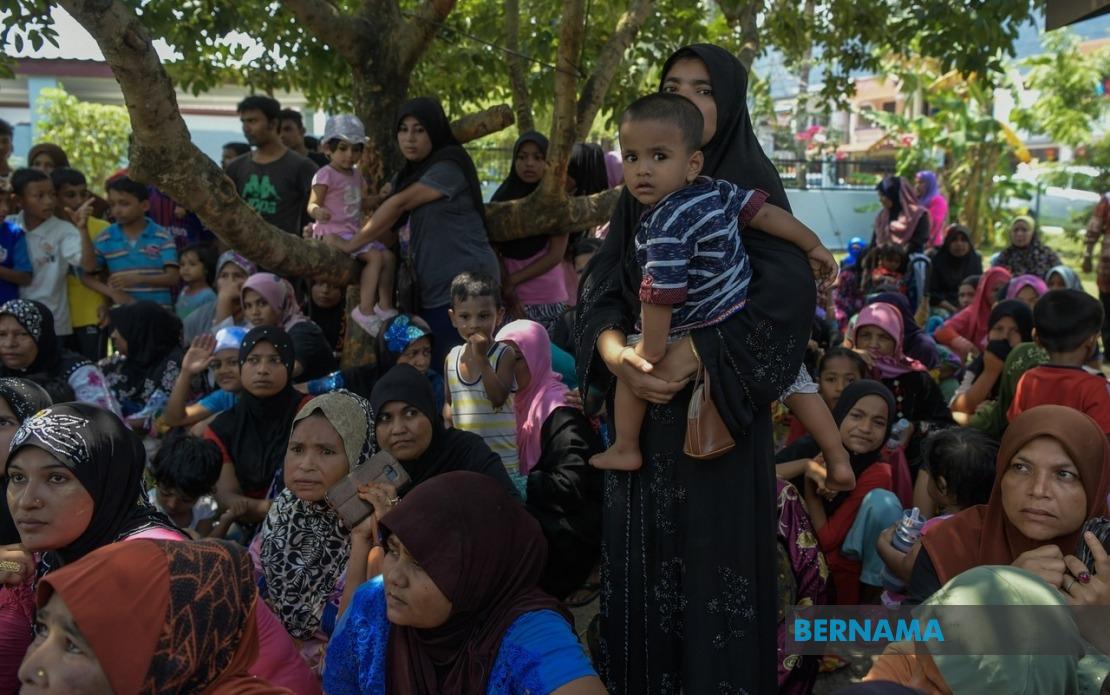
The Malaysian government has moved to dispel misconceptions surrounding refugee documentation, with Economy Minister Datuk Akmal Nasrullah Mohd Nasir emphasizing that possession of a UNHCR card carries no special legal status within the country. During a briefing on the nation's economic position, Akmal Nasrullah stressed that such documentation merely identifies individuals as refugees under United Nations protection, but does not exempt them from Malaysian jurisdiction or criminal prosecution.
This clarification comes amid growing public concern about the management of refugee populations in Malaysia, particularly regarding undocumented migrants, trafficking networks, and their potential impact on community safety. The statement was delivered during the Global Supply Crisis Briefing, which was livestreamed through official government channels, signalling the transparency with which authorities are addressing these sensitive policy matters.
The government's position reflects a broader recognition of tensions between Malaysia's humanitarian obligations and domestic security concerns. While the country hosts one of Southeast Asia's largest refugee populations, accounting for hundreds of thousands of individuals awaiting permanent resettlement, there remains considerable public anxiety about unregulated migration flows and their intersection with organized crime. The Economy Minister's remarks were designed to reassure citizens that refugee status does not create a legal grey zone where individuals can evade accountability.
Responsibility for refugee oversight falls primarily to the Home Ministry, which presented comprehensive management strategies during a National Economic Action Council meeting chaired by Prime Minister Datuk Seri Anwar Ibrahim. The Immigration Department is advancing the Refugee Registration Document Programme, a system incorporating biometric identification, thorough vetting procedures, and ongoing surveillance mechanisms. This technological infrastructure aims to create a more transparent and traceable refugee population, reducing opportunities for exploitation or criminal activity.
Beyond documentation, Malaysian authorities are launching coordinated campaigns against the criminal networks that profit from migrant vulnerability. Integrated operations targeting human smuggling, document forgery, and unauthorized border crossings are being expanded and intensified across enforcement agencies. These initiatives represent a shift towards preventative security measures rather than reactive policing, attempting to disrupt trafficking operations at their source before vulnerable individuals enter the country.
The government has committed substantial financial resources to these objectives, allocating RM1.2 billion across multiple agencies for border control and security infrastructure. This investment demonstrates official acknowledgement that effective refugee management requires comprehensive systems integration rather than isolated departmental responses. The funding encompasses technology, personnel, training, and operational capacity across immigration, customs, police, and military units responsible for territorial security.
Malaysia's expanded Border Control and Protection Agency represents a central pillar of this strategy. By streamlining command structures and consolidating enforcement authority, the government seeks to eliminate coordination gaps that criminal networks have historically exploited. The agency's evolution reflects international best practices in border management, incorporating real-time intelligence sharing, predictive analytics, and mobile rapid-response capabilities across vulnerable entry points.
Data analytics and monitoring technology have become essential tools in this enforcement paradigm. Authorities are deploying sophisticated pattern-recognition systems to identify individuals and networks exhibiting suspicious activity indicators. These technological solutions allow officers to work proactively, targeting high-risk situations before incidents occur, rather than investigating after crimes have been committed. This represents a significant capability upgrade for Malaysian enforcement agencies, though implementation raises important questions about data privacy and civil liberties that remain subject to ongoing debate.
The National Economic Action Council discussion encompassed broader governance challenges beyond refugee management, acknowledging that effective policy requires holistic understanding of interconnected issues. Food security and manufacturing sector resilience amid global supply chain disruptions were discussed alongside border security, reflecting government recognition that economic stability and security concerns are fundamentally interlinked. Refugee management cannot be addressed in isolation from these broader contexts, as poverty and economic desperation often fuel migration pressures.
For Malaysia's regional standing, these clarifications and enhanced enforcement efforts signal commitment to both humanitarian principles and robust state sovereignty. ASEAN partners grapple with similar refugee challenges, and Malaysia's policy approach influences regional norms around displacement management. By establishing clear legal frameworks and transparent procedures, the government seeks to model responsible refugee hosting that respects both international obligations and domestic constituencies.
The emphasis on investigation and prosecution for criminal offences reflects Malaysia's determination to prevent refugee populations from becoming havens for organized crime or security threats. This position acknowledges legitimate public safety concerns while avoiding discriminatory policies targeting refugees as inherently problematic. The distinction between refugee status and criminal liability remains central to Malaysia's policy framework, asserting that most refugees are vulnerable individuals deserving protection, while criminal elements operating within or exploiting refugee communities must face full legal consequences.
Moving forward, the effectiveness of these measures will depend heavily on implementation quality and sustained resource commitment. Refugee management requires consistency, inter-agency coordination, and sensitivity to humanitarian principles alongside security imperatives. The government's willingness to publicly clarify legal frameworks and acknowledge policy challenges represents a positive step, though sustained scrutiny and evaluation will be necessary to ensure policies achieve stated objectives without inadvertently creating new vulnerabilities.

