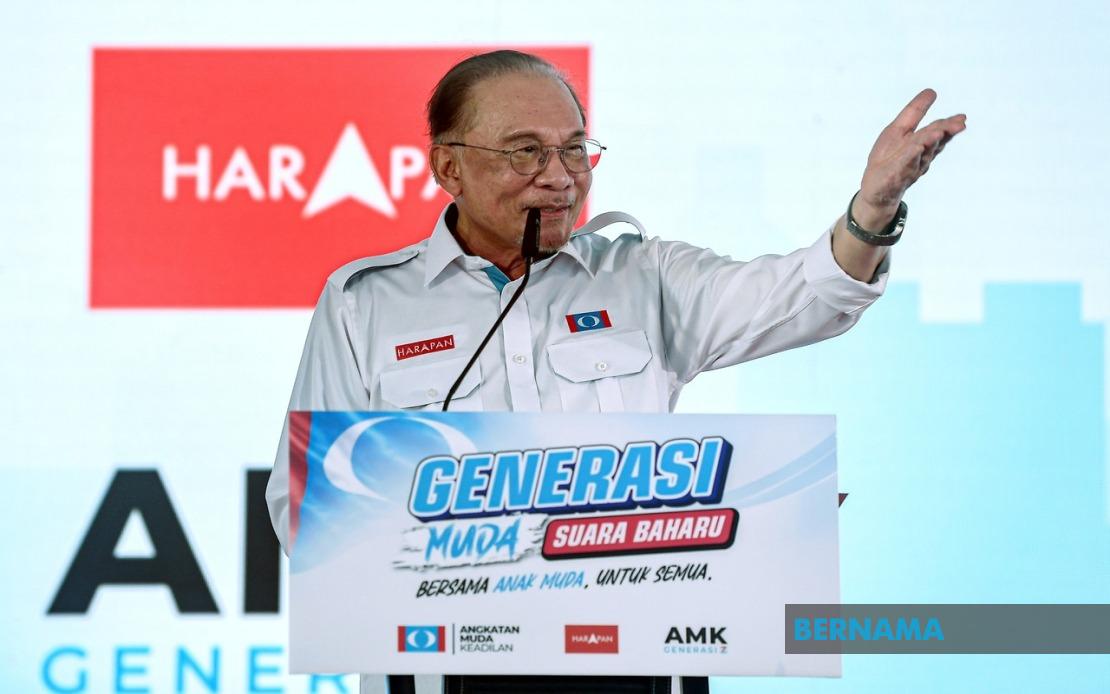
Prime Minister Datuk Seri Anwar Ibrahim has made a direct appeal to Malaysian voters to prioritise national unity when selecting their political representatives, warning against the dangers of leaders who exploit divisions along racial and religious lines. Speaking at the Generasi Muda Suara Baharu programme in Petaling Jaya, Anwar stressed that the calibre of political leadership profoundly shapes the country's trajectory across economic development, education policy, and social cohesion.
At the heart of Anwar's message lies a critique of divisive political tactics that have long characterised Malaysian politics. He explicitly rejected the narrative of manufactured fear that traditionally pits communities against one another—the deliberate sowing of suspicion between Malays and Chinese, Chinese and Indians, and indigenous groups and other populations. This framing appears designed to resonate with Generation Z voters who have grown up in a more interconnected Malaysia and may be less responsive to identity-based political mobilisation that defined earlier decades.
The Prime Minister articulated a vision where political discourse shifts from fear-mongering to substantive governance. Rather than allowing politicians to stoke anxiety about competing ethnic or religious interests, Anwar proposed that Malaysia's younger generation should demand accountability from leaders on concrete issues: the fight against corruption and the elimination of racism as institutional problems. This reframing of political discourse reflects a broader attempt to move Malaysian politics away from identity politics toward performance-based evaluation of leaders.
Anwar's emphasis on the character of political leaders extends beyond rhetoric to competence and integrity. He underscored that voters must consciously select representatives untainted by corruption and free from the impulse to generate animosity within society. The implication is that while Malaysia has made progress in this direction, the vigilance required to prevent backsliding remains essential. This message carries particular weight given that his government has prioritised anti-corruption measures and institutional reform since taking office.
The Prime Minister also addressed a common criticism of reform movements: the gap between passionate rhetoric and sustainable change. Anwar warned against what he termed change driven by mere passion or populist posturing—the kind of political theatre that generates noise but fails to deliver tangible improvements in citizens' lives. Instead, he advocated for thoughtful, strategically planned reform initiatives that have a genuine prospect of success. This nuanced position distinguishes between change for its own sake and change grounded in practical planning and realistic implementation.
Centrally important to Anwar's remarks is his identification of a positive shift among Malaysia's youngest voters. He expressed optimism about the cooperation he observes between different communities, particularly among Gen Z, who he characterised as bringing a fresh mindset and genuine commitment to the reform agenda. This generational dimension carries strategic significance for Malaysian politics, as younger voters increasingly represent a growing electoral force capable of reshaping political competition and priorities.
The Generasi Muda Suara Baharu programme itself signals the government's intention to institutionalise engagement with young voters through nationwide district-level activities. By rolling out this initiative across Malaysia's electoral map, the administration appears to be building grassroots infrastructure aimed at mobilising youth around a pro-reform agenda while simultaneously building political support for the current government's direction.
For regional observers, Anwar's emphasis on multi-ethnic cooperation and reform-oriented governance reflects broader trends across Southeast Asia where younger voters are increasingly resistant to traditional identity-based politics. Malaysia's experience in attempting to redirect political discourse away from communal divisions offers insights relevant to neighbouring countries grappling with similar tensions between identity politics and development-focused governance.
The timing of these remarks, with Communications Minister Datuk Seri Fahmi Fadzil present, suggests a coordinated government messaging strategy aimed at staking out moral and intellectual ground on the reform agenda. By framing unity and integrity as prerequisites for political leadership, the administration positions itself as guardian of a progressive political vision while implicitly contrasting itself with opposition forces that Anwar associates with the discredited politics of division and fear.
Critically, Anwar's call for wise change and careful planning reflects lessons learned from reform movements that have attempted too much too rapidly or failed to consolidate gains. His insistence that change must be grounded in realistic assessment of what is achievable appears designed to temper expectations while maintaining momentum around the reform project. This calibrated approach suggests the government recognises both the opportunities presented by reformist sentiment among youth and the risks of overselling transformation that proves difficult to deliver.
The vision Anwar articulated posits that Malaysia's future depends on generational change in political culture—specifically, younger voters rejecting the zero-sum communal competition that characterised much of the country's post-independence political history. Whether sustained engagement with youth through district-level programming can translate enthusiasm for reform into durable political support remains to be seen, but the initiative reflects serious effort to reshape the electoral and political landscape.

