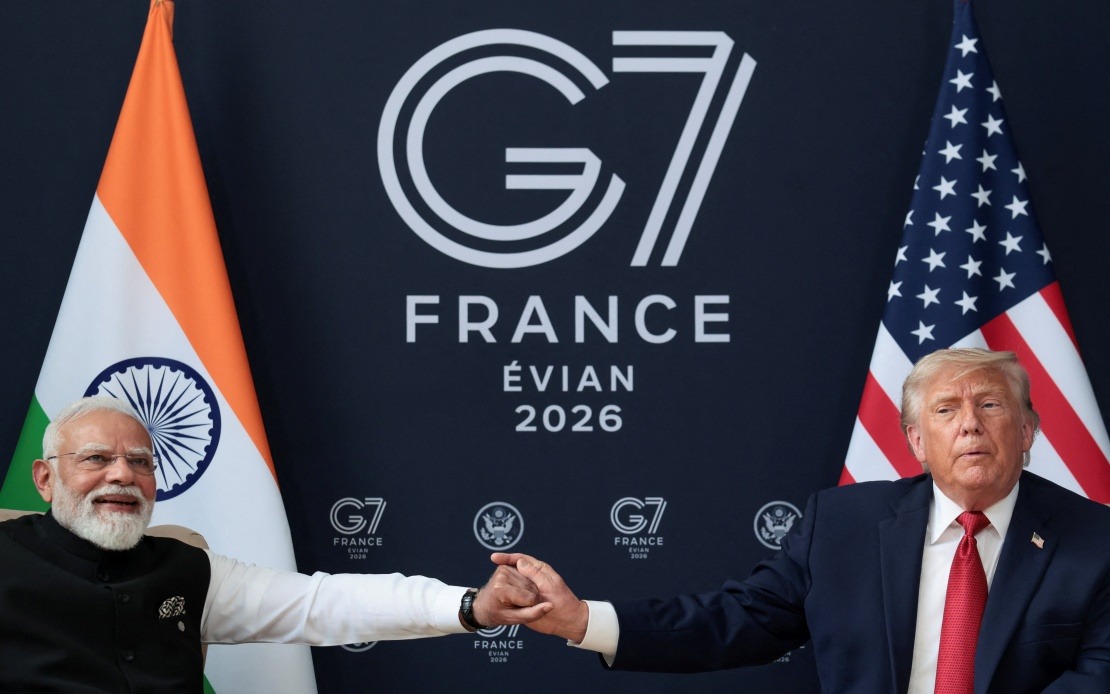
India has announced that substantive progress is being made in protracted negotiations aimed at finalizing a trade agreement with the United States, marking a significant development in commercial relations between the world's two largest democracies. The statement comes after Prime Minister Narendra Modi and US President Donald Trump held talks on the sidelines of the Group of Seven summit held in Evian, France, on Wednesday, where bilateral trade matters featured prominently among the issues discussed.
According to India's External Affairs Ministry, both leaders expressed satisfaction with the momentum gathered in their respective teams' negotiations toward an interim bilateral trade accord. The ministry released a formal statement noting that Modi and Trump have instructed their officials to accelerate efforts toward forging an agreement that balances the commercial and economic interests of both nations while delivering tangible benefits for their businesses and economies. This directive signals renewed political commitment to breaking through the impasse that has characterized these discussions for several years.
The Trump administration will dispatch its chief trade negotiator, Jamieson Greer, to India in the coming week to continue substantive discussions on the accord's final contours. Greer's visit represents an important signal that the US administration views these negotiations as a priority item in its bilateral agenda with New Delhi. The timing of the visit, immediately following the G7 summit where Trump and Modi met, suggests the two sides are capitalizing on the momentum generated by their face-to-face engagement to make concrete gains in the negotiations.
Trump, when asked about the ongoing trade discussions, offered effusive praise for Modi's negotiating abilities while simultaneously suggesting the Indian leader commands respect as a tough dealmaker unwilling to make unilateral concessions. The US president described Modi as "one of the toughest" negotiators he has encountered, using colorful language to convey both the cordial nature of their relationship and the hard-nosed approach the Indian leader brings to commercial discussions. Trump's characterization underscores that any eventual agreement will reflect compromises on both sides rather than one party decisively prevailing over the other.
The current negotiating cycle builds upon an interim framework agreed between the two nations in February of this year, under which the Trump administration reduced tariffs on Indian goods to 18 percent from higher levels previously imposed. This interim arrangement provided temporary relief to Indian exporters facing significant trade barriers in the American market and created space for negotiations on a more comprehensive, long-term trade framework. However, the relationship remains complicated by broader tariff strategies the US has pursued.
The broader trade environment between the two countries has grown more contentious with Trump's 2025 tariff regime, which imposed a blanket 25 percent levy on all Indian imports while simultaneously applying an additional 25 percent penalty specifically targeting Indian purchases of Russian oil. These punitive measures reflected broader Trump administration objectives of constraining both Russian revenue flows and Indian energy diversification strategies. The dual tariffs significantly increased the cost burden for Indian businesses exporting to American markets and raised the stakes for achieving a durable trade settlement.
For Malaysia and other Southeast Asian nations, the progress in US-India trade normalization carries substantial implications for the regional commercial environment. A comprehensive US-India trade agreement could reshape supply chains across Asia, potentially offering opportunities for Malaysian firms to position themselves as alternative suppliers to either market as goods reroute to avoid tariffs. The agreement might also influence broader US strategy in Asia, reinforcing the importance of India as a counterweight to Chinese economic influence in the region.
Moreover, if the US successfully negotiates favorable terms with India on intellectual property protections, digital trade, and labor standards, these outcomes could establish templates that Washington seeks to replicate in discussions with other regional partners. Malaysia, as an important trade hub with significant manufacturing and services sectors, would benefit from clarity about the rules and standards shaping US commercial engagement in Asia. The success of US-India negotiations may thus set precedents for how American trade policy evolves across the Indo-Pacific.
The inclusion of Russian oil trade in the tariff framework also reveals the interconnected nature of modern trade diplomacy, where energy security, geopolitical alignment, and commercial relations intersect. India's energy needs, particularly its reliance on affordable oil imports, make energy trade a crucial component of any viable US-India accord. How the two countries resolve questions about Indian energy sourcing will indicate whether pragmatic commercial interests can override broader strategic tensions.
The timeline for completing negotiations remains ambitious but uncertain. Both governments have instructed their negotiating teams to work toward a "commercially meaningful" agreement, language suggesting they seek a substantive deal rather than a minimal face-saving arrangement. However, the complexity of aligning regulations, standards, and tariff schedules across such massive and diversified economies typically requires extensive back-and-forth before final terms crystallize.
Industry observers in India and the US have expressed optimism about the trajectory, noting that the visible political commitment from both Modi and Trump provides cover for their negotiating teams to make pragmatic compromises. The February interim agreement demonstrated that movement is possible, and the current discussions appear to build on that foundation rather than restart negotiations from earlier impasses. Success would benefit Indian manufacturers seeking stable access to American markets and US companies seeking deeper engagement with India's expanding consumer economy.