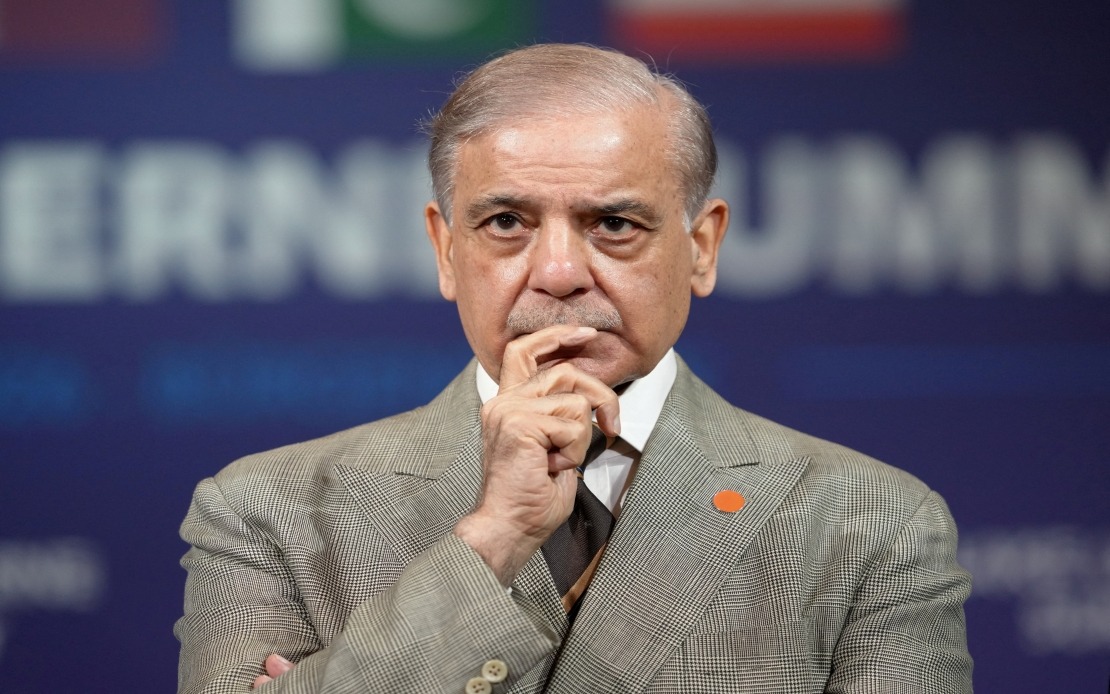
Pakistan's Prime Minister Shehbaz Sharif announced on Tuesday that the United States and Iran have established a framework for technical-level negotiations to address longstanding tensions between the two nations. Speaking to lawmakers in the National Assembly in Karachi, Sharif outlined an ambitious timeline in which both countries will tackle the nuclear issue, frozen Iranian assets, and ballistic missile capabilities over the next 60 days. The statement comes in the wake of what Pakistani officials characterise as "successful" preliminary talks held in Switzerland, marking a potential turning point in decades of US-Iran hostility.
At the centre of this emerging diplomatic initiative lies the Islamabad Memorandum of Understanding, signed by the US and Iran on June 17 with Pakistan serving as a formal mediator. Sharif told the assembly that the MoU represents a foundational agreement, but the true test will come during the upcoming technical discussions where both nations must iron out substantive details on three critical fronts. The Prime Minister expressed optimism that the preliminary accord could evolve into a permanent, comprehensive agreement within the designated 60-day period, suggesting that both capitals have demonstrated sufficient willingness to engage seriously.
The broader geopolitical significance of Pakistan's mediation role cannot be understated for regional observers. Islamabad has positioned itself as an indispensable intermediary in a conflict that has shaped Middle Eastern politics for over four decades. By co-hosting and co-signing the agreement, Pakistan has elevated its diplomatic standing and demonstrated its capacity to facilitate dialogue between adversarial powers. For Southeast Asian nations and particularly Malaysia, which maintains its own diplomatic relationships across the Muslim world, Pakistan's success in this arena offers lessons in shuttle diplomacy and the importance of trusted neutral parties in resolving intractable disputes.
However, complications emerged almost immediately from Tehran's camp. Iran's Foreign Ministry spokesman Esmaeil Baghaei moved quickly to clarify Iran's position, specifically rejecting any suggestion that its ballistic missile programme formed part of the recent Switzerland discussions. This distinction matters considerably because it signals that while Iran has agreed to negotiate on nuclear matters and asset disputes, it views its missile capabilities as outside the negotiating scope. Baghaei's statement suggests that Iran intends to maintain strategic ambiguity regarding its defence systems, even as it reopens dialogue with Washington on other fronts.
More significantly, Tehran made explicit its refusal to grant International Atomic Energy Agency inspectors access to nuclear facilities that had been targeted during recent military operations. This position indicates that Iran's nuclear transparency will have clear limits. The question of which facilities remain off-limits to international monitors could prove contentious during the 60-day window, particularly if the US and its allies push for comprehensive inspection regimes as a condition for sanctions relief or asset unfreezing. The issue touches on core questions of national sovereignty and security that resonate throughout the developing world, including Malaysia and other ASEAN members that have historically championed non-interference doctrines.
The Burgenstock talks in Switzerland concluded early Monday with both delegations signalling progress on procedural mechanisms designed to facilitate further negotiations. Switzerland's role as a neutral venue for sensitive talks reflects a longstanding diplomatic tradition, and the involvement of Qatar alongside Pakistan as mediators demonstrates how multiple regional players now have stakes in a successful resolution. This multilayered mediation structure could actually strengthen the negotiation process by ensuring that various regional perspectives inform discussions and that no single party can easily claim to have been sidelined.
The 60-day timeline announced by Sharif carries both promise and peril. On one hand, it creates pressure on both negotiating teams to move beyond posturing and address substantive issues. The urgency implicit in such a compressed schedule often focuses minds and reduces the opportunities for endless procedural wrangling. On the other hand, attempting to resolve three major issue clusters—nuclear weapons arrangements, asset unfreezing, and missile programmes—in two months presents a formidable challenge. Historical precedent suggests that comprehensive international agreements typically require significantly longer negotiation periods, raising questions about whether this timeline reflects genuine confidence or optimistic thinking.
For Malaysia and the broader Southeast Asian region, the outcome of these US-Iran talks carries practical implications beyond symbolism. Any agreement that leads to sanctions reduction could alter trade dynamics in the Middle East and potentially affect regional shipping lanes and economic corridors that Asian nations rely upon. Additionally, a successful negotiated settlement would reinforce the principle that dialogue and mediation can overcome even seemingly insurmountable geopolitical divides—a principle relevant to various Asian regional disputes. Conversely, if these talks collapse, the region faces the prospect of renewed instability in the Middle East with potential ripple effects on energy prices and security.
The divergence between Pakistani optimism and Iranian hedging on missile issues suggests that significant work remains even during these technical discussions. Pakistan's framing of the frozen assets and nuclear questions as potentially solvable within 60 days may reflect Islamabad's desire to claim diplomatic victory, but Iran's resistance on the missile front indicates Tehran will not accept constraints on its defence capabilities as part of any settlement. Reconciling these positions will require creative compromise, possibly through phased implementation or confidence-building measures that address mutual security concerns without requiring either side to surrender essential strategic assets.
Looking ahead, the success of this negotiating framework will depend heavily on whether both countries can translate their preliminary agreement into concrete technical arrangements. The appointment of capable negotiating teams, the establishment of clear benchmarks for progress, and mechanisms for resolving disputes during the 60-day period will all prove crucial. Pakistan's continued mediation role, potentially alongside Qatar, suggests that both nations are prepared to invest diplomatic capital in shepherding this process to conclusion. For regional observers in Southeast Asia, the next 60 days represent a critical window in which to monitor how great power diplomacy evolves in the Middle East—a region whose stability continues to influence global economic and security conditions that touch all corners of Asia.

