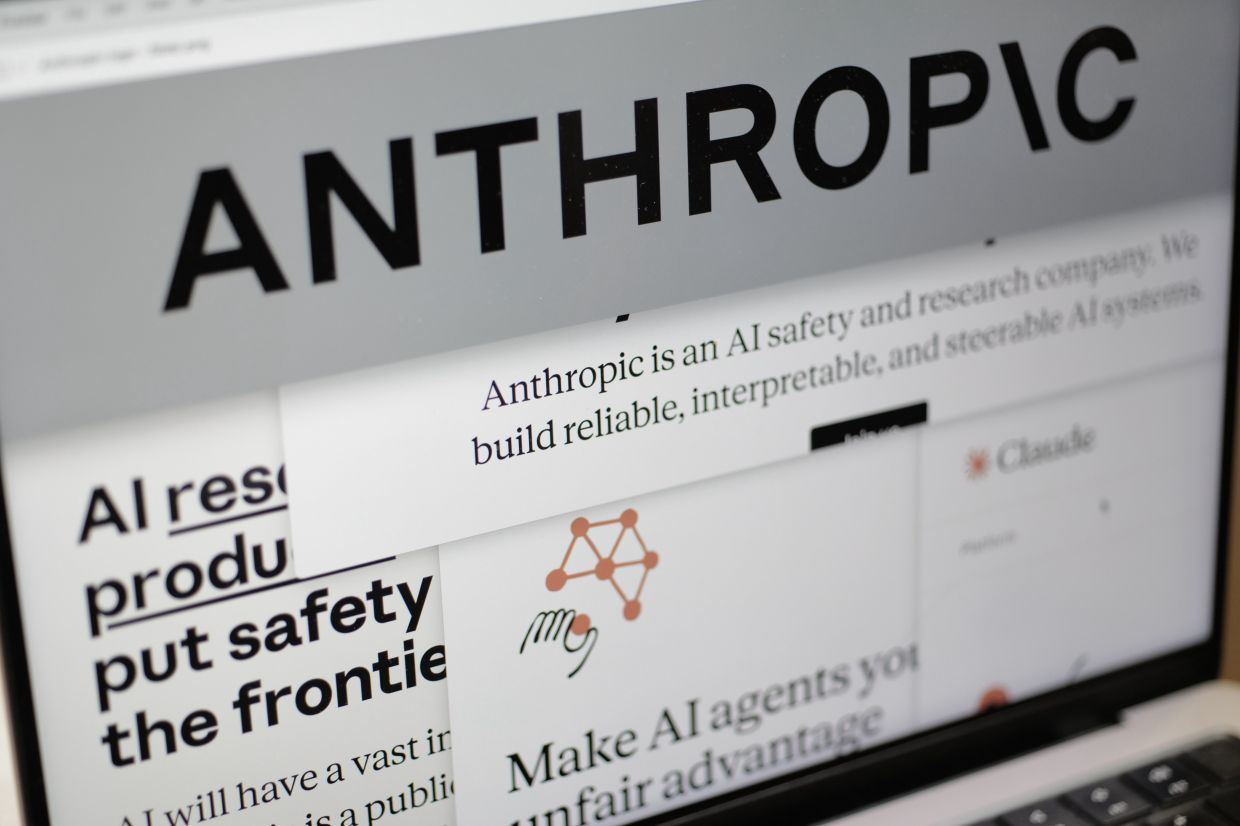
A legal technology startup has become the first company to challenge sweeping American export controls on advanced artificial intelligence, filing suit against federal authorities after losing access to Anthropic's cutting-edge models. Legion, which develops software tools for lawyers, initiated proceedings on June 23 in federal court in Washington, naming Commerce Secretary Howard Lutnick as a defendant. The case marks an early test of how restrictive US AI export policies will withstand legal scrutiny when applied to ostensibly domestic firms hampered by their international workforce composition.
The dispute centres on Anthropic's decision to disable access to Fable 5 and Mythos 5 — the company's most sophisticated artificial intelligence models — in response to a Trump administration directive restricting export of advanced technology. Although Legion operates from the United States, the company employs software developers who hold Canadian citizenship and work remotely from Canada. Under the new regulatory framework, Anthropic determined it could not legally provide Legion with access to these restricted models given the presence of foreign nationals on the engineering team, regardless of their location outside sensitive infrastructure or government facilities.
Legion's filing characterises the sudden severance as catastrophic to its business model and long-term viability. The company argues that losing immediate access to Fable 5 represents losing "the latest tool at the centre of its development instantaneously," creating what it describes as "immediate, irreparable and existential" harm. This language reflects a crucial reality in contemporary technology development: artificial intelligence models are not static tools that can be recreated or replaced through internal effort alone. Rather, they represent the frontier of what is technically possible, and access determines competitive positioning.
The pace of AI capability advancement has created genuine economic dependencies. Legion contends that the velocity of innovation in the sector means that any temporary disadvantage — even weeks or months without access to the most advanced models — translates into permanent competitive loss. When competitors maintain uninterrupted access to cutting-edge systems, they accumulate advantages in product development, feature deployment, and market positioning that cannot be recovered once the gap widens. This dynamic explains why Legion frames the restriction not merely as an inconvenience but as an existential threat.
Anthropc's response to the government directive reveals the practical tensions embedded in export control enforcement. The company issued a statement expressing gratitude toward the administration for attempting to resolve the situation expeditiously, while reaffirming commitment to working with government on shared objectives around critical infrastructure protection and American technological leadership. This diplomatic positioning suggests Anthropic faces pressure from multiple directions: complying with government orders while managing relationships with customers harmed by compliance, all while maintaining its reputation as a responsible AI developer.
Commerce Secretary Howard Lutnick had previously warned Anthropic CEO Dario Amodei in a formal letter that the company required explicit government permission before exporting Fable 5 and Mythos 5 outside United States territory or providing access to foreign nationals anywhere. The letter's specificity — naming the particular models and their geographic and personnel restrictions — indicates the government has designated these systems as sensitive dual-use technology warranting control equivalent to certain military or cryptographic exports.
For Malaysian and Southeast Asian observers, this dispute carries significant implications. The case demonstrates how American export controls on AI, ostensibly justified by national security concerns, create practical barriers that affect companies operating globally or employing international talent. Many regional technology firms, particularly those headquartered in developed markets but serving clients or maintaining offices across Southeast Asia, could face similar restrictions. The principle that foreign national employees — even those working outside the US — disqualify access to advanced American AI systems represents a major structural change to how international technology collaboration functions.
The lawsuit may also signal how such controls will be legally tested and challenged. If Legion prevails in arguing that blanket restrictions cause irreparable commercial harm disproportionate to any genuine security risk, courts might impose modifications requiring individualized assessment rather than categorical bans. Conversely, if the government succeeds in defending the controls, it establishes powerful precedent for broader restrictions that could reshape the technology industry's international operations across the region.
The timing of the challenge — less than two weeks after the restrictions took effect — suggests this case may be merely the first of multiple legal proceedings. Other affected companies may be monitoring the outcome before launching their own challenges. The financial stakes are substantial: Legion claims daily operational disruption, sidelined engineers, and eroding survival prospects in a highly competitive field. These damages accumulate exponentially when measured across the sector-wide effects of such controls.
Underlying this specific dispute lies a broader geopolitical question about how nations will manage artificial intelligence development in an era of competing technological powers. Export controls represent a traditional tool for maintaining advantage, but applying them to software and computational capabilities creates novel challenges compared to physical goods or manufacturing technology. The Legion case will likely influence how subsequent administrations calibrate these controls and whether courts will impose constraints on their scope or application.

