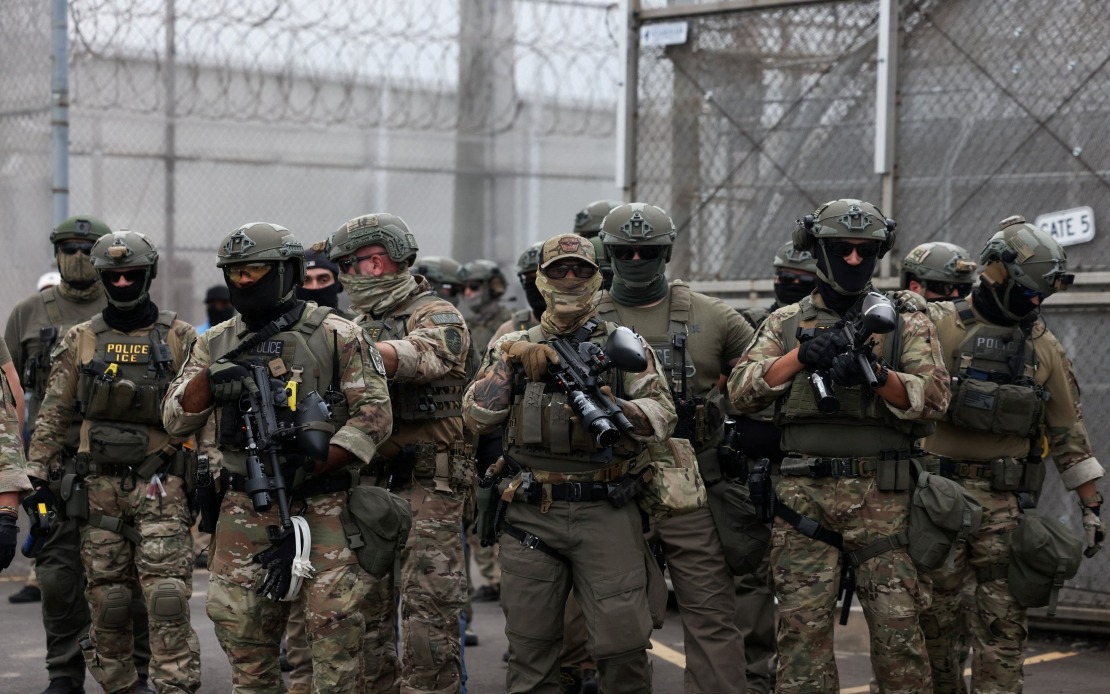
A federal judge in California has issued a nationwide order preventing Immigration and Customs Enforcement officers from conducting arrests at immigration courthouses, delivering a significant legal blow to the Trump administration's aggressive deportation enforcement strategy. The ruling comes as the administration has intensified its immigration crackdown following the start of Trump's second term in office.
The judicial decision effectively halts a contentious practice that allowed ICE agents to apprehend migrants both inside courtrooms and in adjacent areas of immigration court facilities. This enforcement tactic became more widespread following new agency guidelines introduced at the beginning of Trump's current term, which framed courthouse arrests as beneficial to immigration enforcement objectives. The practice had generated considerable controversy among civil rights advocates, legal organisations, and immigration attorneys who argued it fundamentally compromised the integrity of judicial proceedings.
Immigration courthouses serve as venues where individuals facing potential deportation present their cases before judges. The use of courthouse arrests meant that migrants could be taken into custody even before their legal hearings concluded, creating a chilling effect on court attendance. Defenders of the policy argued it enhanced enforcement efficiency, but critics contended the strategy effectively discouraged vulnerable individuals from appearing in court to contest removal orders or present evidence of their eligibility to remain in the country.
The federal judge's reasoning centred on procedural deficiencies in how the Trump administration implemented its new approach. In the court's assessment, Immigration and Customs Enforcement failed to provide adequate rationalisation for departing from prior enforcement practices. The agency did not adequately examine potential harms flowing from the policy change, including concerns about undermining migrants' willingness to participate in legal proceedings. Without such analysis, the court determined the revised guidelines lacked sufficient legal grounding and exposed the government to successful constitutional challenge.
This ruling carries substantial implications for the broader American immigration system. Immigration courts already operate under significant backlogs, with hundreds of thousands of pending cases. A policy that discourages attendance would further delay case resolution and create additional administrative burden. The court's decision reflects judicial concern that enforcement tactics cannot override fundamental procedural fairness, even when government officials believe such measures serve legitimate immigration control objectives.
For Malaysia and the Southeast Asian region, this development offers instructive lessons about the role of judicial review in restraining executive immigration enforcement power. While Malaysia maintains different constitutional frameworks and court systems, the principle that immigration authorities must operate within legal bounds while respecting procedural protections has universal resonance. Malaysian courts have similarly grappled with balancing effective enforcement of immigration law against individual rights, suggesting this US precedent may find resonance among regional jurists examining their own immigration policies.
The Trump administration's apparent strategy has involved testing the boundaries of what courts will permit in immigration enforcement. New guidelines introduced at the start of the second term appeared designed to expand ICE operational authority. However, the California court's decision demonstrates that federal judges retain meaningful power to check such expansions when agencies fail to provide adequate legal justification. This principle—that government action requires reasoned explanation and consideration of adverse effects—remains foundational to American administrative law.
Immigration advocacy groups have characterised the ruling as a victory for due process and constitutional rights, arguing that courthouse arrests fundamentally corrupted the judicial system by creating conditions where vulnerable individuals cannot safely access courts. These organisations documented cases where migrants abandoned legitimate asylum claims or other defences rather than risk immediate detention. The ruling acknowledges these concerns carried legal weight in the judge's analysis.
The decision also highlights internal government tensions regarding immigration enforcement philosophy. Career ICE officials and legal advisors apparently raised concerns about courthouse arrests, which the agency's new guidelines attempted to overcome through changed policy rationale. The court's decision suggests that simply reasserting an enforcement rationale does not suffice when substantive legal objections remain unaddressed. This reflects broader administrative law principles requiring agencies to respond meaningfully to identified concerns when revising established practices.
Looking ahead, the Trump administration may pursue appellate review, potentially seeking to overturn the California judge's ruling through higher court proceedings. Such appeals would likely focus on whether immigration enforcement efficiency concerns outweigh procedural protections, a fundamental question about how immigration systems should operate. Whether appellate courts accept or reject these arguments will substantially shape American immigration enforcement for the coming years.
For migrants themselves, particularly those navigating the immigration court system, the ruling offers immediate practical protection. Individuals can now attend hearings without facing arrest at the courthouse, removing a major barrier to pursuing legal remedies. This may increase court attendance rates, allowing judges to hear cases more completely and potentially reaching more legally sound decisions based on full factual presentation.

