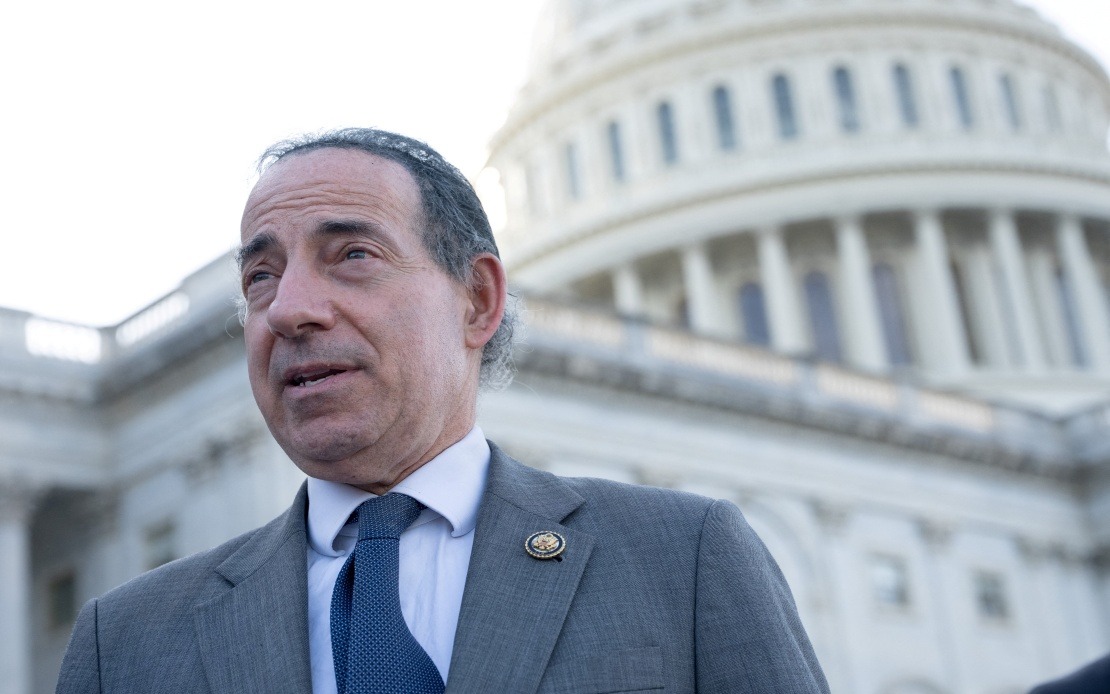
A prominent Democratic member of the United States House of Representatives has launched a formal investigation into FIFA, claiming the international soccer federation pursued favourable political treatment from the Trump administration in exchange for benefits to the president and his associates. Rep. Jamie Raskin, who holds the ranking position on the House Judiciary Committee, sent correspondence to FIFA President Gianni Infantino on Sunday detailing the scope of the inquiry and demanding cooperation from the organisation.
Raskin's investigation centres on what he characterises as a "sustained campaign" by FIFA to obtain preferential handling from the White House, allegedly including efforts to halt high-profile corruption prosecutions that the US Justice Department had previously brought against the global soccer governing body. The congressman has framed these interactions as a quid pro quo arrangement, arguing that FIFA leveraged its influence to secure political favours while offering benefits in return.
A particularly contentious element of the alleged arrangement involves FIFA's World Cup ticketing practices. According to Raskin's letter, the organisation deployed controversial sales mechanisms including dynamic pricing models, price escalations, and policies permitting the downgrade of seating assignments after consumers had completed their purchases. Raskin contends these practices constitute illegal price manipulation and fraudulent commercial conduct perpetrated against ticket purchasers.
The historical context proves significant for Southeast Asian readers, particularly given Malaysia's own experiences with international sports governance and FIFA regulations. Prior Justice Department investigations had uncovered an extensive international bribery scheme centred on soccer media rights, resulting in the recovery of evidence documenting more than US$200 million in bribes and kickbacks. These illegal payments involved defendants from more than two dozen countries spanning multiple continents. Despite securing convictions in certain prosecutions, Raskin alleges that the Trump administration subsequently abandoned these cases, effectively freeing convicted individuals.
Raskin's inquiry will extend to examining FIFA's internal governance structure during Infantino's tenure as president. The congressman has specifically alleged that FIFA systematically weakened its internal ethics oversight mechanisms while simultaneously expanding its relationship with the Trump administration. This pattern suggests a deliberate strategy to limit accountability within the organisation while pursuing political connections that could shield it from regulatory scrutiny.
The investigation encompasses several investigative streams. Raskin is demanding access to documentation concerning any gifts, monetary transfers, or other valuable considerations that FIFA or its representatives allegedly provided to Trump or individuals within his immediate circle. Additionally, the committee seeks records detailing FIFA's communications and interactions with various US government officials, particularly those in positions to influence prosecutorial or regulatory decisions affecting the organisation.
Ticketing operations represent another major focus. Beyond examining pricing strategies, investigators will scrutinise the justifications FIFA offered for its commercial policies and any evidence indicating systematic deception of consumers. The congressman has also requested access to visitor logs for FIFA's office located within Trump Tower in New York, suggesting investigators believe face-to-face meetings between FIFA representatives and Trump or his associates may have occurred in that venue.
Raskin has formally requested that Infantino himself appear before the House Judiciary Committee for a recorded interview while the FIFA president is physically present in the United States. This demand signals that congressional Democrats view the matter with sufficient gravity to require direct testimony from the world soccer body's chief executive. The deadline for scheduling this interview has been set for 5.00 pm on August 9, 2026, indicating the committee's intention to proceed expeditiously with its investigation.
The allegations carry implications beyond the US political sphere. FIFA's operations affect member nations globally, including Malaysia and other Southeast Asian countries. Any corruption within FIFA's governance structures could undermine the integrity of international competitions and the fairness of tournament hosting decisions. Malaysian football enthusiasts and administrators should recognise that investigations into FIFA's ethical conduct potentially affect decisions regarding World Cup participation, qualification procedures, and the distribution of tournament opportunities across regional confederations.
The timing and nature of these allegations also reflect broader concerns within the US Congress regarding the Trump administration's approach to international governance and anti-corruption enforcement. By framing FIFA's alleged misconduct as occurring within the context of Trump administration cooperation, congressional Democrats are positioning this investigation as part of a larger narrative about selective enforcement and potential conflicts of interest.
Furthermore, the focus on dynamic pricing and ticket fraud connects to consumer protection concerns that resonate across diverse markets. Malaysians who have purchased tickets for international sporting events may recognise similarities to pricing practices they have encountered. The investigation thus touches upon ordinary consumer interests alongside elite political considerations, potentially generating public attention across income levels and educational backgrounds.
The investigation's outcome remains uncertain, but its initiation signals that congressional Democrats view the evidence sufficiently compelling to warrant formal inquiry. Should the investigation uncover substantive wrongdoing, the findings could reshape FIFA's regulatory environment and influence how international sports bodies conduct commercial operations. For Malaysian stakeholders in soccer governance, this investigation represents a significant development in the ongoing effort to establish accountability and transparency within global sports institutions.

