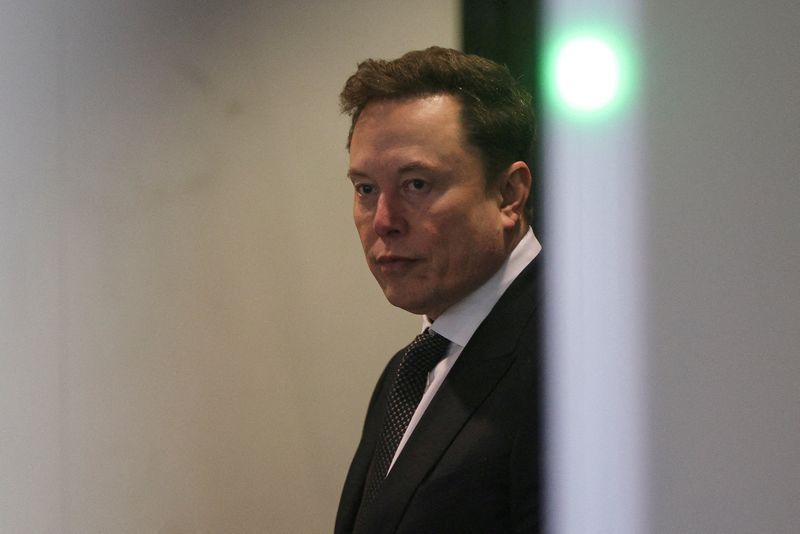
A US federal judge has given her approval to the Securities and Exchange Commission's settlement with Elon Musk regarding his acquisition of Twitter shares, though not without articulating substantial reservations about the deal's fairness and the regulatory process that led to it. U.S. District Judge Sparkle Sooknanan in Washington, D.C., granted the consent judgment while making clear that she harboured fundamental doubts about whether the agreement amounted to appropriate enforcement action or instead represented what she termed a potential mockery of judicial authority. Her written decision highlighted tensions between deference to regulatory settlements and the court's obligation to ensure such agreements serve the interests of justice.
At the heart of the regulatory dispute lies an allegation that Musk delayed disclosing his early purchases of Twitter shares by eleven days in March and April 2022. The SEC maintains this delay was deliberate and provided Musk with a substantial financial advantage, allowing him to accumulate shares at depressed prices before the market gained knowledge of his accumulating stake. The regulator calculated that this delayed disclosure generated approximately $150 million in gains for Musk, who would go on to purchase the entire platform for $44 billion in October 2022. Musk has consistently characterised the disclosure delay as unintentional, and ultimately the SEC accepted this explanation as part of the settlement framework.
The settlement arrangement requires a trust in Musk's name to pay $1.5 million to resolve the SEC's enforcement claims. While the SEC defended this figure as the largest penalty of its type, Judge Sooknanan's concerns extended well beyond the quantum of the fine itself. She questioned why the SEC had not pursued disgorgement—the mechanism by which regulators typically recover illicit profits on behalf of harmed investors. The judge noted that while the SEC's argument about historical precedent might have merit, it raised awkward questions about the wisdom of settling the case at all if comparable violations typically resulted in more punitive approaches. This discrepancy suggested to the court that Musk may have received accommodation not extended to other securities law violators.
A particularly troubling aspect of the settlement, from the judge's perspective, involved its structure and the messaging it enabled. By directing payment through a trust vehicle rather than from Musk personally, the arrangement permitted the billionaire to publicly declare vindication and claim he had been cleared of wrongdoing—a distinction that carries significant reputational value beyond the financial penalty. Judge Sooknanan found this outcome conceptually problematic, noting that the settlement appeared to shield Musk from personal accountability despite the seriousness of the alleged violation. The judge emphasised that courts approving such settlements cannot function as mere rubber stamps, passively accepting whatever arrangement regulators and defendants negotiate, yet they also lack the broader mandate of an ombudsman conducting independent investigations into regulatory propriety.
The timing and circumstances surrounding the settlement further fuelled the judge's scepticism. The agreement was announced in May 2024, following the departure of SEC enforcement chief Margaret Ryan, who had served in that role for only six months before exiting amid disagreements with agency leadership over enforcement priorities. This sequence raised questions about whether the settlement reflected a policy shift within the agency, or whether enforcement lawyers actively litigating the case had been sidelined from these negotiations. During a prior court hearing in May, SEC counsel had appeared genuinely surprised when Musk's lawyers disclosed the existence of settlement discussions, suggesting that the legal team prosecuting the case may not have been driving the negotiation process.
Judge Sooknanan articulated deep concern about whether this settlement represented a singular accommodation designed specifically for Musk or whether the SEC would extend comparable flexibility to other defendants facing similar allegations. Her written decision repeatedly returned to this question of differential treatment, noting that courts must question whether regulatory agencies are applying consistent standards across cases or instead offering preferential arrangements to particular parties. The judge's scepticism was sharpened by the fact that Musk maintains well-documented business relationships with the Trump administration—he served as an informal adviser to President Donald Trump, and his companies have received or sought federal contracts. Judge Sooknanan, appointed to the bench by former President Joe Biden, appeared conscious of potential political dimensions to the enforcement process.
The SEC's formal response to these judicial concerns emphasised that the settlement did not result from any improper collusion between agency staff and Musk's legal representatives. The regulator additionally argued that the public interest was adequately served by an injunction that effectively constrains Musk's future actions when operating through the trust structure, which the SEC characterised as the primary vehicle through which he manages his substantial wealth holdings. This argument suggested that the settlement's real value lay not in financial penalties but in prospective behavioural constraints on one of the world's most influential business figures. Nevertheless, the SEC declined to offer detailed comment beyond its formal court filing, declining an opportunity to address the judge's specific concerns about consistency and preferential treatment.
Elon Musk's extraordinary wealth and business prominence lend additional complexity to this regulatory matter. The Tesla founder and SpaceX proprietor is valued at approximately $927.2 billion according to Forbes magazine, making him consistently the world's richest person. His various enterprises span electric vehicles, commercial spaceflight, satellite communications, and since October 2022, the social media platform formerly known as Twitter, now rebranded as X. The sheer scale of his financial interests and the importance of these companies to both the US economy and global technology markets mean that regulatory enforcement decisions affecting him carry implications beyond typical securities violations. This reality likely contributed to Judge Sooknanan's evident concern that settlement negotiations may have been influenced by considerations other than standard enforcement principles.
For Malaysian and Southeast Asian readers, this case illustrates broader questions about regulatory coherence and the exercise of enforcement discretion in major developed economies. The Twitter acquisition itself had regional ramifications, given the platform's importance to public discourse, business communications, and political debate across Asia. Musk's subsequent operational decisions regarding content moderation and feature development affected millions of users in Malaysia and neighbouring countries. The regulatory treatment of the billionaire by US authorities therefore carries indirect consequences for regional stakeholders, beyond the immediate question of securities law enforcement. The judge's concerns about consistency and potential preferential treatment reflect universal governance challenges that resonate across jurisdictions committed to rule of law principles.
The settlement's approval despite judicial misgivings underscores an enduring tension in regulatory capitalism: the balance between practical dispute resolution and rigorous enforcement that deters future violations. Judge Sooknanan's decision grants formal approval while simultaneously placing on record serious questions about whether the SEC exercised its enforcement mandate appropriately. This approach preserves the settlement's validity while ensuring that the judiciary has not passively endorsed an arrangement it viewed with significant reservations. The judge's written opinion essentially invites further scrutiny of SEC enforcement practices and invokes the citizenry's role at the ballot box as a check on executive branch regulatory decisions—a notably candid acknowledgment that courts sometimes must approve outcomes they find troubling, leaving broader accountability questions to democratic processes rather than judicial intervention.

