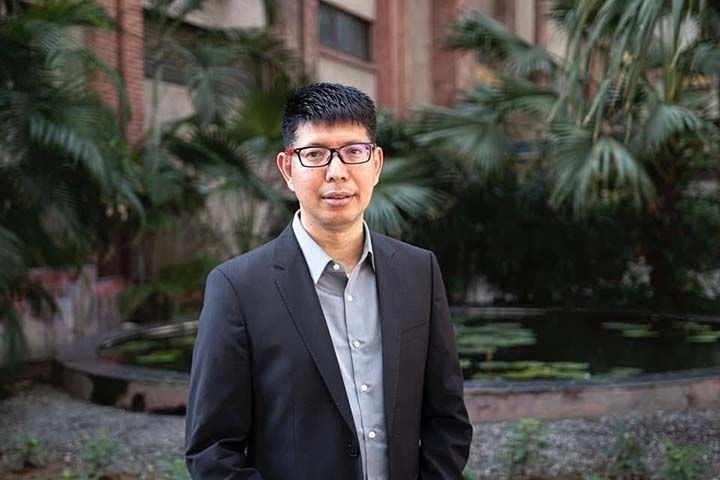
An American academic studying Myanmar was in the southwestern Chinese city of Kunming solely to participate in an academic workshop when he was detained in early June, according to the think tank he founded, which has called for his immediate and unconditional release. The detention of Min Zin, executive director of the Institute for Strategy and Policy (ISP) - Myanmar, has drawn scrutiny as tension mounts over China's handling of foreign researchers and analysts working on sensitive geopolitical issues in the region.
China's foreign ministry confirmed last week that Min Zin had been arrested on suspicion of espionage and threatening national security, marking an unusual move against a scholar engaged in ostensibly legitimate academic pursuits. The think tank responded swiftly with a statement rejecting what it characterised as groundless allegations, emphasising that the detained scholar was undertaking routine research activities at the time of his arrest on June 3. The incident has highlighted the precarious position of foreign academics operating in China and studying neighbouring countries with significant strategic importance to Beijing.
The timing of Min Zin's detention is noteworthy, occurring weeks before Myanmar's junta chief-turned-president Min Aung Hlaing embarked on a scheduled five-day state visit to China. This proximity suggests the detention may have been coordinated with broader diplomatic considerations, though China has not directly linked the two events. The visit underscores the deepening relationship between Beijing and Myanmar's military government, which seized power in February 2021 by ousting the democratically elected administration led by Aung San Suu Kyi and triggering a cascade of political upheaval across the nation.
The United States State Department has firmly rejected China's allegations against Min Zin, indicating that American consular officials have visited the detained scholar and that the department is actively engaging with Chinese authorities to provide appropriate support. This diplomatic pushback reflects Washington's concern about the precedent such detentions may set for foreign academics and researchers working on East and Southeast Asian affairs. The response also demonstrates the broader friction between Washington and Beijing over freedom of research and the movement of scholars across borders, particularly those studying China or its regional interests.
Min Zin's background offers context for understanding why his work may be viewed as sensitive by Chinese authorities. As a veteran of Myanmar's 1988 democracy movement, having participated in pro-democracy uprisings as a student activist, he brings decades of experience in political activism and analysis. His educational credentials include studies in political science at the University of California, Berkeley, establishing him as part of the Western academic establishment while maintaining deep roots in Myanmar's political history and civil society movements.
The Institute for Strategy and Policy that Min Zin helped establish has become an increasingly influential voice on Myanmar's trajectory since the 2021 coup. Originally operating from within Myanmar, the think tank relocated overseas following the military takeover, reflecting the hostile environment for independent analysis and research in the country under junta rule. Operating from abroad has allowed ISP-Myanmar to maintain its analytical independence while monitoring the unfolding political and military crisis with growing urgency as the situation has deteriorated across multiple fronts.
The research output of ISP-Myanmar provides insight into why Chinese authorities might view the organisation's work as problematic. The think tank's publications have systematically examined the armed conflict consuming Myanmar, analysed the country's economic deterioration under military management, and scrutinised trade relationships and bilateral dynamics between Naypyidaw and Beijing. This analytical focus on Myanmar's relationship with China could be perceived as threatening by authorities in Beijing who maintain significant investments and strategic interests in Myanmar's stability and governance trajectory.
The detention also reflects the broader security environment surrounding Myanmar's prolonged political crisis. Since the 2021 coup, the country has descended into multifaceted conflict involving a nationwide armed uprising that has united newly mobilised pro-democracy resistance groups with longstanding ethnic armed organisations. These disparate forces have challenged the military's authority across extensive territories, transforming what began as protests against the coup into a sustained armed struggle. China's role in this conflict and its relationship with Myanmar's military leadership remains a critical geopolitical question, precisely the kind of issue that researchers like Min Zin examine in their work.
The ISP-Myanmar's statement emphasising the importance of academic freedom carries particular weight given the constraints on research and commentary within Myanmar itself. The think tank has stressed that research and analysis organisations must be able to conduct their work without facing intimidation or arbitrary detention. This principle resonates across Southeast Asia, where scholars and analysts increasingly navigate complex relationships between governments, security concerns, and the imperatives of independent research on sensitive regional questions.
For Malaysian and regional observers, Min Zin's case underscores the vulnerability of academic institutions studying geopolitical developments in Asia. Scholars examining China's regional relationships, military activities, or the political trajectories of neighbouring countries operate within a constrained space where research interests may intersect with official security concerns. The detention raises questions about the environment for think tanks and research organisations throughout Southeast Asia, particularly those investigating bilateral relationships or military matters with implications for China's strategic position.

