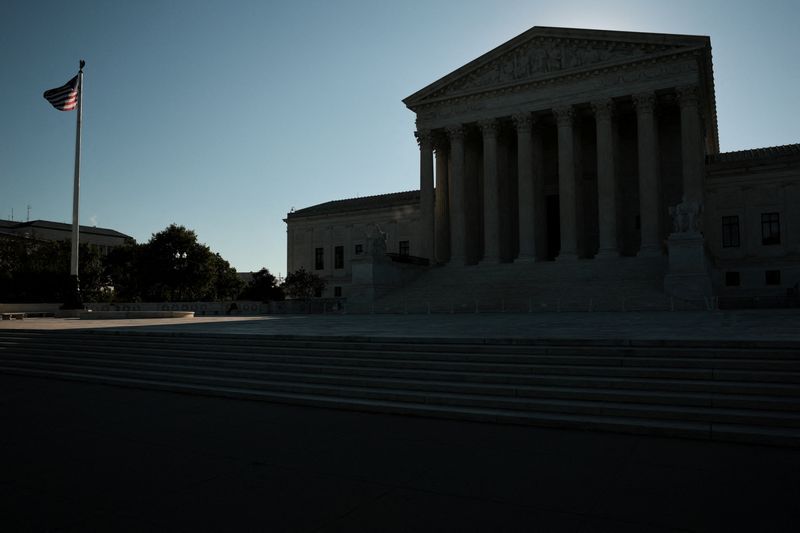
The US Supreme Court has declined to review Tata Consultancy Services' challenge to a substantial $168 million damages award in a trade secrets litigation, marking the end of the Indian technology giant's legal efforts to overturn the penalty. The decision, announced on Monday, upholds findings that the company illegally obtained and exploited confidential information belonging to DXC Technology, a Virginia-based software firm, to develop a competing life-insurance platform.
The roots of the dispute trace back to the 1990s, when DXC's predecessor company, Computer Sciences Corp (CSC), had licensed sophisticated life-insurance software to the financial services provider Transamerica. Years later, DXC initiated legal action in Dallas federal court in 2019, contending that Tata had systematically recruited approximately 2,200 former Transamerica employees and leveraged their intimate knowledge of CSC's proprietary technology to construct a rival system. By bringing these employees into its fold, Tata allegedly gained access to valuable trade secrets and competitive intelligence that would otherwise have taken considerable time and resources to develop independently.
Tata's defense centred on two core arguments: first, that the information in question did not qualify as protected trade secrets under applicable law, and second, that any access to the software and related knowledge occurred through lawful channels. The company disputed the fundamental premise that it had engaged in unauthorised appropriation of confidential material, seeking to reframe the facts as legitimate business practices within the technology outsourcing industry's normal operations.
The legal proceedings unfolded through multiple stages. A jury in 2023 delivered an advisory verdict—a recommendation to the presiding judge rather than a binding decision—recommending that Tata pay $210 million in damages for wilfully misappropriating DXC's trade secrets. US District Judge Brantley Starr subsequently reduced this figure to $168 million in 2024, comprising $56 million in compensatory damages intended to reimburse DXC's losses and $112 million in punitive damages designed to deter similar misconduct. The Fifth Circuit Court of Appeals, based in New Orleans, examined the case in 2025 and found no legal error in Starr's reasoning, thereby affirming the reduced award.
A crucial legal issue underpinning the dispute concerns how US trade secrets law allocates damages. The relevant statute permits courts to award monetary compensation on two independent grounds: recovery of actual losses suffered by the victim of theft, and recovery of the wrongdoer's unjust enrichment—essentially, profits or advantages gained through unlawful conduct. The $168 million judgment was calculated entirely on the unjust enrichment basis, without requiring proof that DXC sustained quantifiable harm.
Tata's petition to the Supreme Court specifically challenged this methodology, arguing that awarding unjust enrichment damages without demonstrating actual losses violated fundamental principles of contract and tort law. The company contended that such an approach allowed plaintiffs to recover excessive compensation divorced from real-world economic consequences. Additionally, Tata claimed the punitive component of the award—the $112 million intended to punish willful conduct—was disproportionate and lacked rational justification under established constitutional standards governing excessive penalties.
DXC countered by asserting that the appellate court had correctly applied settled legal principles to the specific facts presented. The company maintained that nothing in the lower courts' reasoning warranted the Supreme Court's intervention or reconsideration of established doctrine. This position reflected confidence that the legal theory underlying the award enjoyed solid precedential support and required no clarification by the nation's highest court.
The Supreme Court's rejection of the petition without comment carries significant implications for the broader technology and business sectors. The decision effectively closes any possibility of relief for Tata through the federal judiciary and validates a damages framework that allows courts to compensate trade secrets victims based on the perpetrator's enrichment rather than solely on the victim's quantifiable losses. For companies operating across borders in technology, business process outsourcing, and knowledge-intensive industries, the ruling reinforces the legal risks associated with hiring personnel from competitors and emphasises the enforceability of trade secrets protection.
For Malaysian and Southeast Asian enterprises, many of which compete in similar technology and business services sectors, the judgment highlights the importance of robust intellectual property safeguards and employee agreements that clearly delineate ownership of proprietary information. The case demonstrates that US courts will impose substantial financial penalties for trade secrets misappropriation, particularly when the defendant's conduct appears wilful and deliberate. Companies in the region that maintain operations or partnerships with American firms should review their practices regarding knowledge transfer, employee mobility, and the legal classification of information systems.
The Tata litigation also underscores evolving standards in how courts evaluate damages in intellectual property disputes, moving beyond traditional loss-based calculations towards remedies based on ill-gotten gains. This shift has international ramifications, as American judicial precedents often influence how courts in other jurisdictions approach similar cases. Southeast Asian companies increasingly operating on the global stage may encounter comparable legal theories in disputes across multiple jurisdictions, necessitating careful attention to compliance with international intellectual property norms.
With all avenues of appeal exhausted, Tata must now manage the financial and reputational consequences of the award. The $168 million penalty represents not merely a monetary liability but also a judicial determination of misconduct that shapes how potential partners and clients perceive the company's ethical standards. The Supreme Court's refusal to intervene effectively endorses the appellate courts' findings and suggests that similar cases involving employee recruitment from competitors and alleged knowledge transfer will likely face comparable legal consequences.