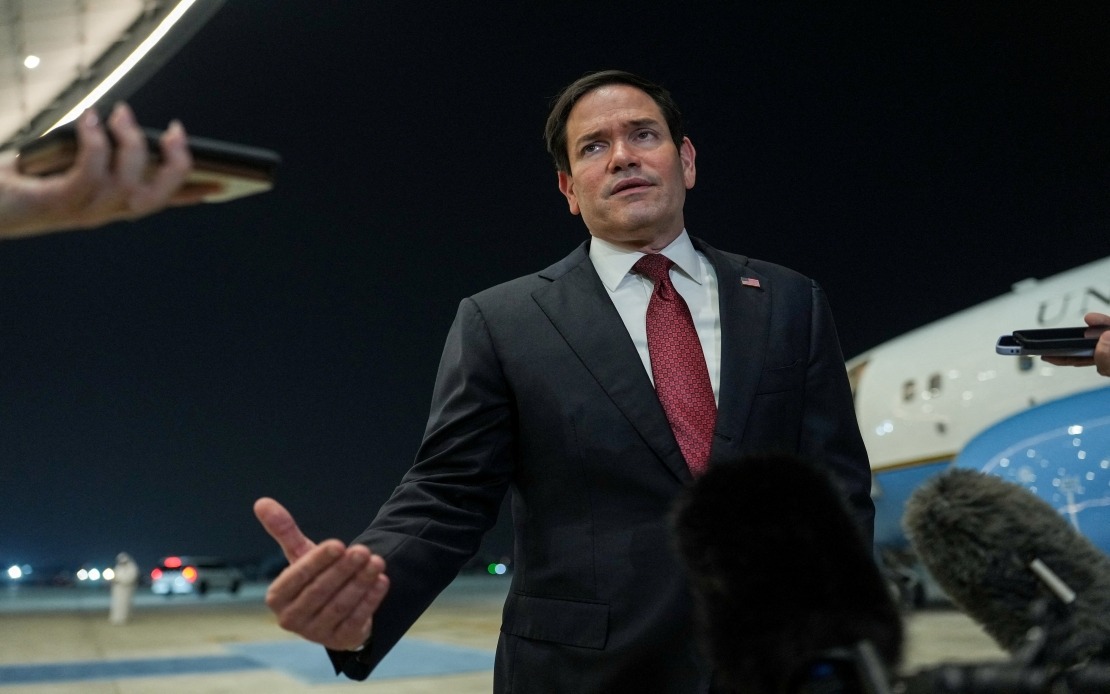
The United States has emphatically distanced itself from any potential reconstruction fund for Iran, according to Secretary of State Marco Rubio, who rejected suggestions that Washington would contribute financial resources to such an initiative. Speaking to reporters on Tuesday, Rubio made clear that while discussions about Iran's economic opportunities may form part of broader diplomatic negotiations, direct US government investment would not materialise. His remarks appear designed to temper speculation about the financial architecture underlying recent diplomatic breakthroughs between Washington and Tehran.
The nature and scope of any reconstruction fund remains deliberately vague at this stage, with Rubio indicating that determining which parties might contribute falls outside the immediate purview of current negotiations. The discussion has been characterised as preliminary and dependent on various conditions being met. By explicitly stating the fund would not be financed by American money, Rubio sought to manage expectations among international observers who have tracked reports about potentially substantial financial commitments accompanying any normalisation agreement between the two adversaries.
The secretary of state suggested that Iran could theoretically pursue its own path toward economic recovery and development if political conditions permitted. However, he framed this possibility as contingent upon broader progress in resolving outstanding security concerns that continue to complicate the relationship between Washington and Tehran. The implication is clear: economic opportunities would flow only after substantive demonstrations of commitment to security arrangements and other provisions of any finalised agreement.
Rubio's comments arrive in the context of intensive diplomatic activity between the United States and Iran. Last week, President Donald Trump publicly dismissed reports that a reported $300 billion reconstruction fund had been agreed upon, suggesting such figures were premature or exaggerated. This latest statement represents a more nuanced position, neither confirming nor denying the existence of reconstruction discussions but rather clarifying America's own financial posture.
Recent negotiations have taken place in Switzerland, where representatives from both nations met with Qatar and Pakistan serving as mediators. The US delegation was led by the administration's Iran envoy, while Iran's parliamentary speaker Mohammad Bagher Ghalibaf headed Tehran's team. Both sides subsequently reported tangible progress, though detailed specifics have remained closely guarded. The talks represent a significant diplomatic development given decades of hostile relations between the two countries.
Complementing these recent discussions, Iran and the United States signed a memorandum last week that formally addressed cessation of military hostilities dating back to February 28. The agreement incorporates specific provisions and timelines, including terms for the US to lift its naval blockade and for Iran to restore commercial shipping operations in the Strait of Hormuz. These measures hold particular significance for regional commerce and global energy markets, given the waterway's critical importance to international trade.
Crucially, the memorandum also addresses the longstanding dispute over Iran's nuclear programme. Under the agreement's framework, Iran commits to not acquiring nuclear weapons, with the substantive details of such arrangements to be negotiated separately. The parties have established a 60-day window for concluding negotiations on this pivotal matter, suggesting that nuclear provisions remain among the most contentious elements requiring resolution. This timeline adds urgency to already complex discussions spanning multiple technical and political domains.
For Malaysia and broader Southeast Asia, these developments carry implications for regional stability and shipping security. The Strait of Hormuz represents a critical chokepoint through which enormous quantities of oil and natural gas transit annually, making any resolution of Iran-US tensions relevant to energy-dependent economies throughout Asia. Additionally, any reduction in US-Iran tensions could affect regional geopolitics, potentially influencing alignment patterns and security arrangements that Malaysian policymakers monitor closely.
The reconstruction fund question, while appearing primarily financial in nature, actually reflects deeper questions about the scope and nature of any potential normalisation between Washington and Tehran. By clarifying that American government resources would not flow toward Iranian reconstruction, Rubio signals that any agreement would not represent a comprehensive reset of relations, but rather a narrower arrangement focused on containing specific security risks. This distinction matters considerably for understanding the limitations of current diplomatic efforts and their implications for the region's longer-term trajectory.
The involvement of Qatar and Pakistan as mediators underscores the involvement of key regional players with their own interests in US-Iran relations. Both nations maintain complex relationships with each great power, and their role in facilitating these talks reflects their diplomatic influence and desire to influence outcomes affecting regional security. For Malaysia, observing these patterns of mediation and negotiation provides insights into how regional powers position themselves during major geopolitical transitions.
Moving forward, the 60-day timeline for nuclear negotiations represents a critical juncture that will test whether the diplomatic momentum can be sustained. The nuclear issue has historically proven the most difficult to resolve, with disagreements over verification mechanisms, sanctions relief, and programme restrictions generating persistent friction. Successfully navigating these technical and political challenges within the prescribed timeframe would represent a substantial breakthrough, though scepticism remains warranted given the issue's fraught history.

