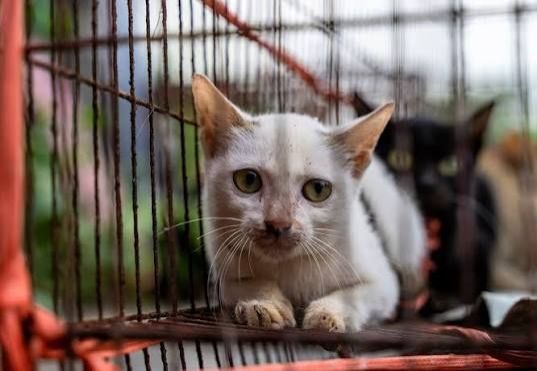
Vietnamese police have dismantled an organised criminal network involved in the systematic theft of cats destined for the underground meat trade, securing the release of over 40 stolen animals back to their owners. The operation, which culminated in raids last week, resulted in nine arrests and the rescue of more than 400 live cats alongside 80 preserved carcasses, according to the Ho Chi Minh City police's official publication. The breakthrough came as authorities intensified efforts to tackle escalating pet thefts across the southern metropolis, with the gang having operated largely unimpeded across the region for three years prior to their capture.
The suspects confessed to employing sophisticated methods to lure and capture cats throughout southern Vietnam, suggesting a well-coordinated operation rather than opportunistic theft. Officers also seized an additional 21 felines from a separate facility linked to the network, pointing to multiple distribution points or holding locations. The scale of the operation—with hundreds of animals at various stages of processing—indicates this was a substantial commercial enterprise rather than isolated criminal activity. The presence of preserved carcasses on ice at the raid sites suggests the group had developed cold chain logistics to supply restaurants and traders across the region.
While domestic consumption of dog and cat meat remains legal in Vietnam, with numerous establishments openly listing such dishes on their menus, the regulatory framework theoretically requires vendors to present documentation certifying the legitimate origin of animals. This requirement creates a gap between law and practice; the systematic theft and black-market sale of stolen pets clearly violates these provisions. The existence of an organised theft ring underscores the inadequacy of current enforcement mechanisms and the market incentives that drive such criminal activity. For consumers in Vietnam and the broader Southeast Asian region, the case raises uncomfortable questions about supply chain transparency in restaurants and food establishments claiming to operate within legal parameters.
The rescue operation represents a significant victory for animal welfare advocates working throughout Southeast Asia, where attitudes toward animal protection vary considerably across the region. Humane World for Animals, which coordinated with authorities following the bust, praised police for their "decisive action" in addressing what it characterised as a life-or-death situation for hundreds of creatures. The organisation's involvement highlights how international animal rights groups increasingly work within local legal frameworks in the region, building relationships with enforcement agencies rather than confronting them. This collaborative approach has proven more effective in Vietnam than purely advocacy-based campaigns, particularly where cultural sensitivities around food traditions require diplomatic navigation.
The emotional dimension of the case extends beyond the successful recoveries. At least 40 of the rescued cats have been returned to their original owners, providing a measure of justice to pet-owners who suffered the loss of beloved companions. For these households, the reunion represents closure after what must have been an agonising period of uncertainty and grief. However, the broader rescue operation revealed the severe toll that theft and captivity exacted on the animals. Approximately 100 of the cats did not survive the ordeal, succumbing to injuries, illness, or the cumulative stress of confinement and mistreatment. This mortality toll underscores the brutality embedded in the supply chain, even before animals reached slaughter facilities.
The ongoing welfare concerns for remaining animals extend beyond the immediate rescue period. Humane World for Animals has flagged serious challenges in maintaining the health and wellbeing of approximately 100 cats still held at police facilities as evidence for the criminal prosecution. These animals, having already endured the trauma of theft and captivity under criminal conditions, now face indefinite detention in what may be inadequate holding conditions. The organisation has moved to address immediate hardships by supplying food provisions and arranging for cooling equipment—fans—to prevent heat-related illness. These interventions, while necessary, represent temporary measures rather than solutions to the systemic problem of caring for large numbers of traumatised animals during extended legal proceedings.
The case carries particular resonance for Southeast Asian pet-owners and animal advocates, as cat theft rings operate in various forms across the region wherever similar market conditions exist. The three-year operational window suggests the criminal network operated with relative impunity until sustained police attention focused on the problem. This timeline raises questions about the visibility of the trade to authorities and the triggers that eventually prompted action. In Malaysia and other regional countries, similar theft operations have been documented, though often receiving less media attention or police resources than this Vietnamese case. The bust therefore provides a useful model for how sustained, coordinated enforcement can dismantle even well-established criminal operations in the pet trade sector.
The convictions—once prosecution concludes—will establish important legal precedent in Vietnam regarding animal theft and trafficking. Nine individuals facing charges represents significant judicial action against organised animal crimes, an area where enforcement has historically been inconsistent or deprioritised compared to other criminal offences. The case demonstrates that such crimes can be investigated with the same rigour applied to other forms of organised theft and distribution. For the region more broadly, successful prosecution sends a message that animal welfare crimes involving organised networks and commercial exploitation are being taken increasingly seriously by law enforcement.
Looking forward, the sustainability of efforts to combat cat theft will depend on whether resources and political will persist beyond this headline-grabbing bust. Animal welfare groups working in Vietnam emphasise that isolated operations, however successful, create only temporary disruption to black markets driven by persistent demand. Addressing the underlying economics requires broader interventions—stronger regulatory enforcement at restaurant and merchant level, consumer awareness campaigns highlighting supply chain opacity, and development of alternative income sources for individuals currently participating in the trade. For Malaysian readers, the case offers both encouragement that organised animal crime can be tackled effectively and a sobering reminder of the scale and sophistication that such operations can achieve when demand remains robust and enforcement capacity remains limited.