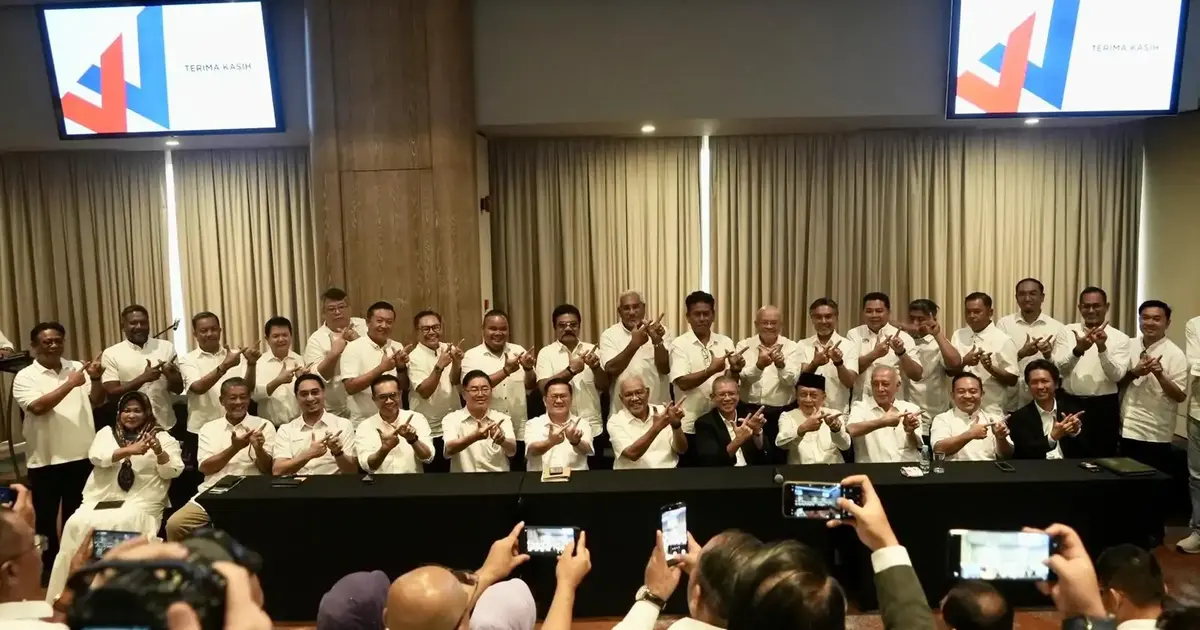
The Perikatan Nasional's election chief has moved to clarify the process behind Wawasan's admission into the opposition alliance, emphasising that the decision emerged from a democratic voting mechanism within the coalition's highest decision-making body. Sanusi's statement addresses mounting tensions within PN following the controversial inclusion of the new political party, underscoring how the coalition's internal governance structures have become a flashpoint for disagreement among member parties.
When presented with the concern that Bersatu, one of PN's founding and most influential components, had raised objections to Wawasan's entry, Sanusi acknowledged these reservations but maintained that the Supreme Council's majority verdict superseded individual party concerns. This distinction between noting an objection and overruling it reflects the inherent friction within multi-party coalitions, where different members may prioritise divergent strategic interests and organisational goals. The framing suggests a formal procedural foundation for the decision rather than backroom consensus-building, which some observers might interpret as transparency, while others could view it as dismissive of dissenting voices.
Bersatu's resistance to Wawasan's membership carries significance beyond procedural disagreement. The party has historically maintained strict control over PN's composition and strategic direction, leveraging its founding status and numerical strength. Any decision that marginalises Bersatu's preferences challenges its traditional veto position within the coalition and potentially signals a shifting balance of power among PN's constituent members. This internal recalibration has implications for how the opposition alliance functions operationally and how decisively it can present itself to voters.
Wawasan's integration into PN represents another attempt by the opposition to consolidate fractured anti-government forces ahead of electoral contests. The party's addition brings additional parliamentary seats, organisational infrastructure, and voter networks to the coalition, theoretically strengthening its competitive position against the incumbent government. However, absorbing new members without achieving consensus risks destabilising the existing ecosystem, creating resentment among established parties who feel their interests or concerns have been bypassed by formal majority procedures.
For Malaysian political observers, this episode illuminates a persistent challenge facing opposition coalitions: balancing inclusivity with governance coherence. Larger alliances theoretically possess greater electoral potential but require more complex coordination and compromise mechanisms. When decisions favour numerical majority over consensus-building, they often generate the perception—whether justified or not—that some members matter more than others, potentially undermining the coalition unity that electoral success demands.
Sanusi's emphasis on the Supreme Council's authority as the ultimate arbiter suggests PN is attempting to establish clearer hierarchical decision-making processes. This could be viewed as strengthening institutional governance or as concentrating power among those controlling the voting machinery. The approach contrasts with coalition models emphasising consensus and collective veto rights, raising questions about whether PN's formal structure adequately represents all member parties' interests or whether it effectively marginalises those lacking numerical dominance.
Bersatu's position merits consideration given its pivotal role in opposition politics. The party has served as PN's primary spokesperson and electoral anchor in multiple constituencies. Its objections to Wawasan may reflect practical concerns about candidate overlap, internal competition for party positions, or ideological misalignment. Rather than merely procedural resistance, Bersatu's stance might signal substantive disagreements about PN's strategic direction and membership criteria that extend beyond this single admission case.
The timing of this clarification also matters. Public disputes about coalition governance can erode voter confidence in the opposition's ability to function effectively if eventually entrusted with government. Swing voters evaluating whether to shift away from the ruling coalition often factor in the Opposition's internal stability and decision-making cohesion. Visible friction over admission procedures, even if technically resolved through majority voting, may undermine the unified message PN needs to project.
Looking ahead, this episode suggests PN's foundational structures may require recalibration. Coalition agreements typically specify membership criteria, decision-making procedures, and mechanisms for addressing inter-party disputes. If Bersatu believes its interests are being systematically overruled by majority voting, the party might push for reformed governance arrangements protecting minority veto rights on key decisions. Alternatively, continued friction could incentivise Bersatu to explore alternative political alignments or reconsider its coalition commitment altogether.
For Southeast Asia's broader opposition landscape, PN's experience reflects universal coalition challenges. How multi-party alliances balance growth with internal harmony determines their viability and effectiveness. Sanusi's invocation of democratic majority procedures provides a technically defensible justification for Wawasan's admission, but procedural legitimacy does not automatically translate into the trust and coordinated action that electoral competition demands. The real test lies in whether PN can move forward with demonstrable unity or whether this decision catalyses deeper structural tensions.

