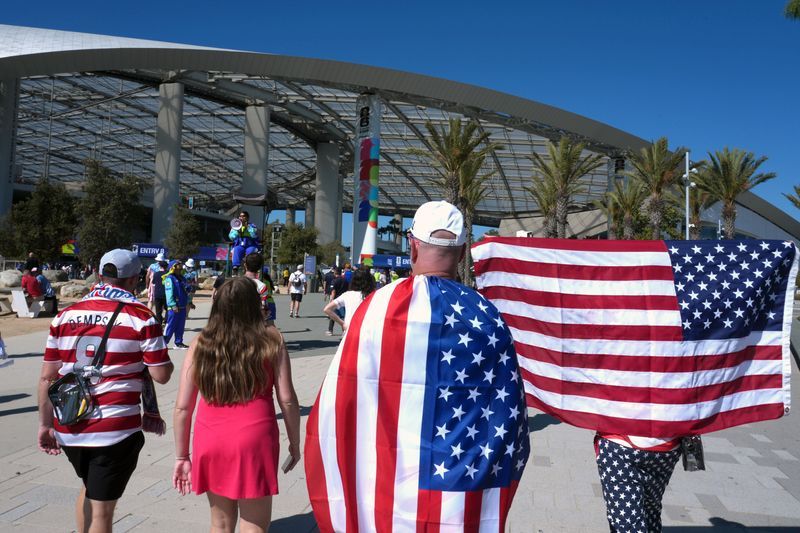
Jeremy Wright's Christmas gift plan for his wife Sarah turned into a costly nightmare when StubHub notified him just five hours before Netherlands versus Japan on June 14 that the two tickets he had purchased months earlier could not be delivered. The couple had been anticipating the event for over ten months, driving from Austin to Dallas and checking into their hotel before receiving the devastating email. StubHub's response offered a so-called guarantee of replacement tickets at no additional cost, but when Wright attempted to claim them, the platform presented only a refund option. After fruitless hours spent attempting to reach customer support, the Wrights abandoned their plans and drove back home through heavy rain, having forfeited both their tickets and the experience they had planned.
The Wright family's experience represents just one of dozens of similar cases that emerged during the 2026 World Cup tournament. Multiple ticket buyers took to social media to air grievances about last-minute cancellations on StubHub that left them without the match tickets they had purchased, frequently following explicit promises that replacement seats would be provided. These complaints coincided with FIFA's controversial introduction of dynamic pricing for the first time in World Cup history, amplifying fan frustration with ticketing practices at the tournament. The scope of the problem extended beyond individual inconvenience, prompting broader scrutiny of how resale platforms operate during major sporting events.
StubHub's position in the dispute centres on the distinction between its role and FIFA's authority. The company operates as a resale-only marketplace rather than an official ticketing partner, meaning it does not directly possess or control ticket inventory. According to StubHub's representatives, order cancellations stem from issues in the ticket delivery process initiated by individual sellers, not from platform failures. The company attributed many of these problems to FIFA's ticketing infrastructure, suggesting that broader system constraints were preventing successful ticket transfers across multiple resale platforms. This explanation, however, did little to mollify frustrated customers who had paid premium prices through StubHub and expected reliable service.
FIFA has consistently maintained that its ticketing infrastructure operates without fault and functions reliably at scale. The governing body explicitly rejected suggestions that its systems were causing problems for third-party platform users, instead emphasising that only its official resale marketplace can guarantee proper ticket delivery. FIFA has actively discouraged fans from using alternative platforms, yet the 30% commission the federation charges on its official platform creates significant price differentials. This commission structure, which FIFA claims aligns with North American industry standards, has effectively pushed many buyers toward cheaper alternatives like StubHub, despite FIFA's warnings about reliability.
The underlying cause of many cancellations appears rooted in a practice known as speculative ticketing, according to Scott Friedman, a ticketing expert previously employed by the Cleveland Cavaliers and current operator of the Ticket Talk Network. Sellers list tickets at assumed prices hoping to purchase them later at lower costs and pocket the difference—a strategy analogous to short-selling in financial markets. This approach typically succeeds when secondary market prices decline over time as events approach. However, World Cup 2026 ticket prices defied historical patterns by rising as the tournament progressed, leaving speculators unable to fulfill orders without accepting significant losses. This dynamic transformed the secondary ticket market into a high-risk environment where sellers increasingly defaulted on their obligations.
StubHub's stated policies explicitly prohibit speculative ticketing, yet the practice persists due to structural gaps in enforcement. The platform does not require sellers to provide seat numbers when listings are created, allowing what Friedman termed 'ghost tickets' to circulate freely. Wright's own ticket purchase exemplifies this vulnerability: he bought seats on September 6, 2025, four days before FIFA even conducted its initial official sales draw, suggesting the tickets were almost certainly listed by a speculator. His order confirmation documented only a 'Category 3' seating designation without any specific seat numbers, providing no accountability mechanism that would have flagged the speculative nature of the listing.
StubHub maintains that it implements safeguards including requirements for sellers to upload proof of ticket ownership or purchase at the time of initial listing. The company has announced financial penalties and account suspension for sellers who misrepresent their inventory. However, these enforcement mechanisms appear insufficient to prevent the cancellation crisis that unfolded during the tournament. The scale of problems suggests that either verification procedures are inadequate or they are overwhelmed by the volume of transactions during a global sporting event of this magnitude.
Public pressure through social media proved decisive in generating responses from StubHub, at least for high-profile cases. The Wrights and Dacy Gillespie, who had driven from St. Louis to Kansas City with four tickets for Argentina's match against Algeria on June 16 only to face a last-minute cancellation email, found that viral posts significantly accelerated StubHub's attention to their situations. The company offered the Wrights complimentary seating to a semi-final match as compensation. Gillespie received a $3,000 payment to offset costs she had incurred purchasing replacement tickets through alternative channels. Yet both families acknowledged that their outcomes resulted from public visibility rather than standard complaint resolution procedures, raising concerns about the experiences of other affected customers who lacked similar media exposure.
The disparity between those receiving compensation and the many others facing similar problems has prompted broader questions about StubHub's accountability structures. Sarah Wright noted the existence of what she termed 'survivor's guilt,' having obtained replacement tickets while recognizing that dozens of other families remained uncompensated. This observation underscores a fundamental tension in third-party ticketing: when platforms operate as mere marketplaces facilitating transactions between independent sellers and buyers, responsibility for failures becomes diffused rather than clearly assigned. StubHub has established a dedicated World Cup support team and expanded its capacity to source replacement inventory, yet these efforts appear reactive rather than preventative.
StubHub's reputation faces potentially severe long-term consequences from the World Cup ticketing failures. The UK's financial watchdog recently imposed a £900,000 fine and ordered the company to refund over 50,000 customers for failing to display total ticket prices transparently to consumers. Marsha-Gaye Knight, a clinical assistant professor at the NYU Tisch Institute for Global Sport, has suggested that the 2026 World Cup issues could trigger more significant regulatory scrutiny and brand damage. For a company built on consumer trust, particularly in high-value transactions involving major sporting events, systematic failures that leave fans unable to attend matches represent existential reputational risks.
For Malaysian and Southeast Asian fans who might contemplate using StubHub for major international sporting events, the World Cup experience offers important lessons about secondary ticket market risks. While resale platforms offer genuine advantages in price competition and accessibility, they also introduce vulnerabilities that official channels, despite their higher costs, generally mitigate through direct control over inventory. The World Cup cancellations demonstrate that speculative ticketing problems are not confined to the Americas but represent systemic challenges in global ticketing infrastructure. As major tournaments increasingly occur in the Asia-Pacific region, understanding these dynamics becomes essential for fans considering whether premium official channels or cheaper alternatives better serve their interests.
FIFA's insistence on exclusive use of its official platform, though frustrating to budget-conscious fans who balk at the 30% commission, reflects legitimate concerns about ensuring ticket delivery certainty. The underlying dispute between FIFA and StubHub also reveals how global sporting governance and commercial ticketing platforms operate with fundamentally misaligned incentives. FIFA prioritizes fan protection and guaranteed access; StubHub prioritizes transaction volume and market efficiency. When these priorities conflict during high-demand events, fans caught in the middle bear the actual costs. Moving forward, the resolution likely requires clearer regulatory frameworks governing how third-party platforms must verify seller legitimacy and proof of ownership before accepting listings, combined with stronger penalties for speculative practices.

