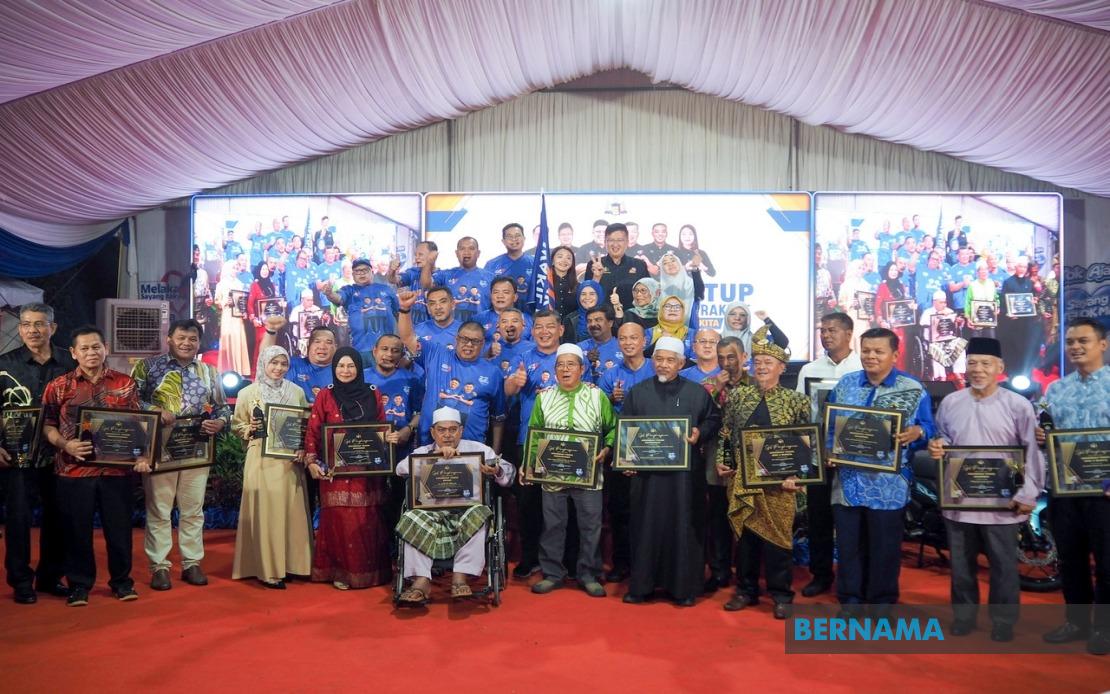
The true measure of any government assistance programme should be the tangible difference it makes to people's lives, not the sheer number of initiatives rolled out. This principle underpinned remarks made by Melaka Chief Minister Datuk Seri Ab Rauf Yusoh at a closing ceremony in Telok Mas, where he emphasised that the Wakil Rakyat Untuk Rakyat (WRUR) Programme's value lies in effectively resolving community grievances and lifting living standards across the state. His comments reflect a growing recognition among Malaysian policymakers that government programmes must deliver substantive results rather than merely create a perception of activity.
The WRUR initiative represents a structured attempt to address complaints at the community level by establishing mechanisms for residents to voice concerns and receive documented responses. According to Ab Rauf, the 19 state constituencies participating in the programme have received approximately 4,027 complaints since inception, with more than 65 per cent—roughly 2,633 cases—already resolved. This resolution rate suggests either genuine administrative efficacy or a rigorous follow-up system, though the distinction between these outcomes remains important for understanding whether the programme is addressing root causes or merely processing complaints.
Kota Melaka became the third parliamentary constituency to host WRUR after Alor Gajah and Hang Tuah Jaya, underscoring the programme's phased expansion across the state. During its four-week implementation window, WRUR generated 470 complaints in Kota Melaka alone, with 31 resolved during the active period and the remainder classified according to priority levels. The Chief Minister's insistence that all grievances will continue to be tracked after the formal programme ends signals an attempt to prevent the common pitfall of initiatives that conclude without addressing outstanding issues.
The broader context reveals ambitious project investment across Telok Mas state constituency. Over five years, 328 development projects worth nearly RM68 million have been completed, touching critical infrastructure including road networks, river systems, drainage and sewerage infrastructure, alongside home repair and construction schemes. These investments extend to community facilities such as assembly halls, places of worship, business centres, educational institutions and recreational complexes. For residents of Telok Mas and other affected constituencies, such infrastructure upgrades directly influence daily living conditions and economic opportunity.
Beyond capital projects, the state has channelled substantial resources into welfare provision. More than 6,098 Telok Mas residents received food, welfare and health assistance exceeding RM1.2 million during the same five-year period, whilst 213 medical beds were distributed to households in need. These direct assistance measures address immediate hardship but also raise questions about sustainability and whether they represent temporary relief or foundations for longer-term economic mobility. The distribution figures suggest selective targeting, though the criteria determining beneficiary selection remain unstated.
Cost-of-living support has emerged as a priority amid Malaysia's persistent inflation pressures. The Jualan Rahmah and Jualan Murah programmes, implemented 70 times since 2022, aim to provide affordable food and essentials to struggling households. Similarly, the Free Petrol Programme has assisted approximately 15,000 residents with RM177,000 in fuel subsidies. These initiatives acknowledge that fixed-income and low-wage earners face genuine purchasing power constraints, though their temporary nature means residents require continuous government support rather than structural wage improvements or employment opportunities.
Educational support represents another dimension of state intervention. The SPM examination support programme reached 1,694 students, whilst 255 high-achieving Form Five students and public university attendees received RM244,200 in educational incentives. This bifurcated approach—supporting examination candidates broadly whilst rewarding academic excellence—reflects competing policy objectives of promoting equity and recognizing merit. For Malaysian families, such targeted education assistance can meaningfully alter post-secondary pathways, particularly for students from low-income backgrounds.
Tourism development initiatives signal strategic economic diversification efforts for Melaka, a state heavily dependent on heritage and cultural attractions. The Ministry of Tourism, Arts and Culture has allocated RM2.4 million for upgrading tourism facilities in Sungai Punggor and Alai, with completion anticipated by 2027. An additional RM300,000 will transform Dataran Telok Mas into a one-stop tourism and local product centre. These investments position Melaka to capture leisure spending and create service-sector employment, though their success depends on effective marketing and sufficient domestic and international visitor flows.
The Bukit Larang geosite's identification as a key component of the Melaka Geopark, with assessment for national recognition scheduled for October, represents an emerging tourism asset. Geopark designation can enhance regional branding and attract geologically-interested visitors willing to spend on accommodation, dining and guided experiences. For small towns and rural areas within Melaka, geopark status may create employment in hospitality and guide services whilst incentivizing community participation in tourism governance.
Ab Rauf's distinction between counting programmes and measuring outcomes speaks to a deeper governance challenge facing Malaysian administrations. Government announcements frequently spotlight initiative quantity—the number of schemes launched, recipients assisted, or ringgit allocated—rather than evaluating whether these efforts produced sustained behavioural or circumstantial change. A resident receiving a medical bed, food assistance or SPM examination support has experienced material benefit, yet whether such assistance represents an isolated grant or a stepping stone toward self-sufficiency remains unclear from aggregate statistics alone.
For constituencies across Melaka and potentially other Malaysian states, the WRUR framework offers a complaint documentation and resolution mechanism that should theoretically enhance government responsiveness. However, success ultimately hinges on whether complaints translated into substantive policy adjustments, whether resolved cases reflect permanent or temporary improvements, and whether the programme adapts based on complaint patterns. A high resolution rate means little if grievances resurface quarterly because underlying issues remain unaddressed.
The investments detailed—from infrastructure to welfare to tourism—demonstrate significant resource commitment. Yet Malaysian residents across income levels increasingly question whether government spending translates to visible improvements in service quality, safety, educational outcomes or employment prospects. The WRUR closing ceremony narrative emphasises completion and positive metrics, but sustained community confidence requires transparent reporting on which problems actually stayed resolved, which investments delivered promised benefits, and where spending fell short of objectives.

