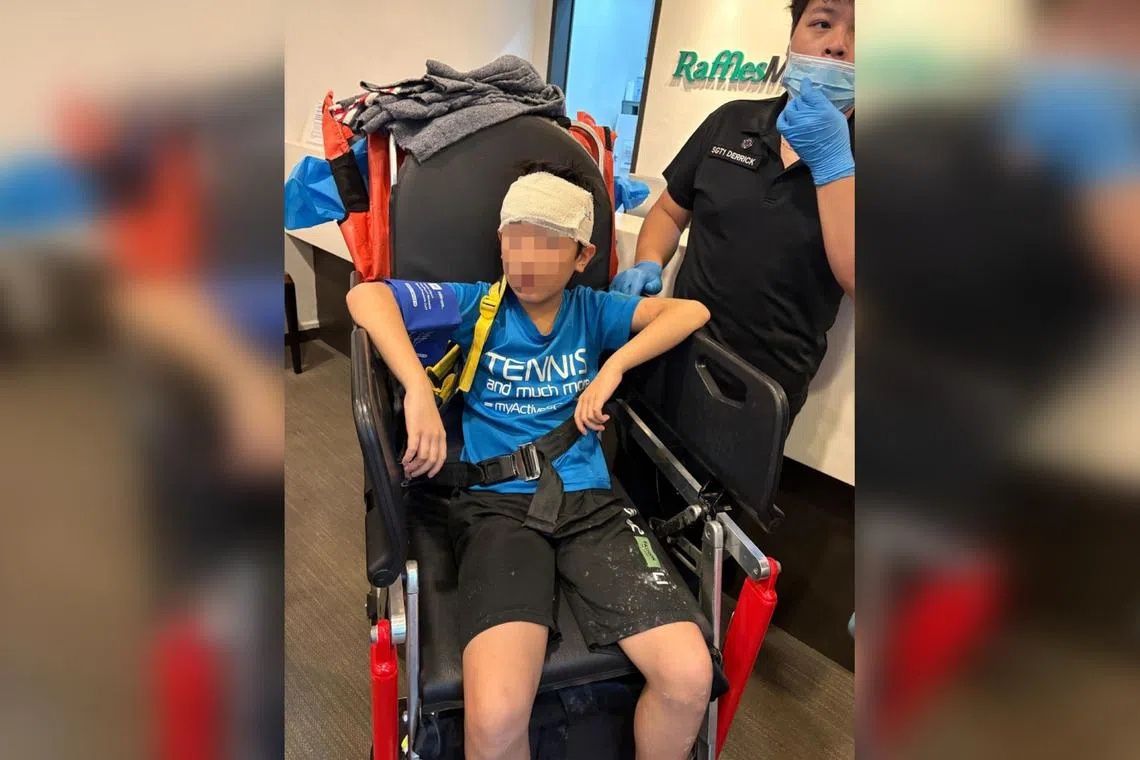
A young child required hospital treatment after a signboard gave way at a Food Junction outlet inside Rivervale Mall in Singapore's Sengkang district on Saturday, 20 June. Emergency services responded to the incident at approximately 10.30 in the morning, transporting the injured child to KK Women's and Children's Hospital for medical evaluation and care. The incident underscores ongoing concerns about structural safety in busy commercial establishments across the region, where signage and fixtures are regularly exposed to wear, environmental stress, and the demands of high-traffic environments.
The Singapore Civil Defence Force confirmed its involvement in the emergency response after receiving a distress call from the shopping centre. Footage that circulated on social media platform TikTok revealed the extent of the collapse, showing substantial debris scattered across the entrance to the Food Junction venue. In the video, portions of the ceiling structure remain partially intact, with shoppers maintaining a cautious distance from the fallen material and damaged area. The visual evidence suggests the incident occurred suddenly, leaving little time for preventive action or warning.
Food Junction issued a statement acknowledging the accident and describing the steps taken in its immediate aftermath. According to a company spokeswoman, the restaurant's team acted promptly upon learning of the incident, coordinating with both mall authorities and the emergency response personnel who arrived at the scene. She indicated that the affected customer, the boy who was transported to hospital, had been discharged and was recuperating at home following his assessment and treatment by medical professionals. This relatively positive outcome will likely provide some reassurance to other patrons and stakeholders concerned about safety standards at the venue.
In the days following the collapse, Food Junction undertook a comprehensive examination to identify what caused the structural failure. The company stated that it had implemented reinforced safety measures across all its locations in response to findings from this investigation, working in alignment with local regulatory bodies overseeing building standards and occupational safety. Such reviews are standard practice in the food and retail sectors, particularly when incidents result in customer injury or potential property damage. The breadth of the response—extending safety upgrades beyond the affected outlet—suggests the company views the incident as a trigger for broader preventive action rather than an isolated mishap.
The Rivervale Mall outlet, situated on the ground floor of the establishment, resumed normal service following the assessment and remedial work. Food Junction's management conveyed regret regarding the incident, acknowledging the distress caused to the customer and any disruption to other visitors and businesses within the mall during the emergency response. Restaurants and food courts, which operate in densely populated environments with continuous foot traffic and regular installation and adjustment of signage, fixtures, and display materials, face inherent challenges in maintaining comprehensive safety oversight.
Singapore's Building and Construction Authority, the regulatory body responsible for ensuring compliance with building codes and structural integrity standards, was contacted by media outlets seeking additional details about the incident and any investigation it might conduct independently. The mall management similarly became a point of contact for information gathering, as facility owners bear responsibility for the safety of all fixtures and structural elements within their premises. This multi-layered accountability—extending to the individual operator, the venue management, and regulatory authorities—reflects the framework through which Singapore seeks to maintain public safety standards in commercial spaces.
The incident gained traction on social media, with users sharing videos and accounts of the collapse, amplifying public awareness of the event beyond those present at the mall. In an era where incidents in busy public spaces are quickly documented and widely disseminated online, such visibility places additional pressure on businesses and property managers to respond transparently and comprehensively to safety concerns. For Malaysian readers, this event serves as a reminder of the importance of similar oversight mechanisms in local shopping centres and food courts, where comparable infrastructure challenges may exist.
Structural incidents in retail and food service environments carry implications beyond the immediate physical injury. They raise broader questions about maintenance schedules, inspection protocols, material quality, and the aging of infrastructure in established commercial complexes. Rivervale Mall, like many regional shopping centres, serves large numbers of daily visitors and would typically undergo regular maintenance. Yet the unexpected nature of this collapse highlights the difficulty in predicting all potential points of failure, particularly in complex installations where signage, ceiling fixtures, and attached structures interact over time.
For Food Junction, a recognised restaurant operator with multiple outlets across Singapore and the wider region, the incident represents both an immediate operational challenge and a longer-term test of stakeholder confidence. The company's swift response, transparent communication, and stated commitment to enhanced safety measures reflect contemporary expectations regarding corporate responsibility when accidents occur. Similarly, for Rivervale Mall and its management, the focus will remain on demonstrating that facility-wide safety standards are robust and regularly validated through professional inspection and maintenance protocols.
The recovery of the young patient remains the priority narrative in this incident. With the child released to home care following hospital assessment, the acute phase of the crisis appears to have been successfully managed. Nevertheless, the broader implications regarding preventive safety measures in public commercial spaces continue to merit attention from operators, regulators, and patrons across Southeast Asia, where rapid urban development and the proliferation of shopping centres have created numerous environments requiring rigorous, ongoing structural oversight and maintenance discipline.

