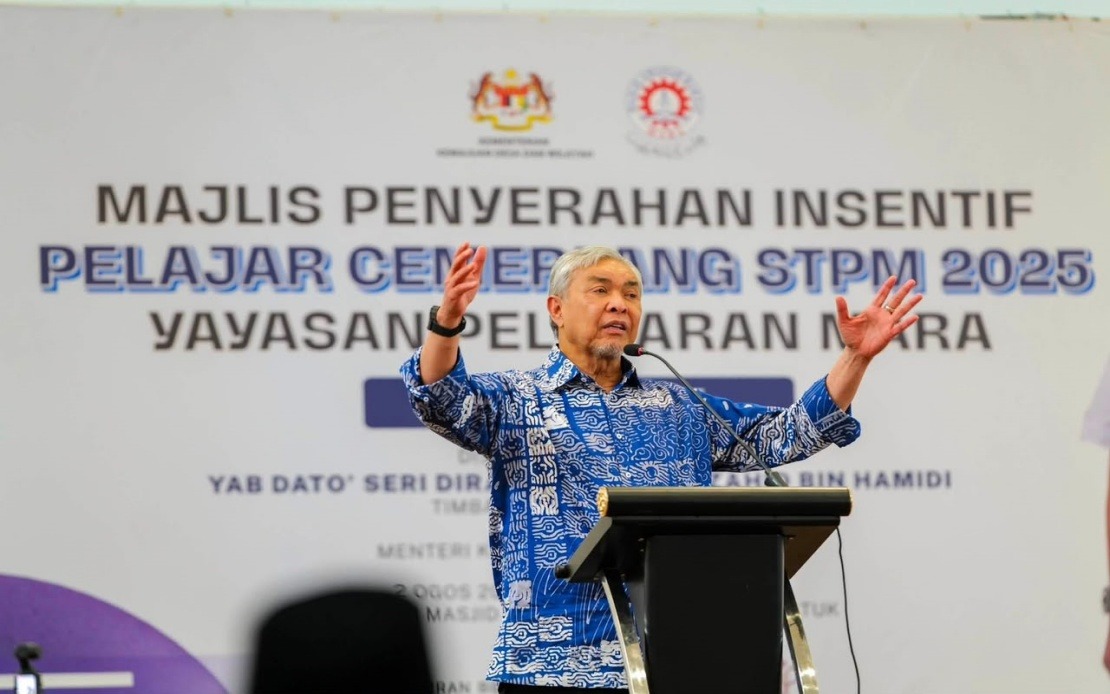
Thirty-eight students from two secondary institutions in Bagan Datuk have been honoured with the 2025 Sijil Tinggi Pelajaran Malaysia (STPM) Excellence Incentive from Yayasan Pelajaran MARA (YPM), marking a significant achievement for the Perak district. The recognition ceremony highlighted the accomplishments of scholars from Sekolah Menengah Kebangsaan Khir Johari and Sekolah Menengah Kebangsaan Tun Abdul Razak, underscoring the quality of secondary education in the parliamentary constituency.
Deputy Prime Minister Datuk Seri Dr Ahmad Zahid Hamidi, who represents Bagan Datuk in Parliament, expressed particular satisfaction with the broader success metrics extending beyond the STPM cohort. Beyond the 38 incentive recipients, the region has demonstrated exceptional educational outcomes that reflect sustained investment in student development and institutional capacity. The Bagan Datuk MP emphasised that these results encapsulate years of dedicated effort by educators, administrative staff, and supportive family structures working in concert to elevate academic standards.
A particularly noteworthy dimension of this year's achievements involves three young scholars from the constituency who have gained admission to Al-Azhar University in Egypt. These students will pursue advanced studies in Islamic Syariah and Usuluddin, representing significant opportunities for deepening religious scholarship and contributing specialised knowledge back to Malaysian Islamic discourse. The placement at this internationally recognised institution demonstrates the calibre of candidates emerging from Bagan Datuk's secondary system and signals growing regional competitiveness in Islamic tertiary education.
Concurrently, 23 students from the district benefited from the YPM Education Compassionate Fund, a targeted intervention designed to address financial barriers that might otherwise hinder academic progression. This dual approach—recognising excellence while simultaneously supporting students facing economic constraints—reflects YPM's comprehensive philosophy of talent development regardless of socioeconomic background. The fund's deployment underscores recognition that merit and potential exist across all community segments, and that removing financial obstacles can unlock hidden capabilities within the broader student population.
Datuk Seri Dr Ahmad Zahid Hamidi positioned these achievements as validation of inherent potential within Bagan Datuk's youth demographic. His commentary suggests that when appropriate institutional frameworks, qualified mentorship, and encouragement converge, students from this constituency perform at levels comparable to, and often exceeding, national benchmarks. The statement reflects confidence in the human capital developing within the district and challenges any perception that smaller parliamentary constituencies lack educational dynamism or future-oriented young people.
The Bagan Datuk MP articulated a philosophical conviction that education represents the most consequential investment available for transforming individual trajectories and building community resilience. This perspective aligns with broader Malaysian national development priorities, where human capital accumulation remains central to economic competitiveness and social stability. By highlighting education's transformative potential, Datuk Seri Dr Ahmad Zahid Hamidi connects individual student achievements to larger narratives about national progress and intergenerational advancement.
Parental involvement emerged as a critical success factor in the deputy prime minister's assessment. He appealed to mothers and fathers to maintain their roles as consistent sources of motivation and emotional support throughout their children's educational journeys. This emphasis on family engagement reflects research demonstrating that household encouragement significantly correlates with academic persistence and achievement, particularly during challenging examination periods. The appeal also acknowledges that educational success extends beyond institutional delivery to encompass home environments where values around learning are modelled and reinforced.
Looking forward, Datuk Seri Dr Ahmad Zahid Hamidi expressed aspirations for continued upward trajectory in educational outcomes across Bagan Datuk. His hope that increasing numbers of district scholars will pursue tertiary qualifications domestically and internationally, followed by return migration to contribute to local development, articulates a sophisticated vision of brain circulation rather than brain drain. This perspective recognises that exposure to global educational systems and international experiences can enhance individuals' capabilities when they subsequently apply expertise within their home constituencies.
The recognition of these 38 STPM achievers also carries implications for secondary school institutional development within Perak. Success at external standardised examinations like STPM serves as a barometer of pedagogical effectiveness, curriculum implementation quality, and overall school management. Both Sekolah Menengah Kebangsaan Khir Johari and Sekolah Menengah Kebangsaan Tun Abdul Razak have demonstrated capacity to prepare students for rigorous national-level assessment, suggesting professional teaching forces and supportive administrative environments conducive to academic excellence.
Within the broader Malaysian context, achievements in constituencies outside the Klang Valley and Selangor remain significant because they challenge perceptions that quality secondary education concentrates exclusively in economically dominant regions. Bagan Datuk's STPM results contribute to national narratives demonstrating that talent and academic excellence distribute widely across the country, and that geographic location need not constrain educational aspiration or attainment. Such distributed excellence strengthens overall national human capital stocks.
The YPM initiative itself merits consideration as a strategic instrument for talent development and equity promotion. By targeting high achievers through excellence incentives while simultaneously extending compassionate funds to financially constrained students, YPM operates across multiple intervention levels. This multifaceted approach acknowledges that educational barriers are not monolithic, and that effective development policy must address both recognising and rewarding exceptional performance while removing financial obstacles preventing capable students from progressing through academic pipelines.
For Bagan Datuk specifically, these 2025 STPM results represent momentum that district educational stakeholders can build upon. Consistent recognition of student achievement creates positive institutional cultures where academic excellence becomes normalised expectation rather than exceptional outcome. Schools earning reputations for producing high-performing cohorts attract motivated students and families, further reinforcing virtuous cycles of educational quality improvement and expanding opportunity access within constituencies.

