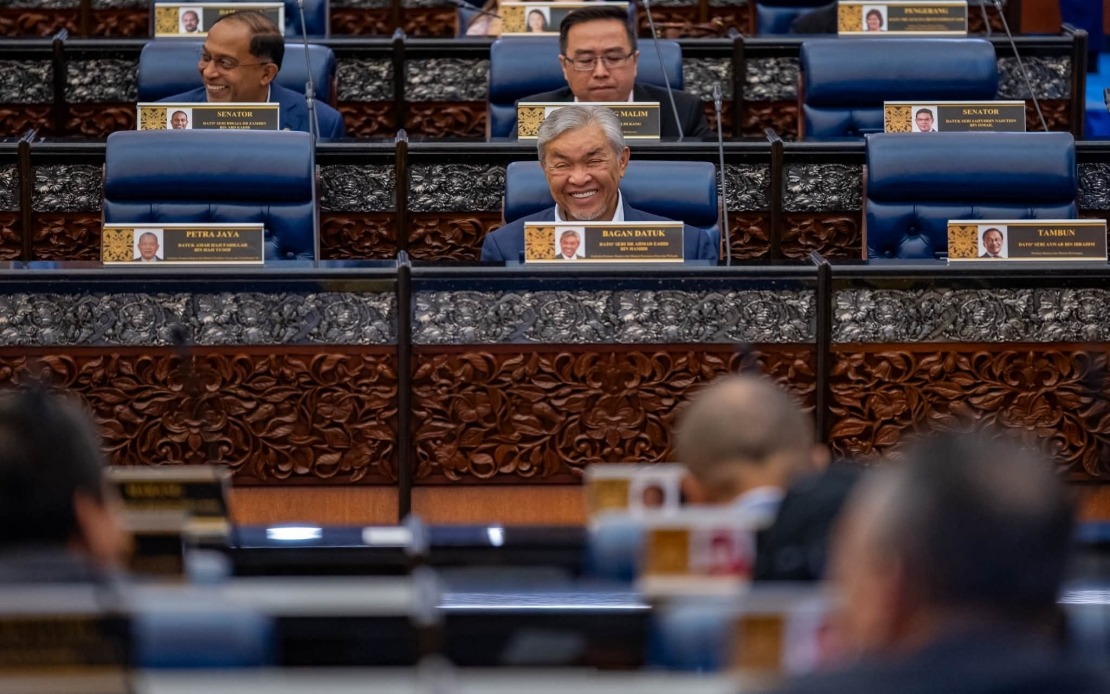
Deputy Prime Minister Datuk Seri Dr Ahmad Zahid Hamidi has stressed that constructive criticism directed at Lembaga Tabung Haji (TH) must be accompanied by tangible, responsible action if the institution is to emerge from recent scrutiny with its reputation intact and public confidence restored.
Addressing the matter following a special parliamentary sitting dedicated to examining the Royal Commission of Inquiry report into TH, Zahid emphasized that merely identifying problems without implementing solutions risks prolonging the controversy that has engulfed the institution. His remarks signal the government's intention to move beyond the diagnostic phase and toward concrete remediation, particularly given TH's central role in managing the pilgrimage savings of hundreds of thousands of Malaysian Muslims.
The Deputy Prime Minister, who also holds the portfolio of Rural and Regional Development Minister, noted that parliament had been provided with a formal platform to thoroughly discuss, clarify and work through all outstanding issues relating to TH during the special Dewan Rakyat sitting. This legislative forum represented an opportunity for lawmakers to engage substantively with the inquiry's findings rather than allow grievances to simmer unresolved in public discourse.
Zahid expressed his hope that the parliamentary debate would mark a turning point, with all parties committing to evidence-based discussion and abandoning unfounded allegations or rumour-mongering that have characterized some earlier coverage of TH's troubles. His implicit message was that the institution deserves to be judged on facts established through formal investigation rather than conjecture or partial narratives circulating in media or social platforms.
The government made the RCI report public on July 29, a significant transparency move that opened the inquiry's full findings to parliamentary and public scrutiny. The report, which examined TH's management and operational performance across the 2014–2020 period, identified multiple governance weaknesses and structural deficiencies that required systematic correction. The document put forward 25 specific recommendations aimed at strengthening institutional controls, financial management and operational transparency.
By late July, TH had already begun implementing corrective measures, with the institution reporting that 75 per cent of the commission's recommendations had been executed or were in active progress. This relatively brisk implementation rate suggests that TH management has treated the inquiry findings with appropriate urgency, recognizing that public trust in the institution depends on demonstrable action rather than defensive rhetoric.
For Malaysian Muslim pilgrims and their families, the inquiry and its aftermath carry substantial practical implications. TH manages savings and deposits entrusted to it by several hundred thousand Malaysians, many of whom view their contributions as both a financial commitment and a religious obligation. The exposure of management lapses has understandably triggered anxiety among account holders about the security of their funds and the institution's governance standards.
Zahid's appeal for wisdom and sincerity in handling the matter invokes religious and national considerations, framing the TH issue as one that should unite rather than divide Malaysian society. By explicitly invoking the welfare of the ummah and the nation's broader interests, he sought to elevate the discourse beyond partisan or factional point-scoring and toward genuine institutional reform.
The RCI's work has established a documented baseline against which future TH performance can be measured, potentially transforming what began as a governance crisis into an opportunity for systemic strengthening. However, the inquiry's value depends entirely on whether its recommendations translate into sustained operational change rather than serving as historical documentation of past failures.
The parliamentary debate provided individual MPs with a venue to press specific concerns, question officials, and place on record their constituents' concerns about TH management. This legislative accountability mechanism complements the RCI's investigative work and creates multiple pathways through which public interest in institutional reform can be channeled constructively.
Looking forward, the credibility of Zahid's call for responsible action will ultimately be measured by whether TH's remaining 25 per cent of unimplemented recommendations are completed according to stated timelines, whether the institution's financial position strengthens visibly, and whether stakeholder confidence—among pilgrims, regulators, and the broader public—gradually stabilizes. The Deputy Prime Minister's remarks serve as a marker against which official performance can be assessed in the months ahead.

