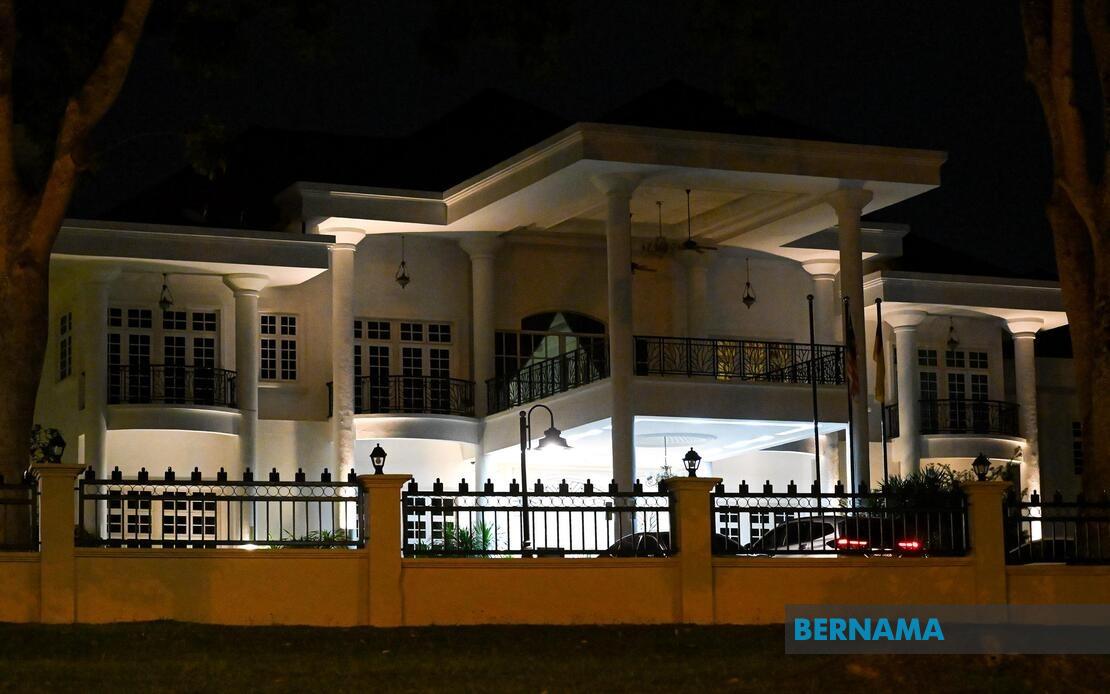
Barisan Nasional chairman Datuk Seri Dr Ahmad Zahid Hamidi arrived at Istana Hinggap in Seremban on Thursday evening, August 1, in what observers understood to be an official audience with Negeri Sembilan Yang Dipertuan Besar Tuanku Muhriz Tuanku Munawir. The visit underscores the significance of the state's recent electoral outcome and signals the next phase of coalition governance in the central Malaysian state.
The delegation comprised representatives from both Barisan Nasional and Perikatan Nasional, demonstrating the united front maintained by the two coalitions following their joint electoral performance. More than ten vehicles transported the assembled leadership team through the palace gates at approximately 10 pm, with Negeri Sembilan BN chairman Datuk Seri Mohamad Hasan among the notable attendees. The coordinated arrival reflected careful political choreography ahead of what are likely to be crucial discussions regarding the formation of government structures and ministerial appointments in the state.
The election results delivered a commanding mandate to the combined coalition. According to Ahmad Zahid's assessment, Barisan Nasional secured 18 of the 36 state legislative seats, whilst Perikatan Nasional captured seven seats, yielding a combined total of 25 seats. This supermajority—substantially exceeding the 19 seats required for control of the state assembly—provides the coalitions with considerable latitude in policymaking and governance decisions without dependence on independent legislators or fragile ad-hoc arrangements.
For Malaysian observers tracking federal and state political dynamics, the Negeri Sembilan outcome carries broader implications. The performance demonstrates the continued organisational strength of Barisan Nasional in state-level contests, particularly in constituencies where traditional support bases remain influential. Simultaneously, the collaboration between BN and PN at the state level reflects the pragmatic alliance-building that has characterised Malaysian politics since the 2022 general election restructured the political landscape.
The visit to the palace represents more than ceremonial protocol. In Malaysia's constitutional monarchy system, such audiences typically precede formal notifications to the ruler regarding government formation, ministerial recommendations, and policy directions. Tuanku Muhriz, as the Yang Dipertuan Besar of Negeri Sembilan, carries significant constitutional weight in these processes, and receiving the coalition leadership demonstrates respect for institutional procedures that have governed Malaysian political transitions.
The timing of the palace visit—late evening on the day following election results—suggests urgency in formalising the coalition's position and presenting a unified narrative to both the monarchy and the public. In Negeri Sembilan particularly, where the BN historically maintained strong governance before the 2018 general election shifted political dynamics, this restoration of coalition control represents a reassertion of established political networks and institutional relationships.
For Negeri Sembilan residents and the broader Malaysian electorate, the decisive two-thirds majority carries practical significance. Such supermajorities traditionally enable administrations to pass state legislation, approve budgets, and implement policy initiatives with minimal obstruction. They also afford coalition leadership considerable discretion in executive appointments and the distribution of positions among partner parties, though such decisions must balance intra-coalition interests and factional dynamics within both Barisan Nasional and Perikatan Nasional.
The delegation's composition, including representation from multiple parties, underscores the coalition management challenges that will confront whoever assumes the Chief Minister portfolio. Governing a state requires not merely electoral victory but sustained internal coordination among partners with distinct political cultures, memberships, and policy priorities. The initial palace visit therefore functions as an opportunity to establish protocols and expectations for the coalition's tenure.
Political analysts will scrutinise subsequent developments closely. The appointment of the Chief Minister, the distribution of state executive council positions, and the initial policy announcements will reveal how effectively Barisan Nasional and Perikatan Nasional have negotiated post-election arrangements. Previous state administrations where coalitions have held substantial majorities offer both precedents and cautionary examples regarding the maintenance of unity under electoral success.
Regionally, the Negeri Sembilan result fits into a broader pattern of electoral competition in Malaysia. State elections have become increasingly significant as voters evaluate alternative political combinations beyond the federal level, and as political parties use state-level contests to strengthen organisational capacity and refine messaging. The coalition's performance in Negeri Sembilan contributes data to ongoing assessments of Barisan Nasional's recovery trajectory and Perikatan Nasional's consolidation as a national political force.
Looking forward, the palace audience represents the formal commencement of the coalition's mandate period. How effectively Ahmad Zahid, Mohamad Hasan, and their colleagues translate electoral success into stable governance, popular service delivery, and political coherence will determine whether this victory marks the beginning of sustained coalition dominance in Negeri Sembilan or merely a temporary realignment before subsequent electoral contests reshape the political terrain.

