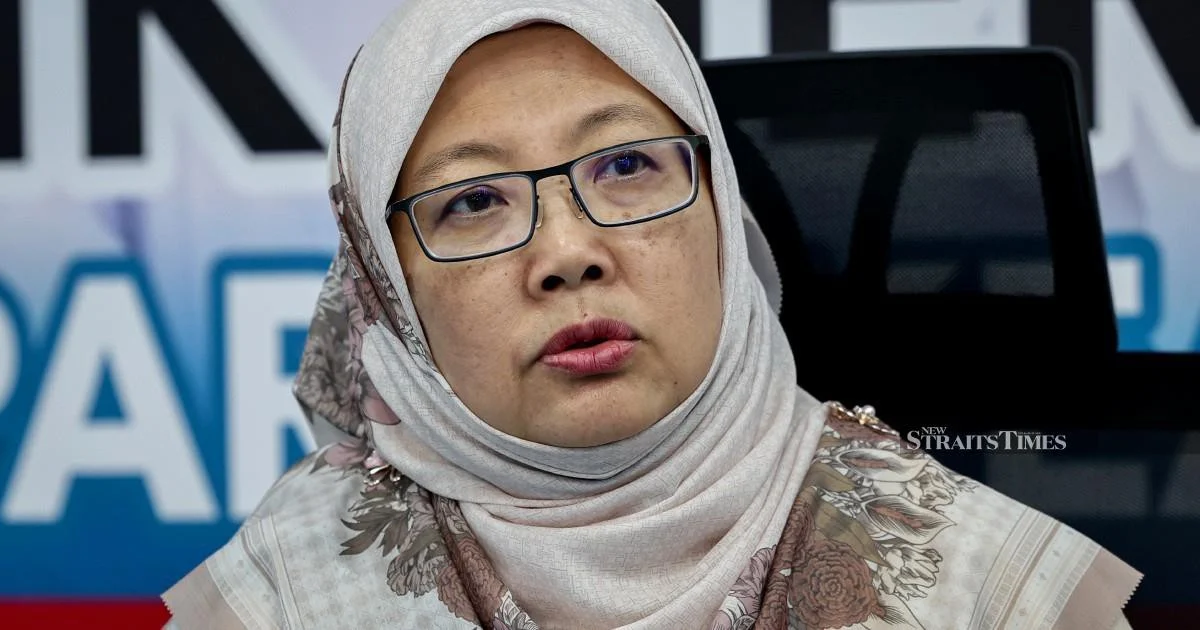
The political temperature in Johor continues to rise as PKR vice-president Datuk Seri Dr Zaliha Mustafa has launched a pointed critique at Johor Barisan Nasional (BN) chairman Datuk Onn Hafiz Ghazi, accusing him of adopting an internally inconsistent stance regarding the question of who should lead the state government. Her intervention in the ongoing debate reveals deeper tensions within Malaysia's competitive political landscape, particularly as major coalitions prepare for what is expected to be a closely contested election in the southern state.
Mustafa's challenge centres on what she characterises as Onn Hafiz's flip-flopping positions. The PKR leader contends that the BN chairman cannot simultaneously demand transparency from his rivals while maintaining strategic ambiguity about his own coalition's intentions. This observation strikes at the heart of pre-election positioning, where both major political blocs attempt to control narratives around leadership and electoral mandates. The inconsistency that Mustafa highlights suggests Onn Hafiz may be applying different standards to his own coalition compared to those he imposes on Pakatan Harapan, a tactic that could undermine his credibility among voters who increasingly demand consistency from political leaders.
The backdrop to this controversy involves fundamental questions about electoral integrity and democratic transparency. When opposition coalitions are asked to name their chief ministerial candidates before ballots are cast, it creates an asymmetry if the ruling coalition is not held to identical standards. This becomes particularly significant in Johor, Malaysia's second-most populous state and historically a BN stronghold, where such leadership clarity could influence electoral outcomes by allowing voters to make fully informed choices. The principle underlying Mustafa's criticism is that voters deserve equal information from all competing coalitions, not selectively from one side.
Onn Hafiz's position, according to Mustafa's reading, appears to shift depending on political convenience. At certain moments he insists that transparency regarding PH's menteri besar choice is essential for voters to make sound decisions. Yet simultaneously, or at different times, he seems reluctant to commit Barisan Nasional to similar disclosure regarding its own candidate, if indeed the question were to arise. This perceived double standard has become fodder for opposition arguments that BN is attempting to maintain tactical flexibility while constraining its opponents' options, a strategy that risks alienating voters who favour clear pre-election commitments.
The menteri besar candidacy issue carries weight beyond mere procedural semantics. In Malaysian electoral culture, the appointment of a chief minister represents the apex of state-level governance and carries implications for policy direction, developmental priorities, and resource allocation. Voters expect to know which individual will carry their mandate into office, and naming candidates beforehand demonstrates confidence in the party's choice. When one coalition insists on this disclosure while another avoids reciprocal commitment, it invites accusations of democratic inconsistency and attempts to reserve decision-making power for post-election negotiations rather than pre-election accountability.
Pakatan Harapan's position, by implication, is that it should not be singled out for greater transparency requirements than Barisan Nasional. This reflects broader tensions within Malaysian politics regarding equitable treatment of competing coalitions. If BN's philosophy is that menteri besar selections can be determined after ballots are counted—perhaps through consensus-building among party stakeholders—then PH legitimately questions why it should be held to a different, more restrictive standard. Mustafa's intervention amplifies this argument by highlighting the logical inconsistency in Onn Hafiz's approach.
From a regional perspective, Johor's political developments carry significance beyond state boundaries. As Malaysia's most developed southern state and a major economic engine, the outcome and manner in which Johor's government is formed influences perceptions of democratic health across Southeast Asia. International observers monitoring Malaysian politics scrutinise whether electoral commitments are met transparently and whether governance follows democratically established protocols. Inconsistent standards for different political contestants could signal to observers that Malaysian electoral practices lack uniform application of democratic principles.
Onn Hafiz's reputation as BN chairman depends partly on his ability to articulate coherent policy positions and maintain internal party discipline. If he is perceived as shifting his stance on important matters like candidate disclosure, this could weaken his standing within the coalition itself, where different parties and personalities maintain their own interests and expectations. His credibility with voters—who increasingly demand straight answers from politicians—may also suffer if he cannot provide consistent explanations for why one standard applies to some contestants but not others.
The timing of Mustafa's criticism is strategically significant. By raising these questions now, ahead of formal election announcements and campaigning, PH signals that it will contest any perceived unfairness in how both sides operate. This pre-emptive positioning allows the coalition to frame any subsequent developments regarding candidacy disclosure as either victories for democratic transparency or evidence of BN's defensive strategies, depending on how events unfold. It also provides talking points for PH campaigners when engaging voters during the election period.
Looking forward, Johor's election will likely revolve around more than just menteri besar candidacy questions, encompassing economic management, infrastructure development, and social welfare. However, the manner in which both BN and PH conduct themselves during the pre-election period—including how consistently they apply democratic principles—will influence voter perceptions of which coalition merits their trust. Mustafa's challenge to Onn Hafiz effectively places consistency and fairness at the centre of the electoral conversation, framing the election as not merely a contest between programmes but a test of which side better upholds democratic values.

