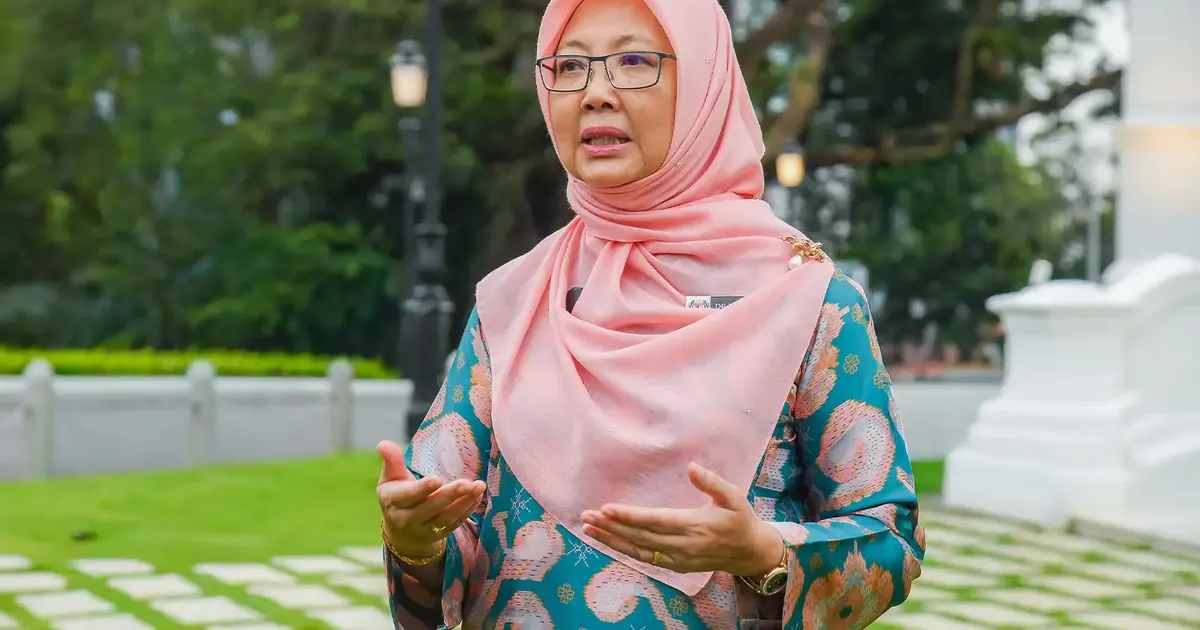
Pakatan Harapan faces a puzzling demand from its Johor opponent, with PKR vice-president Zaliha Kamaruddin expressing confusion over Barisan Nasional chairman Onn Hafiz Ghazi's insistence that the coalition name a poster boy ahead of state elections—a request complicated by the absence of any guarantee about who will ultimately assume the top state position.
The timing of Onn Hafiz's call has raised eyebrows within PH circles, as it places an unusual spotlight on internal coalition dynamics during a critical political juncture. Zaliha's response underscores a fundamental tension in Malaysian electoral politics: the expectation to project unified leadership while maintaining flexibility over succession arrangements that remain fluid until after polling day. Her puzzlement reflects not merely personal confusion but a broader strategic question about whether Johor BN is seeking tactical advantage by forcing PH into premature organisational commitments.
The menteri besar position carries immense significance for any ruling coalition in Malaysia, conferring executive authority over state governance, resource allocation, and patronage networks that extend far into local communities. In Johor's case, the prize is particularly valuable given the state's size, economic importance as a manufacturing and logistics hub, and its historical role as a BN stronghold. That neither PH nor presumably BN has publicly locked down its candidate beforehand suggests both coalitions retain strategic flexibility, possibly to accommodate ground sentiment closer to polling day or to reward particularly strong electoral performances by allied parties.
PH's reluctance to name a specific menteri besar candidate before elections is not unusual in Malaysian politics. Coalition partners often maintain ambiguity to prevent internal conflicts, preserve negotiating power within the broader alliance, and avoid giving opposition parties specific figures to attack during campaigns. By calling for PH to name its poster boy, Onn Hafiz may be attempting to expose divisions within the coalition or force uncomfortable public commitments that could alienate faction within PH's component parties. The political maneuvering reflects the intricate balance that leaders must maintain between projecting cohesion and allowing room for post-electoral negotiations.
Zaliha's position as PKR vice-president places her at an intersection of coalition politics and party factional concerns. Her public expression of puzzlement carries weight, signalling that at least one influential PH figure sees little merit in rushing toward what might be a disadvantageous commitment. PKR's leadership structure and its role as the second-largest party in PH means its voice carries substantial influence in coalition-level discussions about succession arrangements and leadership choices.
The Johor political context adds another layer of complexity. The state has historically been BN territory, with strong institutional advantages accruing to the ruling coalition in terms of administrative machinery, grassroots networks, and business community alignment. Any challenge by PH represents a significant political undertaking requiring meticulous coordination between DAP, PKR, and Amanah. In such circumstances, flexibility about leadership becomes a valuable asset rather than a liability, allowing the coalition to adapt tactics and messaging based on ground feedback and emerging electoral dynamics.
Onn Hafiz's gambit may reflect BN confidence in its Johor prospects, or alternatively, it could indicate anxiety about the coalition's ability to reclaim or retain power in a state where PH made inroads in previous electoral cycles. By placing PH on the defensive regarding its own organisational clarity, BN attempts to shift narrative focus away from policy platforms and toward questions of coalition cohesion and leadership legitimacy. This approach has proven effective in Malaysian politics, where voter perceptions about which side is better organised and internally aligned can influence electoral outcomes.
For Malaysian voters, particularly those in Johor, this dynamic raises important questions about democratic accountability and leadership transparency. Voters typically prefer clarity about which individuals will hold executive power should their preferred coalition win, yet the political system frequently obscures such clarity through strategic ambiguity. The tension between voter expectations for transparency and coalition incentives for flexibility reflects deeper structural challenges in how Malaysian electoral politics operates at state level.
Zaliha's public puzzlement serves another function within PH's broader strategic communications. By questioning the logic of Onn Hafiz's demand, she effectively challenges the premise that coalitions must always operate with absolute transparency about succession arrangements. This response helps frame PH's flexibility not as weakness or internal dysfunction, but as sophisticated political management appropriate to complex multi-party coalitions navigating electoral uncertainty. It also deflects attention from any genuine tensions within PH about leadership succession, redirecting focus toward BN's apparent nervousness about the contest ahead.
The exchange between these two political figures illuminates how Malaysian elections transcend simple contests about ideology or policy. They become complex negotiations about power distribution, coalition management, and the careful calibration of internal and external messaging. Onn Hafiz's demand and Zaliha's response both serve tactical purposes within their respective organisations and alliances, revealing the sophisticated game being played behind ostensibly straightforward electoral competition.
As Johor moves toward its elections, such exchanges will likely proliferate, with each side attempting to gain psychological and organisational advantage. The state's political evolution—from being almost exclusively BN territory to becoming genuinely competitive—means that both coalitions recognise how much depends on getting fundamental organisational and strategic questions right. Whether Zaliha's puzzlement will ultimately prompt PH to clarify its menteri besar position remains uncertain, but her willingness to publicly question the demand suggests the coalition intends to maintain its strategic ambiguity for now.

