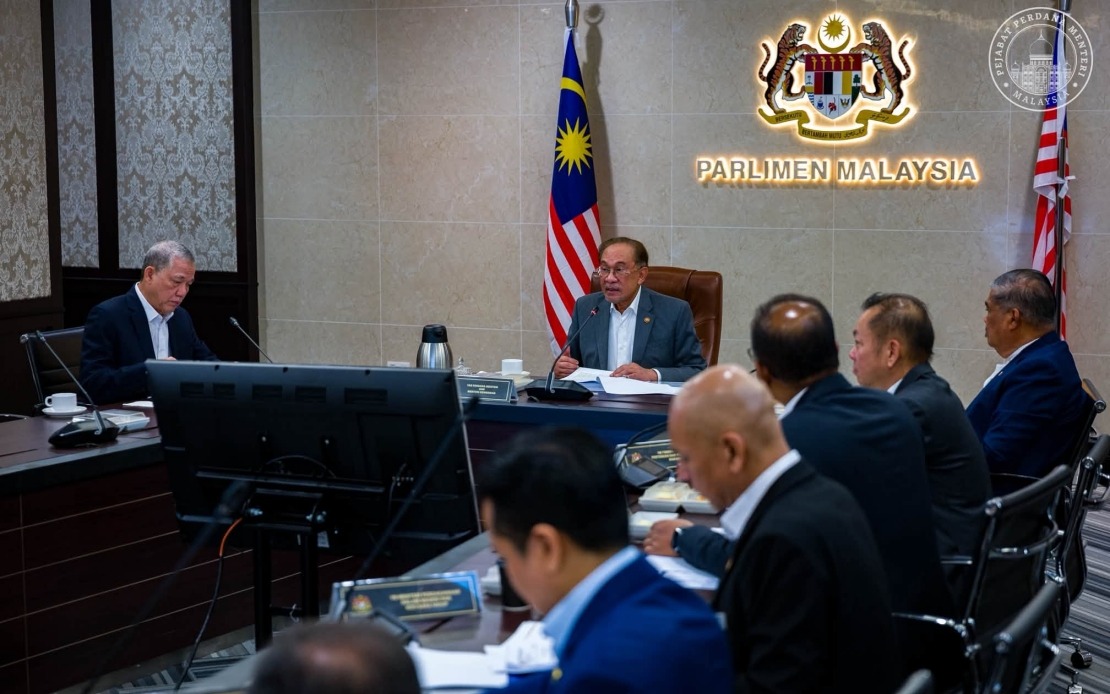
Prime Minister Datuk Seri Anwar Ibrahim has moved decisively to shield Malaysia's agricultural sector from the impacts of a Super El Niño weather phenomenon expected to strike the nation beginning November. During the inaugural National Food Security Council Meeting of 2026, Anwar directed the Ministry of Agriculture and Food Security (KPKM) to develop and implement protective measures without delay, signalling the seriousness with which the government views the impending climatic disruption.
The Super El Niño phenomenon represents a significant threat to agricultural systems across Southeast Asia, typically bringing prolonged dry conditions, reduced rainfall, and elevated temperatures that can devastate crop yields and livestock productivity. For Malaysia, which depends heavily on palm oil, rubber, rice, and tropical fruits, such weather patterns can disrupt supply chains and trigger food price volatility. The advance warning gives policymakers a crucial window to prepare, though the compressed timeline between now and November means execution must be swift and coordinated across multiple agencies.
Anwar's emphasis on minimising disruption to national food production reflects broader concerns about Malaysia's food self-sufficiency. The country imports significant quantities of staple foods, making domestic production capacity a strategic priority. Farmers and smallholders, already operating with thin profit margins and facing climate variability, stand to suffer disproportionately if drought conditions materialise. The government's intervention aims to shield both the farming community's economic resilience and household food security across the population.
The ministerial directive underscores the expanding role of food security in Malaysia's national governance framework. By elevating agricultural policy coordination to council level with prime ministerial oversight, the government signals that food stability ranks alongside defence and economic management as a core national concern. This institutional positioning allows for faster policy implementation and inter-agency collaboration that might otherwise be delayed by bureaucratic processes.
Beyond El Niño preparation, the council discussed regional fisheries cooperation with Thailand, demonstrating that Malaysia's food security strategy extends beyond domestic production to encompass cross-border supply arrangements. Fishing communities in both nations depend on shared maritime resources and coordinated management practices. Establishing standards compliance protocols with Thai partners addresses both food safety concerns and market access, ensuring that bilateral trade continues to flow smoothly and that consumers receive products meeting rigorous safety benchmarks.
Anwar specifically highlighted the necessity of maintaining stringent food safety and quality standards even as the government accelerates mitigation efforts. This dual imperative—speed and quality—creates implementation challenges for KPKM, requiring the ministry to design protocols that shortcut unnecessary bureaucratic steps without compromising the testing and certification processes that protect public health. The directive implicitly acknowledges that any agricultural emergency response must be proportionate and evidence-based rather than reactive.
Engagement with farming communities forms another pillar of the government's strategy. KPKM has been instructed to maintain continuous dialogue with fishing communities and other agricultural stakeholders to ensure voluntary compliance with quality standards and to gather intelligence about on-ground realities that might not reach ministerial levels. This consultative approach recognises that farmers and fishermen possess experiential knowledge about local conditions and potential solutions that central planners might overlook.
The council's broader focus on technology adoption, innovation, and international best practices indicates that Malaysia views the El Niño threat as an opportunity to accelerate long-overdue agricultural modernisation. Climate-resilient crop varieties, precision irrigation systems, aquaculture innovations, and data-driven farm management can help producers weather extreme weather events while improving productivity during normal conditions. Malaysian agribusinesses have fallen behind regional competitors in adopting such technologies, and a government push could narrow that gap.
For Malaysia's farming sector, competitiveness increasingly depends on factors beyond price. Export markets demand traceability, sustainability certifications, and food safety credentials that Malaysian producers struggle to deliver consistently. The government's emphasis on aligning domestic production with international standards creates an incentive structure that could drive productivity improvements beneficial across the supply chain—from smallholder farmers to export-oriented agribusinesses.
The timing of this council meeting, held in mid-July with El Niño set to arrive in November, illustrates the government's attempt to get ahead of the crisis curve. Agricultural planning typically operates on seasonal cycles, and a four-month lead time allows KPKM to identify vulnerable crops and regions, pre-position resources, communicate with farmers, and adjust planting schedules where feasible. Delayed action would squander this window and leave the sector scrambling to respond as drought develops.
Regionally, Malaysia's proactive stance contrasts with slower responses in some neighbouring countries facing similar threats. By establishing a coordinated government response anchored at the prime ministerial level, Malaysia demonstrates institutional capacity that could position it as a model for other Southeast Asian nations. Regional food security is interconnected, and stability in one major producer can help steady prices and supplies across the broader region.
The government's commitment to supporting farmers' livelihoods throughout the El Niño period also reflects awareness that agricultural resilience depends on producer confidence. If farming becomes unviable during difficult seasons, rural communities abandon agriculture for urban employment, permanently eroding production capacity. By signalling sustained government support, Anwar aims to encourage farmers to maintain operations and adapt rather than exit the sector.
As implementation proceeds over coming months, success will depend on KPKM's ability to move quickly without the usual delays that plague Malaysian bureaucracy. The ministry must develop concrete programmes—whether subsidised irrigation improvements, crop insurance schemes, emergency feed supplies, or variety distribution—and deliver them to target communities before November arrives. The council's directive provides the political cover and institutional priority needed; now execution becomes everything.

