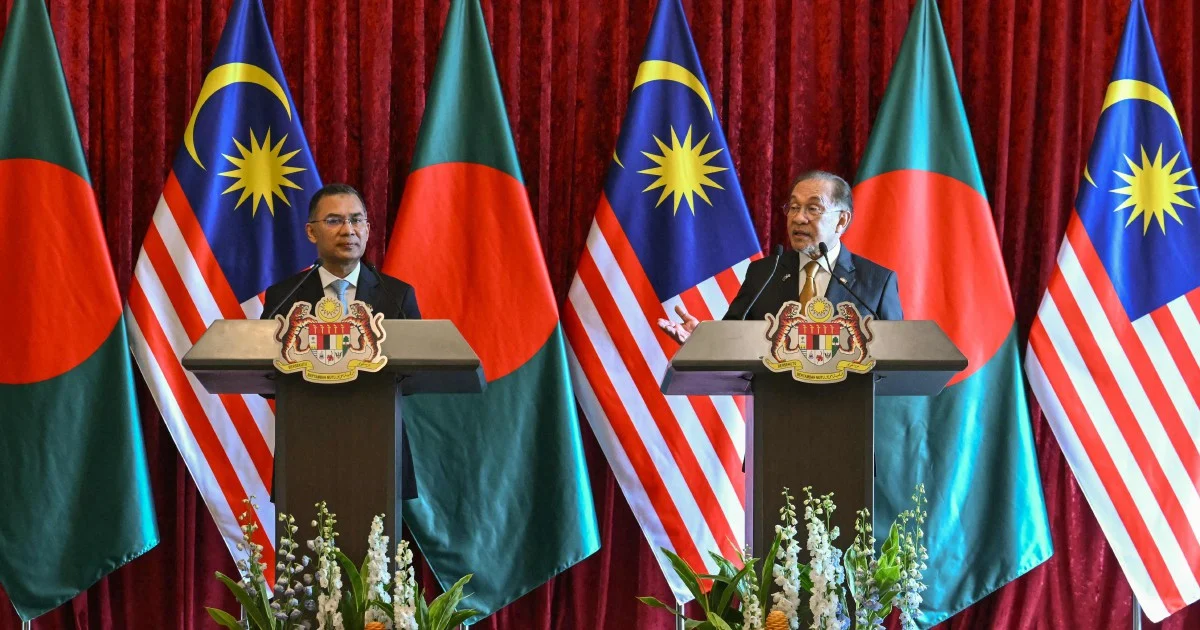
Prime Minister Datuk Seri Anwar Ibrahim has issued a firm commitment to eliminate the systematic exploitation of Bangladeshi migrant workers, framing the issue as both a moral imperative and an economic necessity for Malaysia. Speaking on the matter, Anwar emphasised that such abusive practices represent intolerable breaches that cannot be permitted to continue under his administration's watch, signalling an intensified focus on worker welfare and labour standards across the nation.
The Prime Minister's pronouncement reflects growing international and domestic pressure on Malaysia's handling of its migrant workforce. Bangladesh has consistently raised concerns about the working conditions faced by its nationals employed in Malaysian industries, ranging from manufacturing and construction to domestic service. With hundreds of thousands of Bangladeshi citizens working across Malaysian sectors, the issue carries significant diplomatic weight and affects bilateral relations between the two countries.
Anwar's statement acknowledges a fundamental economic reality often overlooked in policy discussions: Bangladeshi workers form an integral pillar supporting Malaysia's competitive advantage and economic growth trajectory. These workers fill critical labour gaps in sectors where local employment has proven insufficient, enabling Malaysian businesses to maintain productivity and operational scale. Without access to this labour pool, numerous Malaysian industries would face severe disruption, from plantation operations to hospitality and healthcare services. The Prime Minister's framing thus positions worker protection not as charitable benevolence but as enlightened economic self-interest.
The exploitation of migrant workers in Malaysia has been extensively documented by international human rights organisations and labour monitoring agencies. Abuses typically include wage theft, contract violations, unsafe working conditions, passport confiscation, and restricted freedom of movement. These practices particularly affect undocumented or semi-documented workers who lack formal recourse mechanisms. The Malaysian government has faced persistent criticism from entities including the International Labour Organization for insufficient enforcement of existing labour laws and inadequate penalties for violators.
Anwar's commitment suggests a potential shift in governmental approach, moving beyond rhetoric towards substantive implementation. This could encompass strengthening enforcement mechanisms within the Ministry of Human Resources, enhancing inspection protocols at workplaces employing significant migrant populations, and establishing clearer penalties for employers engaged in exploitative practices. The administration may also consider expanding access to complaint mechanisms and legal remedies specifically tailored for migrant workers who often fear deportation or employer retaliation.
The timing of Anwar's pledge carries particular significance given Malaysia's efforts to improve its international standing on labour issues. Global supply chain companies increasingly scrutinise their Malaysian partners for labour compliance, and persistent exploitation narratives threaten Malaysia's access to premium markets and international partnerships. By prioritising worker protection, the government signals to global stakeholders that it takes labour standards seriously, potentially securing long-term competitive advantages in sectors like electronics manufacturing and apparel production where ethical sourcing increasingly influences purchasing decisions.
Bangladeshi worker communities in Malaysia have historically remained largely invisible in public discourse, despite their numerical significance. Many work in informal sectors or undocumented statuses, making them particularly vulnerable to exploitation whilst simultaneously rendering them difficult to reach through conventional regulatory channels. Anwar's acknowledgment of these workers' importance represents a step toward greater visibility and inclusion within Malaysia's labour protection framework. Effective implementation would require mechanisms that extend beyond formal sector workers to encompass the broader migrant community.
The promise also carries implications for Malaysia's relationship with Bangladesh as a source country. Bangladesh has leverage through its ability to regulate worker outflows, and persistent exploitation concerns have periodically prompted the government in Dhaka to restrict or suspend worker deployments to Malaysia. Such moratoria create labour market disruptions for Malaysian employers and strain bilateral ties. By demonstrating genuine commitment to worker protection, Malaysia can strengthen its position as a preferred destination for Bangladeshi migrant workers and maintain stable access to this labour supply.
Implementation challenges remain substantial. Malaysia's enforcement capacity within the labour ministry requires strengthening, and corruption within some enforcement agencies has historically undermined regulatory efforts. Additionally, cost-conscious employers often view labour compliance as a burden rather than an opportunity, requiring both credible penalties and potential incentives to encourage voluntary adoption of higher standards. The government may need to consider certification schemes that recognise exemplary employers, providing them with marketing advantages and preferential treatment in government contracting.
Regional developments also factor into Malaysia's approach. Thailand, Singapore, and other regional competitors have invested in improving their labour reputation, potentially positioning themselves as more attractive destinations for migrant workers. Malaysia's commitment to tackling exploitation could help level the competitive landscape and prevent further erosion of its share of regional migrant worker flows. This calculus underscores that worker protection increasingly intersects with economic competitiveness rather than representing a purely humanitarian concern.
For Malaysian businesses relying on migrant labour, Anwar's pronouncement should signal an expectation of compliance with elevated labour standards. Companies currently engaged in exploitative practices face increasing risks of regulatory action, reputational damage, and potential international market access restrictions. Conversely, employers demonstrating genuine commitment to worker welfare may benefit from government support, improved worker retention, and enhanced productivity that often accompanies fair labour practices.
The coming months will prove crucial in determining whether Anwar's commitment translates into concrete policy changes and enforcement actions. Civil society organisations, international observers, and Bangladesh's government will be monitoring implementation closely. Success would require sustained political will, adequate resource allocation, and coordination across multiple government agencies. The challenge extends beyond legislative changes to encompass cultural shifts within Malaysian business communities and enforcement institutions that have historically tolerated exploitative practices.

