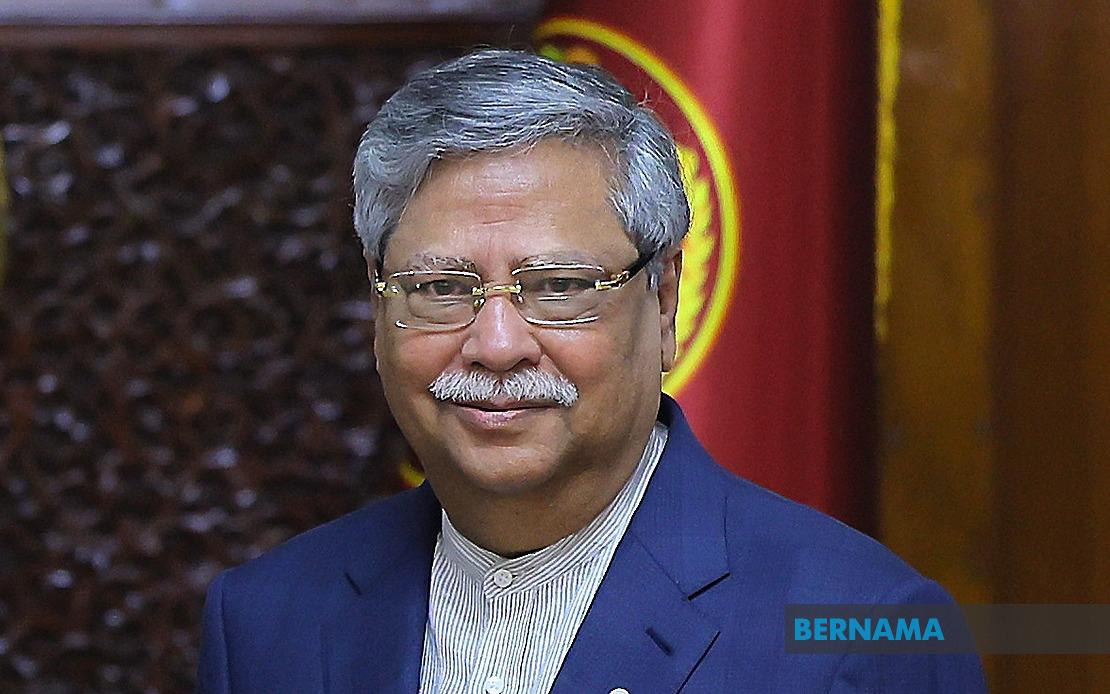
Bangladesh is set to elect a new president when parliament reconvenes for its third session in September, according to Law Minister Md Asaduzzaman. The electoral timeline adheres to constitutional requirements mandating that a presidential election take place within 90 days of a president's departure from office. Speaker Hafiz Uddin Ahmad has assumed the presidential functions temporarily, pending the formal election process that will restore full leadership to the nation's top ceremonial office.
The constitutional framework governing this transition reflects Bangladesh's parliamentary system, where members of the national assembly rather than the general electorate choose the president. This mechanism has shaped the country's political landscape for decades, concentrating presidential selection within the legislative chamber. The upcoming election will follow the established procedure, with parliamentarians casting votes to determine who will hold the position for the next term.
President Mohammed Shahabuddin Chuppu submitted his resignation to Speaker Hafiz Uddin Ahmad, citing serious health complications that prevented him from continuing in the role. Press Secretary Md Sarwar Alam confirmed the resignation letter's submission, underscoring the medical factors that necessitated the leadership change. The departure marks a significant transition point in Bangladesh's governance during a period of considerable political activity and reconstruction.
The parliamentary calendar allows a two-month window for convening the third session, with the constitutional deadline falling by September 14. The second session concluded on July 15, establishing the framework within which the new session must commence. This timeline provides parliament adequate opportunity to organise the electoral process while maintaining the legal requirements that structure Bangladesh's governmental functioning.
Prime Minister Tarique Rahman's Bangladesh Nationalist Party commands a substantial parliamentary majority, positioning the ruling coalition to directly influence the presidential selection. Political analysts widely anticipate that the BNP's chosen nominee will secure election, reflecting the party's numerical dominance in the legislature. This concentration of electoral power within a single party reflects the current political configuration that emerged from recent parliamentary contests.
The presidential office in Bangladesh carries significant ceremonial responsibilities alongside constitutional duties, making the election an important institutional moment despite the legislature's decisive control over the outcome. The position represents the formal head of state, embodying national identity and constitutional authority. Previous transitions have typically proceeded smoothly when a single party maintains clear parliamentary control, as currently exists.
For Malaysian observers and Southeast Asian commentators, Bangladesh's presidential succession illustrates the mechanics of parliamentary systems where executives remain accountable to legislative bodies. Unlike presidential republics where direct popular elections determine leadership, Bangladesh's model concentrates presidential selection within parliament, fundamentally altering the political dynamics and accountability structures. This distinction matters considerably for understanding how power flows within different regional governance frameworks.
The transition also highlights how health crises can precipitate leadership changes in democratic systems, requiring constitutions to establish clear succession procedures. Bangladesh's 90-day framework demonstrates how institutional design anticipates such circumstances, ensuring continuity even when unexpected departures occur. The smooth assumption of functions by Speaker Hafiz Uddin Ahmad reflects institutional maturity in managing interim periods.
The BNP's position as the dominant force in parliament means the coming months will likely see party deliberations regarding its presidential nominee rather than genuine electoral competition. This dynamic, common in parliamentary systems with strong single-party majorities, concentrates real decision-making within party structures rather than the broader legislature. While the formal election remains constitutionally necessary, practical outcomes may be largely predetermined by intra-party processes.
Regionally, Bangladesh's presidential election occurs as other South Asian democracies continue navigating complex political transitions. The country's ability to manage orderly succession demonstrates institutional resilience despite ongoing governance challenges. The September electoral process will affirm whether established constitutional mechanisms function effectively when invoked.
The new president will inherit an office operating within a political context dominated by Prime Minister Tarique Rahman's executive authority. While ceremonial duties occupy much of the presidential role, the office retains constitutional significance and represents an important institutional position within Bangladesh's democratic architecture. The incoming president will serve for a constitutionally defined term, subject to the same electoral processes when that period concludes.

