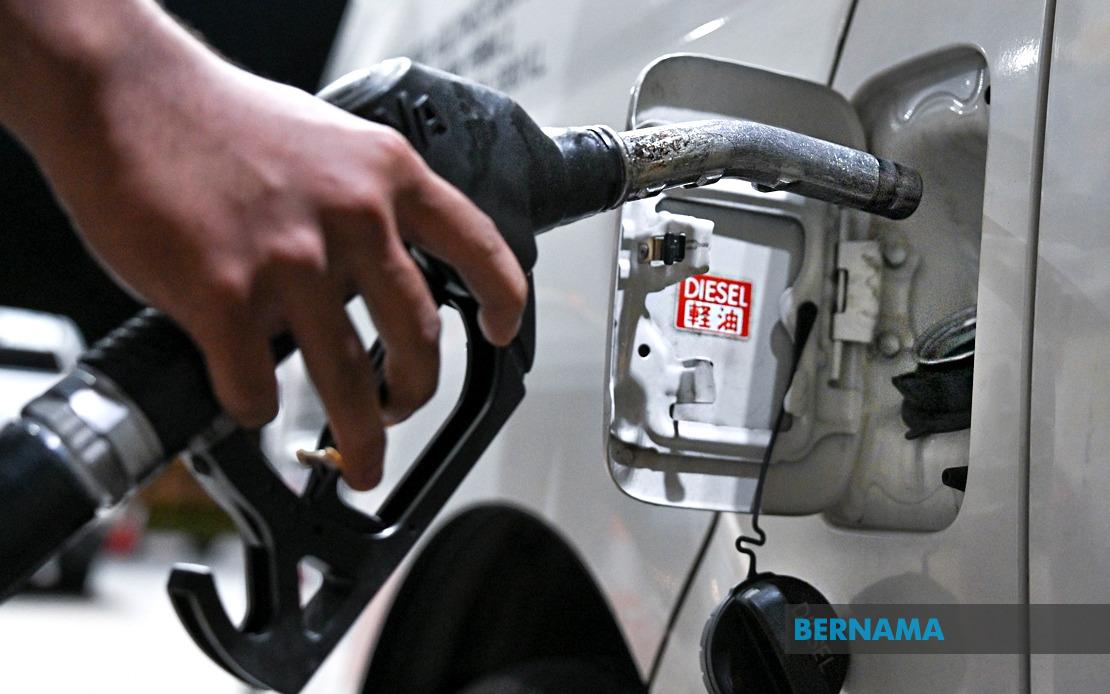
Malaysia's government has announced a reduction in subsidised diesel prices to RM2.10 per litre beginning in July, marking what authorities describe as tangible progress from the MADANI administration's broader push to reform how the nation allocates welfare spending. The move comes amid persistent global energy volatility and represents an attempt to balance fiscal prudence with relief for ordinary Malaysians struggling with rising living costs across multiple sectors of the economy.
Datak Mustapha Sakmud, Minister in the Prime Minister's Department overseeing Sabah and Sarawak, characterised the price reduction as evidence that economic restructuring undertaken by the current government is translating into measurable gains for households. Rather than presenting this simply as a policy adjustment, Mustapha framed the announcement within the context of the administration's broader commitment to efficiently managing public finances while maintaining purchasing power for citizens who depend on fuel for transportation, commerce, and daily survival.
Central to this announcement is the continuation of a targeted subsidy framework that relies on MyKad identification to verify eligibility. This approach differs fundamentally from the universal subsidies that previously characterised Malaysia's fuel pricing regime, instead concentrating government support on Malaysians deemed to require assistance. Proponents argue that such precision substantially reduces the historical problem of subsidy leakage, where fuel purchased at below-market rates domestically was often smuggled across borders to neighbouring countries where prices were substantially higher, thereby depleting the subsidy budget without benefiting intended recipients.
The current pricing structure reveals significant disparities within Malaysia itself. Peninsular Malaysia continues to trade diesel at RM4.37 per litre without subsidy, while Sabah and Sarawak residents enjoy the RM2.15 per litre subsidised rate, soon to fall further to RM2.10. This two-tier system reflects historical administrative arrangements and the distinct fiscal relationships between the federal government and the East Malaysian states, but it also highlights the uneven impact of subsidy policy across the country's different regions.
Mustapha's statement explicitly linked Malaysia's subsidy management to broader geopolitical considerations. The minister referenced ongoing conflict in West Asia as creating structural pressure on global energy markets and necessitating more strategic national approaches to energy security. This framing underscores how domestic fuel pricing decisions intersect with international diplomacy and market dynamics that remain largely beyond any single nation's control, even one producing its own petroleum.
To address these external pressures, the government has pursued deeper energy cooperation with major producing nations. Relationships with Russia and Turkmenistan, alongside partnerships with other significant energy exporters, are positioned as crucial insurance policies against supply disruptions or price spikes that could overwhelm Malaysia's fiscal capacity to maintain subsidies. Such arrangements reflect recognition that the nation's long-term prosperity depends not merely on domestic policy choices but on securing reliable energy access through diversified international relationships and strategic positioning within global energy markets.
Prime Minister Datuk Seri Anwar Ibrahim's administration has presented these price adjustments as evidence of competent economic stewardship. The argument advanced is that careful management of state resources, combined with structural reforms to targeting mechanisms, creates fiscal space to provide relief even within constrained budgets. This narrative matters politically because it connects cost-of-living improvements directly to the ruling coalition's governance record, justifying the reforms and the sometimes unpopular transitions away from universal subsidies toward more selective support.
The diesel price adjustment also carries implications for commercial sectors throughout Malaysia. Transportation operators, agricultural businesses, and manufacturers dependent on fuel costs will experience direct margin impacts from the adjustment, potentially cascading through supply chains and affecting prices for goods and services accessible to Malaysian consumers. For operators in Peninsular Malaysia without subsidy access, the RM4.37 rate creates persistent cost pressures that may incentivise business relocations to East Malaysia or strategic adjustments to operational efficiency.
For Southeast Asian observers, Malaysia's experience with subsidy targeting offers both lessons and cautionary notes. Several neighbours grapple with similar challenges of maintaining affordable fuel while controlling fiscal erosion from smuggling and universal support systems. Malaysia's MyKad-based approach represents one attempted solution to these dilemmas, though questions persist regarding implementation effectiveness, administrative burden, and political acceptability as universal benefits transition toward means-tested support.
The success of this pricing strategy ultimately depends on multiple factors beyond government control. Global energy prices remain volatile; geopolitical developments could dramatically alter supply security; and the effectiveness of fraud prevention in the MyKad verification system remains subject to real-world testing. Citizens and observers will assess whether the promised benefits materialise consistently and whether the subsidy savings genuinely translate into broader government capacity to address other cost pressures facing households.
Looking ahead, Malaysia's diesel price decision signals continued commitment to gradual subsidy restructuring rather than sudden transition. This incremental approach aims to avoid the social disruption that past abrupt fuel price increases have sometimes triggered, while maintaining momentum toward longer-term fiscal sustainability. The announcement thus represents both an immediate relief measure for diesel consumers and one chapter in an extended narrative of how Malaysia reconciles welfare objectives with fiscal discipline in a challenging economic environment shaped by forces extending far beyond national borders.

