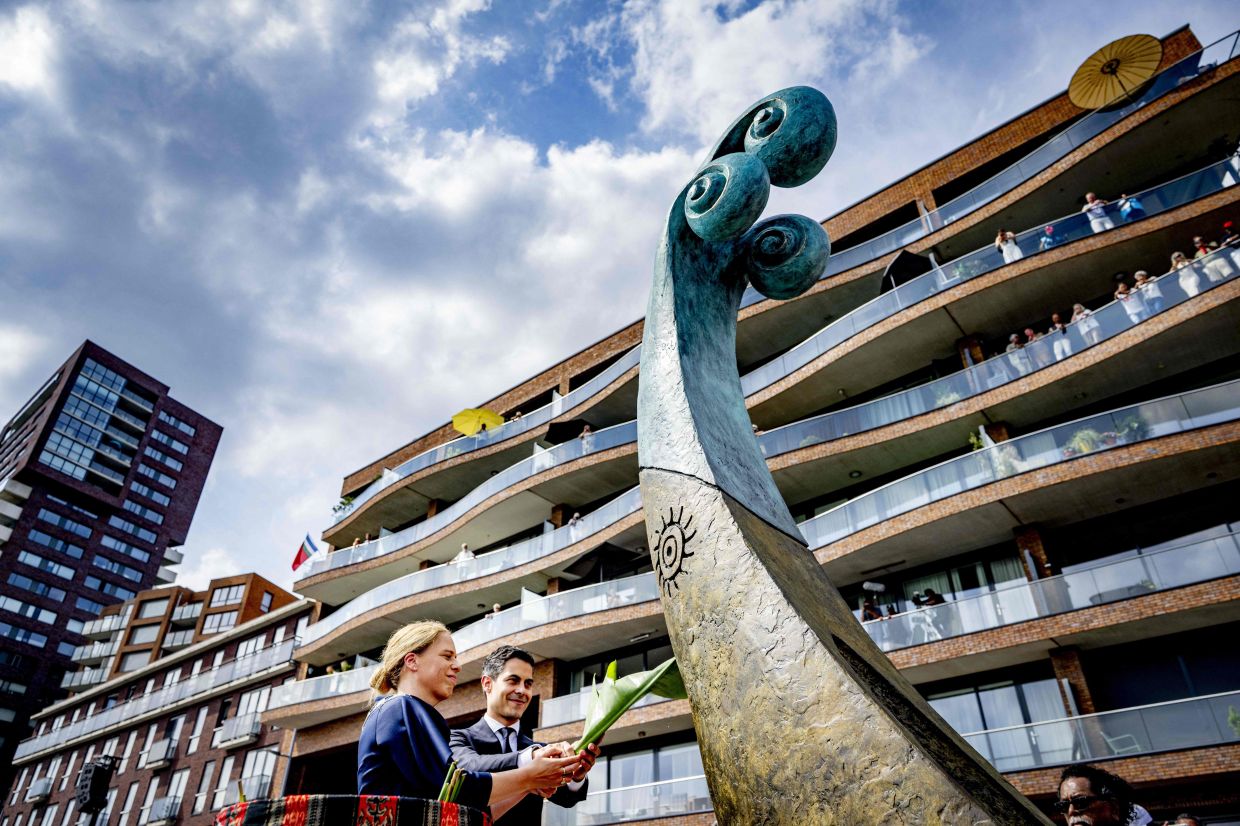
Dutch Prime Minister Rob Jetten delivered a formal state apology on Sunday to members of the Moluccan community, acknowledging the systematic mistreatment and betrayal they suffered at the hands of the Netherlands across multiple decades. The ceremony, held in Rotterdam where the first ships carrying displaced Moluccans arrived, marked a significant moment of reckoning for the Dutch government regarding a longstanding historical injustice that has reverberated through generations of an entire diaspora population.
The Moluccans, originating from Indonesia's eastern spice islands, found themselves caught in the turbulent aftermath of World War II colonial politics. During the Indonesian independence struggle in the late 1940s, many from these islands had served in the Dutch colonial army, fighting alongside their Dutch commanders even as nationalist movements swept across the archipelago. When Indonesia finally secured independence in 1949, these military personnel and their families suddenly faced an uncertain future in their homeland, where they were increasingly viewed with suspicion as collaborators with the departing colonial power.
Facing potential reprisals from newly independent Indonesia's population, approximately 12,500 Moluccans were transported to the Netherlands under a state-organised resettlement programme. The arrangement was presented as temporary—a necessary protective measure while negotiations unfolded between The Hague and Jakarta over the prospect of eventual repatriation or the creation of an independent Moluccan state. This promised pathway home became the enduring hope that sustained families through their initial years in an unfamiliar European climate and culture.
The reality that awaited the Moluccan arrivals bore little resemblance to official assurances. Housed in appalling conditions with minimal government support, many found themselves systematically excluded from Dutch employment and social integration efforts. Former Nazi concentration camps, repurposed after the war's end, became holding facilities for these displaced people. The Dutch government's initial commitment to facilitate their return gradually evaporated, replaced by indefinite residence in substandard accommodation and social marginalisation that persisted for decades.
This broken promise generated profound psychological and social trauma across the Moluccan community. Families experienced fractured connections to their homeland, cultural erosion accelerated by enforced distance, and economic hardship compounded by employment discrimination. First-generation Moluccans carried lifelong grief over their separated homeland and unfulfilled expectations, while their children grew to adulthood in the Netherlands, increasingly aware of their parents' unfulfilled dreams and the Dutch government's abandonment of its commitments.
The accumulated frustration and disillusionment exploded into visible protest during the 1970s, when second-generation Moluccans, born or raised in the Netherlands but disconnected from their ancestral islands, initiated several violent confrontations. These incidents, including train hijackings and raids, shocked Dutch society and drew international attention to the simmering grievances of a forgotten community. The actions reflected the existential crisis of a generation caught between their parents' longing for a homeland they had barely known and the reality of permanent settlement in a society that had never truly welcomed them.
Jetten's apology directly addressed each layer of this injustice. He explicitly acknowledged the inadequate housing, the deliberate invisibility imposed upon the Moluccan community, the yearning for a home that would never be reclaimed, and the intergenerational grief that had fractured families across decades. His words, delivered with evident emotion at the unveiling of the Ulu Kora monument on Rotterdam's Lloydkade—the precise location where displacement began—carried symbolic weight as recognition of Dutch state responsibility.
Yet the Prime Minister tempered his apology with candid acknowledgment of its limitations. Jetten recognised that formal words, however sincere, cannot erase historical trauma or reverse decades of neglect and broken commitments. An apology cannot restore lost years, reunite families permanently separated by geography and circumstance, or recover cultural heritage diluted by forced exile. It cannot change the fundamental reality that the Moluccan homeland remains part of Indonesia, making the return that first-generation Moluccans longed for a political impossibility rather than a mere postponement.
The Dutch government's formal acknowledgment carries broader significance for how developed nations reckon with colonial legacies. The Netherlands, like other European powers, has increasingly faced reckoning with historical injustices committed during its period as a colonial power. However, the Moluccan case represents something more complex than straightforward colonial-era wrongdoing—it involves post-war betrayal, broken international agreements, and systematic marginalisation of a vulnerable population within European borders.
For Malaysian and Southeast Asian observers, the Dutch apology offers instructive lessons regarding historical accountability and intergenerational justice. Many nations in this region continue navigating their own legacies of colonialism, migration, and displacement. The Moluccan experience demonstrates both the lasting consequences of broken state promises and the eventual necessity, however belated, of official recognition and responsibility. It underscores how diaspora communities maintain cultural memory and claim historical justice even across generations removed from the original displacement.
The Moluccan journey from expected temporary residents to permanent diaspora, excluded and unintegrated for decades, stands as a cautionary historical marker. Their eventual partial recognition through this apology, arriving only after multiple generations had passed and many original community members had died, illustrates the extended timeline often required for institutional acknowledgment of historical wrongs. For descendants of first-generation Moluccans—now thoroughly rooted in Dutch society despite their contested relationship with it—the formal apology represents belated validation of their ancestors' suffering and a measure of historical justice that, while incomplete, finally names and acknowledges the injustice they endured.

