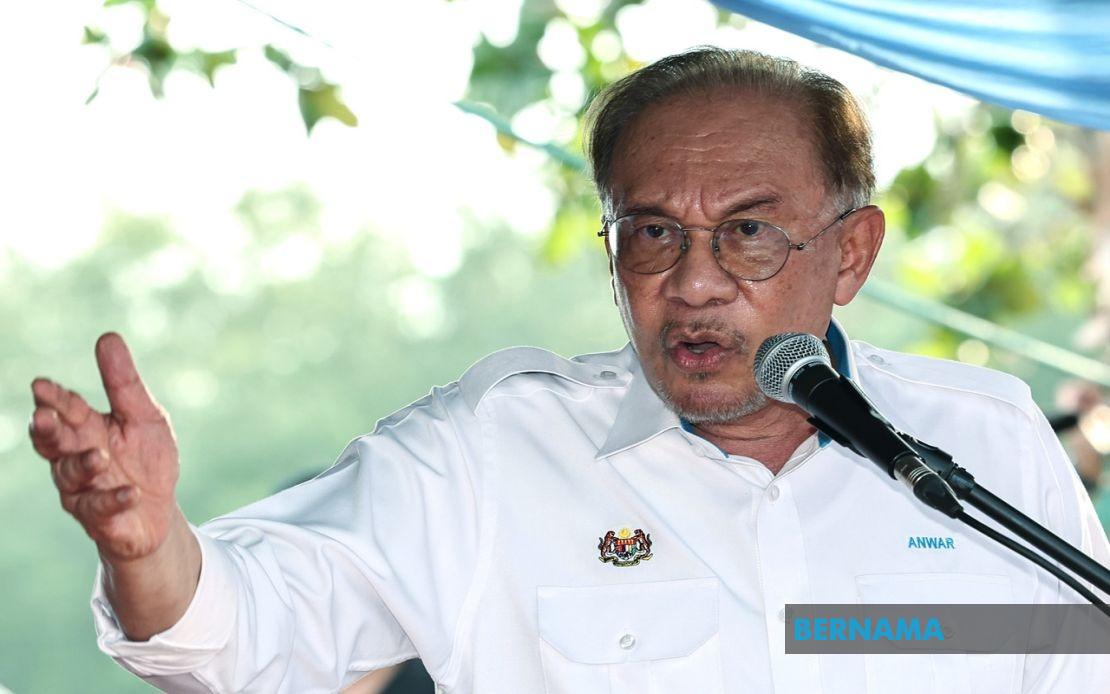
Prime Minister Datuk Seri Anwar Ibrahim has underscored the necessity for Malaysia's economic expansion and development gains to reach across all strata of society, with particular emphasis on communities at the grassroots level. Speaking during an engagement with fishing communities, farmers, and local residents at Pantai Leka Food Court in Muar, the Prime Minister stressed that prosperity cannot remain concentrated among elite circles or urban centres if the nation truly aspires to sustainable and meaningful progress.
The government's development blueprint, Anwar argued, must transcend the traditional approach of prioritising major infrastructure projects and cutting-edge technological advancement. Instead, policymakers and government agencies ought to ensure that ordinary Malaysians—including smallholder farmers, paddy cultivators, fishing communities, and small-scale entrepreneurs—directly experience the tangible benefits of national progress. This recalibration reflects a recognition that grand developmental narratives often obscure the lived realities of ordinary citizens whose economic circumstances may not visibly improve despite headline growth figures and modernisation announcements.
Anwar articulated a fundamental principle of inclusive governance: that development initiatives must guarantee convenience, accessibility, and genuine improvement in living standards for lower-income groups. He questioned who bears responsibility for advocating on behalf of those without institutional access or political leverage, implying that elected leaders must personally venture into communities rather than relying solely on bureaucratic intermediaries. This emphasis on direct engagement represents a challenge to top-down governance models that have historically dominated Malaysian policymaking, where decisions are often made in air-conditioned boardrooms far removed from the conditions they purport to address.
While acknowledging the strategic importance of emerging technologies such as artificial intelligence and digital transformation for Malaysia's competitive positioning in global markets, Anwar positioned rural welfare and income enhancement as non-negotiable priorities under the MADANI Government framework. This apparent tension between high-tech modernisation and rural development reflects a broader debate within Southeast Asian economies about whether growth strategies should prioritise technological leapfrogging or address immediate material needs of agricultural and fishing-dependent populations. The Prime Minister's statement suggests the government intends to pursue both pathways simultaneously, though questions remain about resource allocation when trade-offs become unavoidable.
The government maintains that social protection mechanisms and targeted assistance programmes reach their intended beneficiaries through relevant agencies and authorities. However, implementation gaps between policy design and on-ground delivery remain persistent challenges across Malaysian bureaucracy. Anwar's emphasis on effective channelling of safety nets and subsidies suggests awareness that structural weaknesses in programme administration may prevent funds from reaching eligible recipients. This acknowledgment carries particular weight given recurring complaints from rural communities about delayed payments, eligibility disputes, and insufficient awareness about available support schemes.
The Prime Minister issued a direct instruction to Cabinet members and political leaders at all levels, directing them to routinely visit communities, listen to grievances firsthand, and implement solutions with appropriate urgency and efficacy. This directive challenges the conventional distance maintained between senior policymakers and ordinary constituents, implying that such separation contributes to policy failures and misaligned priorities. For Malaysian political leaders accustomed to managing governance through hierarchical channels and delegated authority, this call for ground-level engagement represents a potentially significant shift in operational expectations, though actual implementation will ultimately determine its impact.
Anwar further contended that responsible leadership requires courage—specifically, the willingness to amplify concerns of economically marginalised populations to decision-making forums where resource distribution occurs. This framing positions advocacy for vulnerable communities as a leadership characteristic rather than charitable impulse, suggesting that failure to represent lower-income groups constitutes a fundamental abdication of political responsibility. Such rhetoric resonates with electoral constituencies who feel overlooked by development agendas dominated by urban and corporate interests, though translating rhetoric into sustained policy reorientation remains challenging within Malaysia's complex bureaucratic and political landscape.
The underlying concern animating Anwar's remarks centres on ensuring that no demographic group becomes excluded from modernisation benefits. As Malaysia pursues digital economy expansion, green energy transitions, and advanced manufacturing capabilities, the risk intensifies that communities lacking technological literacy or capital access may experience widening inequality rather than shared prosperity. Rural populations dependent on traditional livelihoods face particular vulnerability to disruption without concurrent investment in skills development, infrastructure modernisation, and market access improvements tailored to their circumstances. The Prime Minister's Muar visit represented an attempt to signal commitment to preventing such marginalisation, though the adequacy of policy instruments and budgetary allocations remains subject to scrutiny.
For Malaysian stakeholders across agriculture, fishing, and small commerce sectors, Anwar's statements provide rhetorical validation of their concerns and signal potential receptiveness to sectoral advocacy. However, the distinction between acknowledgment and substantive resource reallocation looms large. Rural communities have heard development-inclusive rhetoric from previous administrations, and measured scepticism about whether current commitments translate into enhanced extension services, agricultural modernisation support, or enhanced fisheries management remains evident. The MADANI Government's track record on rural economic initiatives and income supplementation will ultimately determine whether these statements represent genuine reorientation or familiar political messaging.
The broader context encompasses Malaysia's positioning within Southeast Asia's competitive dynamics, where regional neighbours similarly pursue development models attempting to balance technological advancement with rural welfare. Thailand's agricultural modernisation programmes, Vietnam's digital economy expansion combined with rural support mechanisms, and Indonesia's infrastructure-focused development reflect regional precedent for attempting dual-track approaches. Malaysia's ability to execute inclusive growth credibly could enhance its development model's regional influence and attract international attention as example of balanced modernisation, though execution challenges across bureaucratic institutions and political constituencies remain formidable.