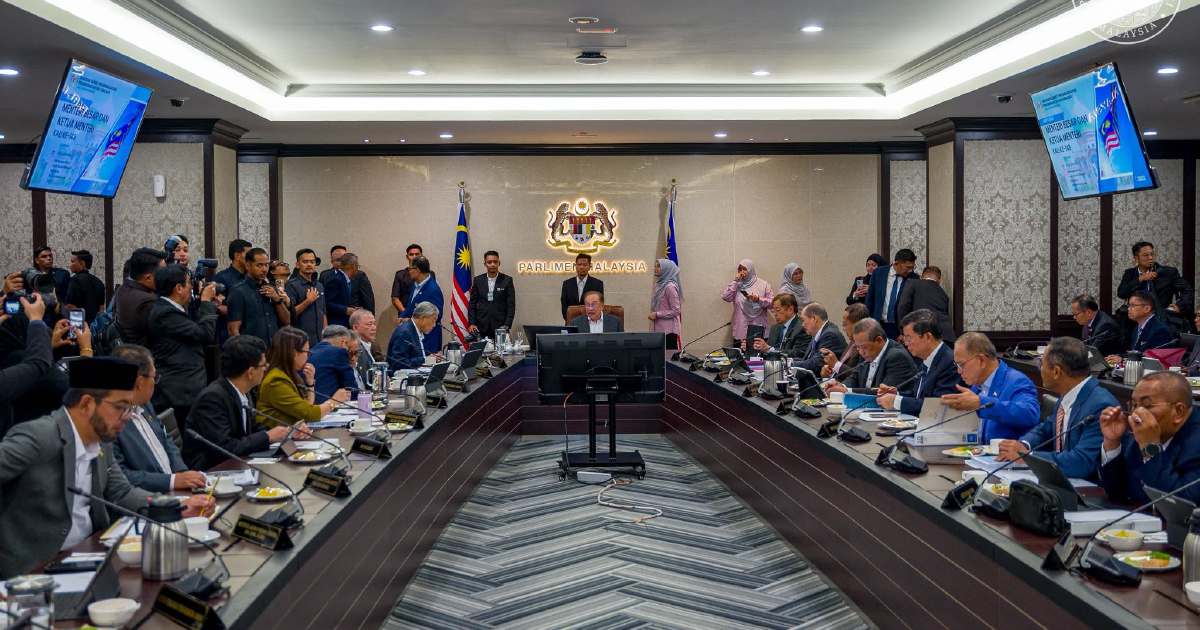
Prime Minister Datuk Seri Anwar Ibrahim brought together Malaysia's top state administrators at Parliament for the 149th joint meeting of Menteris Besar and Chief Ministers, directing discussions toward revitalising the nation's economic performance in an increasingly uncertain global environment. The gathering reflected mounting concerns about how spillover effects from international conflicts, particularly ongoing tensions in the Middle East, could jeopardise Malaysia's growth trajectory and investor confidence during a critical period of economic adjustment.
The choice to elevate this gathering to a full state-level forum underscores how seriously the federal government views the challenge of maintaining momentum across Malaysia's diverse economic corridors. By bringing together the chief executives of all Malaysian states, Anwar's administration signalled that economic recovery cannot be achieved through federal policy alone—state governments, which manage critical local development portfolios from land use to small business promotion, must coordinate their efforts within a coherent national strategy. This collaborative approach reflects a shift toward more integrated federalism in economic policymaking, contrasting with previous administrations that sometimes operated in silos.
The timing of the meeting carries particular significance given Malaysia's complex economic position. The nation operates as a critical node in global supply chains, particularly in semiconductor manufacturing, palm oil production, and petrochemicals. Regional instability in the Middle East threatens multiple dimensions of Malaysian prosperity: potential disruptions to shipping routes through sensitive waters could increase transportation costs for Malaysian exporters, volatile oil prices affect government revenues and domestic fuel subsidies, and geopolitical uncertainty typically prompts multinational corporations to reassess investment strategies across Asia-Pacific. These vulnerabilities make coordinated state-federal economic management not merely advantageous but essential.
State governments play an underappreciated role in economic recovery that often escapes federal oversight. Menteris Besar and Chief Ministers directly influence business registration, licensing, land allocation for industrial zones, workforce development through technical institutions, and local procurement policies. When state authorities operate without clear alignment to national economic priorities, they inadvertently create friction that slows investment processes and diverts resources inefficiently. The 149th meeting provided a platform to ensure that state-level decisions on infrastructure, land use, and business incentives reinforce rather than contradict national economic objectives during a recovery period.
Malaysia's economic landscape has shifted considerably since the global financial recovery. The nation now competes for foreign direct investment with increasingly sophisticated regional rivals including Vietnam, Thailand, and Indonesia. Each of these competitors actively markets their individual states or provinces to international investors with coordinated branding and streamlined approval processes. By convening Menteris Besar and Chief Ministers, the federal government acknowledges that Malaysia's ability to attract and retain high-value economic activity depends on presenting a united, efficient investment environment. Fragmented state policies—divergent tax incentives, inconsistent regulatory approaches, or competing infrastructure investments—undermine Malaysia's competitive positioning in attracting multinational enterprises seeking single-gateway entry to Southeast Asia.
The agenda touching on Middle Eastern conflicts reflects realistic economic anxiety. Malaysia's trade relationship with Gulf states remains significant, particularly in oil and gas sectors, construction services, and financial services. Saudi Arabia, the United Arab Emirates, and other Gulf monarchies represent not only trading partners but also crucial sources of foreign investment and workers' remittances through their large Malaysian diaspora. Prolonged instability in the Middle East could reduce these revenue streams, making it imperative for Malaysian policymakers to identify alternative growth drivers and strengthen domestic economic resilience. States with significant petroleum downstream facilities or ports handling Middle Eastern trade faced particular pressure to present strategic alternatives to ensure their economic viability in a disrupted scenario.
The meeting also indirectly addressed concerns about Malaysia's fiscal capacity. With several states facing structural budget constraints and varying capacity for infrastructure investment, the federal-state coordination mechanism allows wealthier states to learn best practices from peers while ensuring that less-resourced states receive technical support in implementing national economic priorities. This vertical and horizontal knowledge-sharing within the governance system represents a pragmatic approach to achieving equitable economic development across Malaysia's disparate regions.
Beyond immediate economic concerns, the gathering reflected broader anxieties about Malaysia's developmental trajectory. The nation possesses substantial human capital, strategic geographic location, and established institutional frameworks, yet has struggled to transition decisively toward high-technology, high-value-added manufacturing comparable to South Korea or Singapore. State leaders, particularly those governing industrialised zones in Selangor, Penang, Johor, and Sabah, command critical levers for accelerating this transition through education-industry linkages, technology incubators, and innovation zones. Their participation ensured that state-level economic strategies could support this long-term structural transformation alongside immediate recovery measures.
The focus on economic revival also contains an implicit political dimension. Managing state expectations around federal support, ensuring equitable resource distribution across states with different political alignments, and demonstrating visible commitment to addressing economic hardship remain crucial for maintaining political stability within Malaysia's federal system. By convening this high-level forum, the Prime Minister provided a venue where state leaders felt heard and included in national economic decisions, fostering the collaborative federalism necessary for effective governance during economically challenging periods.
As Malaysia navigates uncertainty emanating from Middle Eastern tensions and broader global economic volatility, the coordination mechanisms activated through meetings such as the 149th gathering represent essential infrastructure for collective resilience. The effectiveness of this coordination mechanism will ultimately determine whether Malaysia can either withstand external economic shocks or leverage current disruptions as opportunities to strengthen its competitive position in Southeast Asia's evolving economic landscape.

