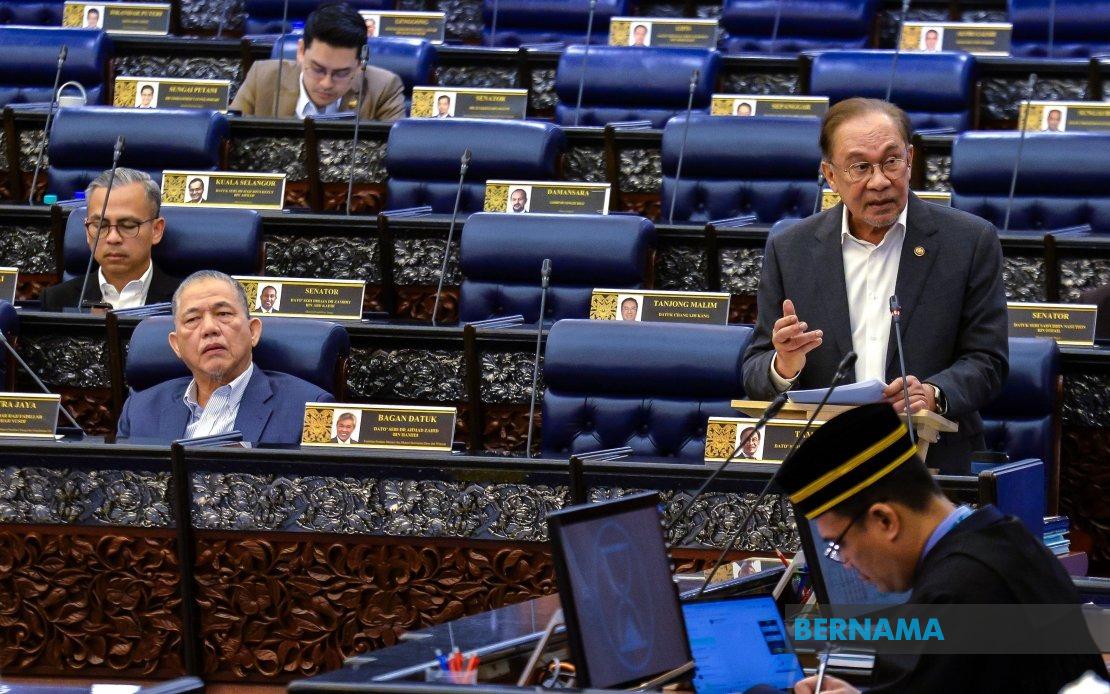
Prime Minister Datuk Seri Anwar Ibrahim has moved to clarify the methodology behind federal allocations to states, emphasising that the distribution framework prioritises development requirements and public welfare over tax revenue comparisons. Speaking during parliamentary proceedings, Anwar highlighted that the vast majority of states receive substantially higher federal funding than they contribute in tax collection, a disparity he framed as intentional policy rather than administrative oversight.
Only two states—Selangor and Penang—generate tax revenues exceeding their federal allocations, a distinction that underscores the redistributive nature of Malaysia's fiscal federalism. This mechanism reflects a deliberate government strategy to channel resources toward regions with greater infrastructure gaps and socioeconomic challenges. The clarification came in response to parliamentary questions concerning the perceived fairness of allocation distribution and whether certain state administrations faced systematic marginalisation in funding decisions.
The Prime Minister's explanation reveals the weighting system applied when determining budget allocations across Malaysia's thirteen states and three federal territories. Rather than applying a simple formula based on fiscal contributions, the government evaluates each jurisdiction's specific development requirements. Critical priorities include comprehensive flood mitigation infrastructure, particularly vital given Malaysia's vulnerability to seasonal inundation. Additionally, allocations account for ongoing transportation network upgrades, such as the Pan Borneo highway expansion in Sarawak and Sabah, alongside the construction of new road corridors in underserved regions.
Water management infrastructure represents another substantial allocation category, with drainage system improvements addressing both urban flooding and rural water access challenges. The government also emphasises poverty alleviation programmes and educational facility development as core spending priorities. These categorical investments reflect the MADANI Government's development philosophy, which incorporates social mobility enhancement and basic service delivery as foundational elements of regional equity.
Anwar drew explicit comparisons with the previous administration's funding patterns, arguing that his government has substantially increased allocations to traditionally underfunded states. Kedah, Terengganu, and Kelantan have received heightened federal attention under the current administration, with resource levels surpassing historical precedent. This reallocation strategy addresses long-standing regional development disparities that accumulated across multiple electoral cycles. The emphasis on these three states carries particular significance given their historical status as economically disadvantaged regions requiring intensive infrastructure investment.
The distinction between revenue contribution and allocation receipt reflects broader constitutional arrangements governing Malaysian federalism. The Federal Constitution establishes a framework permitting the federal government to exercise fiscal redistribution powers, enabling cross-subsidisation between resource-rich and resource-constrained states. Selangor and Penang's exceptional status as net fiscal contributors stems partly from their concentrated urban economies and industrial bases, which generate disproportionate commercial taxation. This concentration has historically enabled these states to exceed federal allocation levels, though they continue receiving federal funding for nationally-coordinated infrastructure projects.
For Malaysian policymakers and state administrators, understanding the allocation methodology carries implications for budget planning and resource management. States cannot reliably forecast federal transfers based on their tax revenue generation, necessitating diversified revenue strategies including state-level taxation, licensing fees, and land development revenues. This structural reality has driven some state governments toward entrepreneurial approaches to public finance, including the development of special economic zones and commercial property ventures.
The Prime Minister's parliamentary response also addressed underlying concerns about political equity in resource distribution. Opposition questioning implied that certain state administrations might face budgetary disadvantages based on political affiliation or factional considerations. Anwar's emphasis on objective need-assessment criteria—rather than political calculation—sought to preempt accusations of discriminatory allocation practices. However, the subjective element inherent in determining which states face the greatest development urgency remains a potential flashpoint for political dispute.
From a regional Southeast Asian perspective, Malaysia's approach to fiscal federalism reflects patterns common across the Association of Southeast Asian Nations, where central governments typically maintain allocative authority over subnational units. Singapore's constitutional framework vests substantially greater centralised control, whilst Thailand's historical instability has periodically disrupted fiscal transfer systems. Indonesia's decentralisation reforms created more substantial fiscal autonomy for provincial governments, establishing a contrasting model. Malaysia's current system represents a middle position, preserving federal redistributive capacity whilst permitting state-level revenue generation.
The debate over allocation fairness extends beyond technical fiscal questions into political legitimacy. Citizens in net-contributor states may perceive federal redistribution as inequitable, whilst residents in recipient states may question whether allocations adequately address genuine development gaps. Anwar's parliamentary statement represents an attempt to anchor allocation decisions in objective criteria—infrastructure need, poverty prevalence, service delivery gaps—rather than political preference. This framing aims to depoliticise what remains inherently contested terrain in any federal system.
Moving forward, the government faces sustained scrutiny regarding allocation transparency and methodology clarity. State governments and opposition parliamentarians will likely demand more detailed breakdowns explaining how need assessments translate into specific budget figures. Enhanced disclosure could strengthen public confidence in the allocation system whilst reducing speculative claims about favouritism or discrimination. The MADANI Government's stated commitment to increased allocations for historically underfunded states offers a measurable benchmark against which future distribution patterns can be evaluated.

