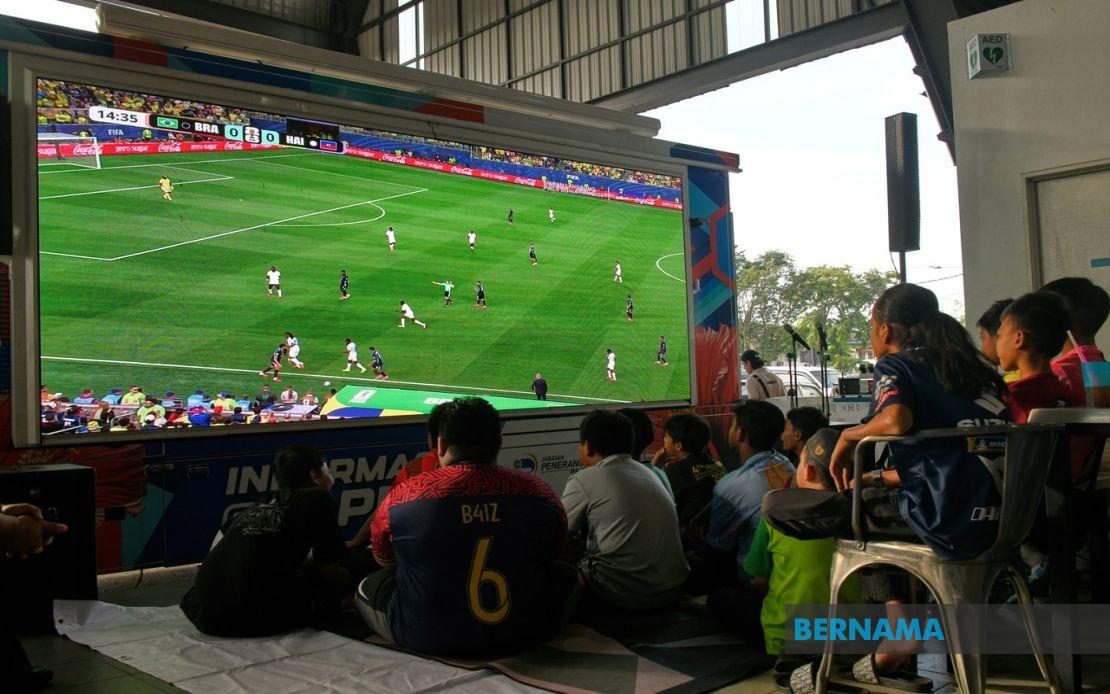
The Malaysian government's decision to offer free access to 2026 FIFA World Cup matches through Radio Televisyen Malaysia and Unifi TV is generating substantial relief for restaurant operators and the general public, Communications Minister Datuk Fahmi Fadzil announced during a visit to Butterworth on June 20. The initiative represents a significant shift in how Malaysians can consume the tournament, removing the financial barriers that typically accompany major sporting events broadcast through commercial channels.
Fahmi highlighted feedback he received from the Malaysian Muslim Restaurant Owners Association, which underscored the tangible benefits the free broadcast arrangement is delivering to the food and beverage sector. Restaurant operators have expressed genuine appreciation for a policy that sidesteps the costly licensing fees usually associated with screening international sporting events. For businesses operating on thin margins—particularly small to medium-sized food courts and casual dining establishments—the elimination of broadcast costs represents meaningful savings that can be redirected toward other operational expenses or passed along to customers.
One trader shared a poignant perspective with the minister, noting that the opportunity to show World Cup matches without incurring broadcast fees represented the first such occasion in over twenty years of business. This remark encapsulates the historical challenge facing Malaysian food premises: the tension between viewer demand for major sporting spectacles and the commercial reality of expensive broadcast rights. The free availability through RTM, RTMKlik, and Unifi TV fundamentally alters this equation, allowing establishments to capitalize on customer interest without the prohibitive licensing arrangements that previously governed such screenings.
The minister's visit to the Seberang Jaya Public Market food court provided him with firsthand exposure to trading conditions and consumer sentiment. Rather than limiting his appearance to ceremonial duties, Fahmi watched the opening half of the Brazil versus Haiti fixture alongside patrons and traders, an engagement that allowed him to gather unfiltered perspectives on current commercial pressures. This direct interaction yielded multiple inputs regarding business challenges and expectations for government support, conversations he committed to relay to Prime Minister Datuk Seri Anwar Ibrahim and Penang Chief Minister Chow Kon Yeow.
The cost-reduction benefit extends well beyond commercial establishments to Malaysian households. Families and informal viewing groups can now gather at public venues or in homes with access to the designated broadcast platforms, eliminating the need to pay premium subscription fees or visit venues with expensive broadcast arrangements. This democratization of access to the World Cup aligns with broader government objectives of enhancing public engagement with major sporting events while considering the financial constraints facing ordinary Malaysians.
Fahmi used the occasion to advocate for greater ministerial visibility at community level, encouraging his peers in Cabinet and Parliament to spend time observing conditions faced by traders and residents. He emphasized that such ground-level engagement provides invaluable context for policymaking, particularly regarding the cascading effects of international economic disruptions. The minister noted that conflicts in West Asia continue to drive inflation in specific goods categories, creating headwinds for businesses already navigating challenging market conditions.
The broader strategic value of the free broadcast initiative becomes evident when considered against economic headwinds currently affecting the region. Rising input costs, supply chain uncertainties, and consumer spending pressures create an environment where government policies that reduce business operational expenses carry particular significance. By absorbing or forgiving the broadcast licensing costs associated with World Cup screening, the government effectively provides indirect economic stimulus to the hospitality sector while simultaneously enhancing public entertainment value.
For Malaysian policymakers, the initiative represents a practical example of how public broadcasting infrastructure—often viewed as peripheral to core government functions—can be leveraged to address contemporary challenges. RTM's expanded role in distributing premium sporting content demonstrates the continued relevance of public media institutions in an era dominated by commercial streaming platforms. The partnership with Unifi TV, a private-sector entity, exemplifies collaborative approaches that combine public resources with commercial distribution networks.
The initiative also carries implications for how Malaysia positions itself in regional sporting discourse. By ensuring broad public access to the World Cup, the government supports a participatory national sporting culture and demonstrates commitment to inclusive engagement with global sporting events. This contrasts with models in some neighboring countries where broadcast access remains restricted to premium subscribers, potentially fragmenting the national viewing experience along socioeconomic lines.
Looking ahead, the success of this model may establish precedent for how major international sporting events are broadcast in Malaysia. If trader feedback and public reception remain positive throughout the World Cup tournament period, government and media stakeholders may consider extending similar arrangements to other premium sporting properties, from continental football competitions to major tennis tournaments. Such expansion could become standard practice rather than exceptional policy.
The initiative also reflects evolving understanding of what constitutes effective economic support for small and medium enterprises. Rather than direct subsidy programs, policies that reduce structural costs—such as broadcast licensing fees—can generate material impact while avoiding bureaucratic complexity. Food premises operators benefit without requiring application processes, eligibility verification, or administrative overhead, making the policy both efficient and broadly accessible.
Trade associations like the Malaysian Muslim Restaurant Owners Association appear to view the arrangement as recognition of their sector's economic contribution and vulnerability to external cost pressures. This perception can strengthen the relationship between government and business communities, fostering greater cooperation on future policy initiatives. The positive reception Fahmi received suggests that the business community interprets the free broadcast initiative as substantive government support rather than symbolic gesture.

