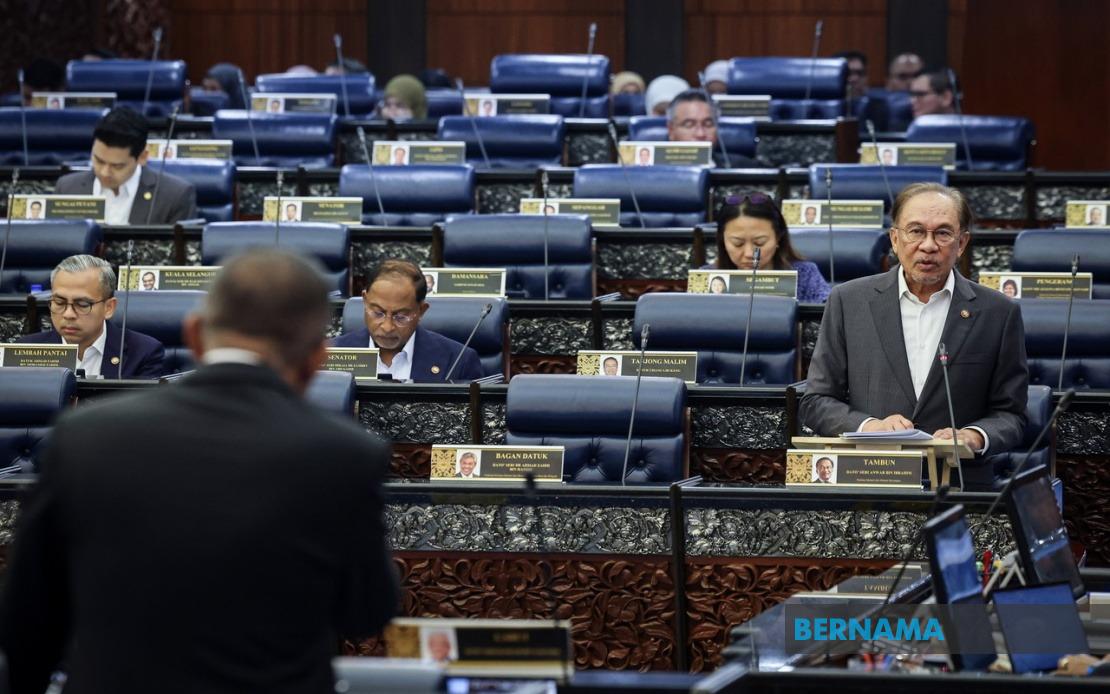
Prime Minister Datuk Seri Anwar Ibrahim announced today that Syarikat Jaminan Pembiayaan Perniagaan (SJPP), a financing guarantee company fully owned by the Ministry of Finance, has approved RM4.9 billion in funding facilities for more than 6,000 micro, small and medium enterprises during the first six months of 2026. The announcement underscores the government's widening support infrastructure for Malaysia's vast MSME ecosystem, which remains vital to employment generation and economic diversification across the country.
Making the statement during ministerial question time in the Dewan Rakyat, Anwar, who simultaneously holds the Finance portfolio, framed the approvals as a direct response to challenges confronting small business operators in an increasingly volatile international economic environment. The initiative reflects growing recognition within government circles that MSMEs—which collectively employ millions of Malaysians and constitute the backbone of domestic commerce—require sustained, accessible financing mechanisms to weathere external shocks and fund operational continuity.
Beyond the immediate headline figures, Anwar elaborated on the government's comprehensive financing architecture for small enterprises. He disclosed that total loans and financing guarantees disbursed to the MSME segment across government-backed schemes exceed RM15 billion, representing a substantial commitment of public resources toward business sustainability. This broader fund allocation demonstrates that the RM4.9 billion approved in the first half of 2026 represents merely one component of a multi-layered support system designed to address liquidity constraints that persistently hamper growth among smaller operators.
A particularly significant element of the government's MSME strategy involves targeted support for Bumiputera-owned enterprises. Within the RM15 billion aggregate financing portfolio, RM5 billion has been explicitly reserved for Bumiputera businesses, signalling an intentional policy focus on ensuring that government capital reaches indigenous entrepreneurs and reinforces the constitutional framework supporting Bumiputera economic participation. This allocation acknowledges both historical inequities in credit access and the strategic importance of broad-based business ownership across Malaysia's diverse population.
The announcement emerged in response to a parliamentary question from Lee Chuan How, the representative for Ipoh Timor, who sought clarity on government awareness of sectoral challenges and the concrete mechanisms being deployed to sustain MSME viability. The framing of the question itself reflects parliamentary scrutiny of whether the MADANI government possesses adequate visibility into real-world business constraints and whether policy interventions translate into tangible relief for entrepreneurs facing margin compression, input cost inflation, and demand volatility.
Contextually, the timing of this RM4.9 billion approval announcement carries significance for regional business sentiment. Malaysia's MSME sector, numbering approximately 3.4 million registered enterprises, operates within an increasingly complex landscape shaped by supply chain fragmentation, rising energy costs, and competitive pressures from regional neighbors. Financing access remains a chronic bottleneck, particularly for enterprises operating outside major urban centers or those lacking traditional collateral assets. SJPP's guarantee mechanism fundamentally addresses this market failure by interposing government credit backing between commercial lenders and borrowers deemed higher-risk by conventional banking criteria.
The SJPP model, wherein the government owns and operates a dedicated guarantee vehicle rather than attempting direct lending, reflects international best practice in MSME finance. By absorbing a portion of credit risk, SJPP reduces loan rejection rates and enables commercial banks to extend credit facilities to otherwise marginal clients. For borrowers, this translates into faster approval timelines, lower interest rate premia, and reduced collateral requirements compared to conventional bank lending. The RM4.9 billion approved figure thus represents leverage of government capital to mobilize substantially larger sums in commercial bank credit.
The emphasis on working capital financing aligns with demonstrated MSME needs. Unlike large corporations capable of managing complex working capital cycles or accessing capital markets, smaller enterprises typically require short-to-medium term credit facilities to bridge gaps between input purchases and revenue realization. By explicitly addressing working capital requirements, government financing schemes enable MSMEs to maintain production cadence, meet payroll obligations, and negotiate favorable payment terms with suppliers—all critical operational dimensions often constrained by inadequate liquidity.
Regional implications warrant consideration. As regional competitors including Vietnam, Thailand, and Indonesia accelerate their own MSME support initiatives, Malaysia's demonstrated commitment to small business financing enhances competitive positioning for attracting entrepreneurial talent and investment. A robust domestic MSME sector capable of thriving—rather than merely surviving—generates export-oriented supply chain participants, employment resilience, and grassroots economic dynamism. The government's RM15 billion financing commitment signals serious intent beyond rhetorical support.
Implementation fidelity remains crucial. While aggregate approval figures suggest ambitious outreach, actual fund deployment, disbursement velocity, and accessibility across geographic regions and demographic segments require ongoing monitoring. Previous government initiatives targeting MSMEs have occasionally encountered bottlenecks in final-mile delivery, where administrative complexity, documentation requirements, or lender conservatism still impede capital flows to intended beneficiaries. Success metrics should encompass not merely approvals granted but actual funds reaching business accounts and supporting productive activities.
The MADANI government's articulation of MSME support through concrete financing figures, rather than aspirational policies alone, represents a measurable commitment. However, sustainable MSME growth requires complementary interventions addressing regulatory burdens, skills development, market access, and technology adoption. Financing, while essential, constitutes one component within a broader ecosystem that determines whether smaller enterprises can scale, innovate, and contribute proportionally to national economic growth and employment creation.

