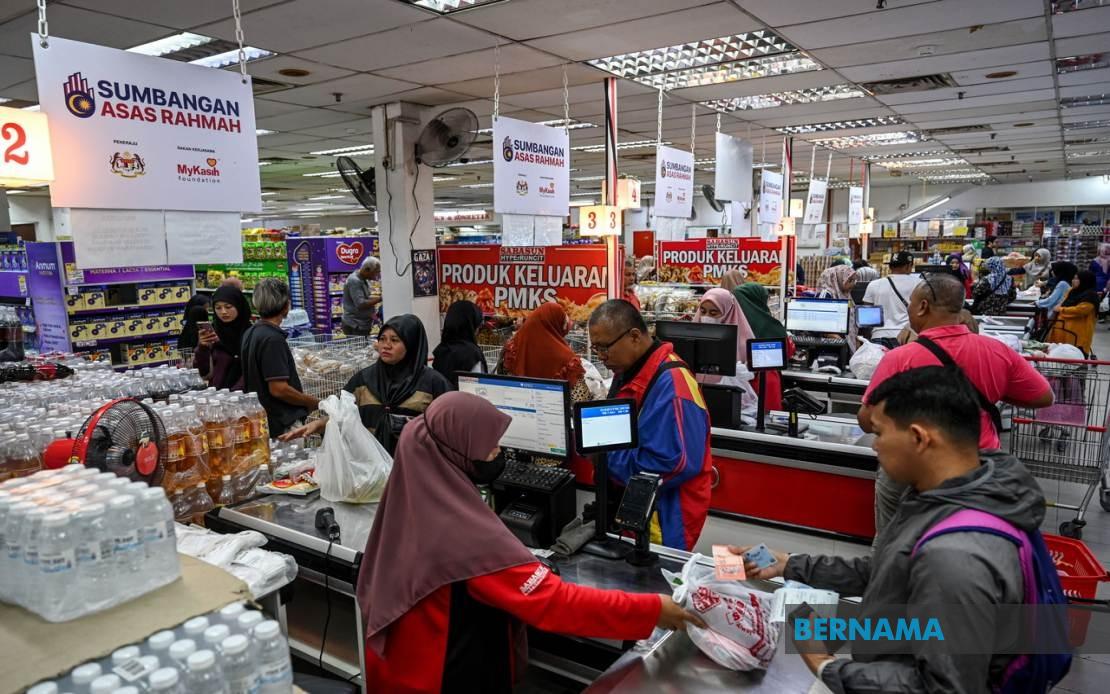
Prime Minister Datuk Seri Anwar Ibrahim has signalled that Malaysia's MADANI Government is actively exploring mechanisms to increase direct cash assistance to vulnerable citizens through the Sumbangan Tunai Rahmah (STR) and Sumbangan Asas Rahmah (SARA) programmes, though the prospect remains contingent on broader macroeconomic developments. Speaking during a community engagement programme in Ipoh on July 19, Anwar indicated that senior Treasury officials, including Treasury secretary-general Tan Sri Johan Mahmood Merican, have been tasked with examining the feasibility of enhanced payouts under both schemes.
The initiative reflects the government's ongoing commitment to social safety nets at a critical juncture for Malaysia's economy. Both STR and SARA represent cornerstone assistance programmes targeting lower-income households, pensioners, and vulnerable populations. These direct cash transfers have become increasingly significant in the nation's welfare architecture, particularly as inflationary pressures and cost-of-living challenges persist across households nationwide. The consideration of expansion demonstrates official recognition that existing assistance levels may require recalibration to maintain adequacy amid evolving economic circumstances.
Anwar, who simultaneously holds the Finance Ministry portfolio, framed the potential enhancement as part of comprehensive Budget planning rather than an immediate commitment. His emphasis on economic conditions permitting such increases underscores the delicate balance Malaysian policymakers navigate between welfare expansion and fiscal sustainability. The timing of this discussion with Treasury officials suggests that detailed feasibility studies may already be underway, with findings likely to inform the next Budget deliberations. This methodical approach contrasts sharply with ad-hoc assistance announcements, indicating a preference for structured, institutionalised welfare adjustments.
The Prime Minister's remarks carry particular weight given Malaysia's current economic positioning within Southeast Asia. Growth has remained relatively modest by regional standards, and inflation, though moderating, continues affecting purchasing power. In this context, the government's consideration of enhanced cash assistance reflects pressure from multiple constituencies—opposition figures, civil society organisations, and households themselves—advocating for stronger welfare provisions. The STR and SARA schemes have already been extended and adjusted multiple times since their introduction, indicating their centrality to the administration's social policy framework.
Beyond direct cash assistance, Anwar also highlighted government attention to welfare provisions for security personnel and volunteers, particularly those serving through RELA, the Malaysian Volunteer Corps Department. This broader welfare focus demonstrates a comprehensive approach addressing not merely citizen vulnerability but also the welfare security of those engaged in national defence and disaster response activities. Anwar announced that RM3 million has been allocated this year specifically for RELA member welfare, representing continuation and reinforcement of previous year allocations.
The allocation to RELA volunteers underscores recognition that security and emergency response activities depend substantially on motivated volunteer participation. RELA members contribute across diverse operations, from border security to disaster relief efforts, often at considerable personal inconvenience. By maintaining and emphasising welfare provisions, the government signals commitment to sustaining volunteer engagement in national security functions—a critical consideration given budgetary limitations on professional security personnel expansion. The RM3 million allocation, whilst modest in broader budgetary terms, acknowledges this essential contribution.
For Malaysian households currently receiving STR and SARA assistance, Anwar's remarks offer conditional hope regarding enhanced support. These programmes have proven instrumental in providing immediate relief, particularly during economic downturns and cost-of-living crises. Previous iterations of the schemes have provided targeted relief ranging across various income thresholds and demographic categories, though coverage and adequacy remain contested among analysts and welfare advocates. Any formal increase would require careful calibration to avoid creating overlapping entitlements or undermining incentive structures for labour force participation.
The Budget process will ultimately determine whether such aspirations translate into concrete policy changes. Treasury officials must reconcile competing demands—welfare enhancement, infrastructure investment, debt servicing, and defence spending—within constrained fiscal space. Malaysia's revenue collection, whilst improved under the current administration, remains challenged by various structural factors, limiting room for substantial new spending commitments. The emphasis on conditional expansion thus reflects realistic assessment of fiscal parameters rather than reluctance to assist vulnerable populations.
Regionally, Malaysia's approach to direct cash assistance programmes positions it within a growing Southeast Asian trend toward targeted, means-tested welfare schemes. Countries across the region have similarly introduced or expanded cash transfer mechanisms in recent years, reflecting recognition that traditional welfare structures inadequately address contemporary poverty and vulnerability. Malaysia's experience with STR and SARA, including implementation challenges, administrative lessons, and distributional outcomes, potentially offers instructive insights for neighbouring countries considering similar mechanisms.
The government's consideration of enhancement also responds to broader discourse about inequality and inclusive economic growth. Critics contend that existing assistance levels fail to meaningfully address underlying structural disadvantages affecting lower-income communities. By actively examining expansion possibilities, the administration demonstrates engagement with such critiques, though ultimately fiscal constraints may constrain ambitions. The upcoming Budget will thus serve as crucial test of whether conditional improvement aspirations materialise into substantive policy shifts.
Moving forward, policy coherence between welfare expansion and other economic objectives becomes critical. Simultaneously enhancing assistance whilst pursuing deficit reduction targets and maintaining macroeconomic stability requires careful sequencing and prioritisation. The Treasury's ongoing deliberations with the Prime Minister's office likely involve sophisticated modelling of various scenarios, examining trade-offs across competing objectives. Public communication regarding any eventual decisions will similarly require careful framing, explaining both the rationale for enhancement and realistic constraints governing implementation scope and timing.
The signals emerging from Ipoh reflect a government evidently responsive to welfare concerns whilst mindful of fiscal realities constraining policy options. Whether the currently contemplated enhancements ultimately reach formal announcement stage depends on Treasury projections and economic developments over forthcoming months. Regardless, the explicit acknowledgement that enhancement remains under active consideration provides some assurance to beneficiaries that their circumstances receive high-level policy attention, even if immediate expansions prove unfeasible.

