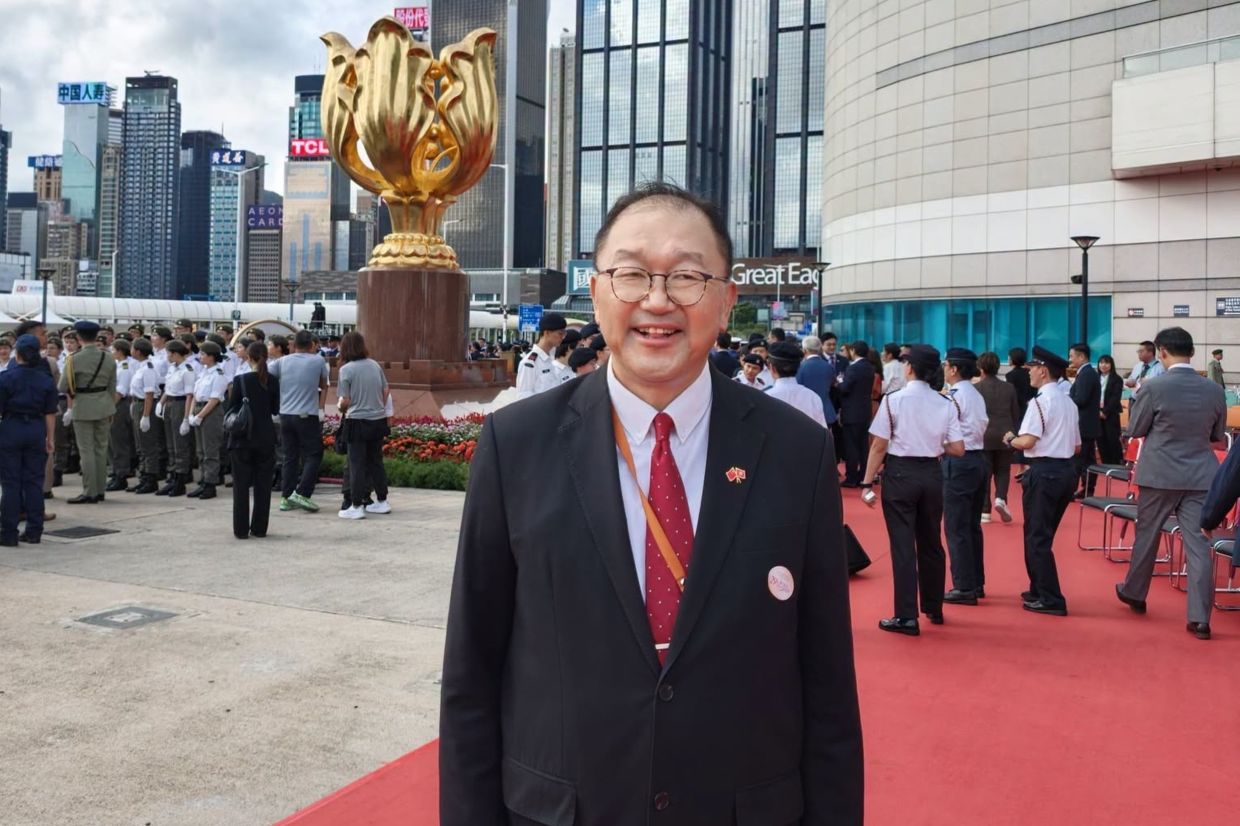
William Wong Kam-fai, a 66-year-old Hong Kong legislator, has become the first member of the Legislative Council to resign over a scandal in more than 26 years. His departure comes in the wake of his arrest on suspicion of drink-driving and involvement in a hit-and-run incident, marking a significant moment of accountability within Hong Kong's political establishment. Wong's decision to step down underscores the gravity with which senior political figures now view their conduct and its potential repercussions on public institutions.
Wong announced his resignation on Friday, just days after he was arrested Monday evening when his vehicle collided with two parked cars near a staff residence on campus at approximately 10.46pm. The incident triggered an immediate police investigation, and Wong's swift action in relinquishing his legislative seat reflects his recognition of the damage the scandal could inflict on Hong Kong's political system. In his resignation statement, Wong expressed remorse for the distress his actions had caused both society and the Legislative Council, framing his departure as a necessary step to shield the institution from further reputational harm.
Legislative Council President Starry Lee Wai-king formally acknowledged Wong's resignation letter, stating that she respected his decision and thanked him for his service to the chamber and contributions to Hong Kong. Her measured response suggests institutional acceptance of Wong's exit as the appropriate course of action given the circumstances. Beyond his Legco membership, Wong also held a position as a member of the Chinese People's Political Consultative Conference, China's top political advisory body, raising questions about whether his resignation would extend to that role as well.
Political commentators in Hong Kong have largely endorsed Wong's decision as strategically sound. Lau Siu-kai, a consultant at the semi-official Chinese Association of Hong Kong and Macau Studies, characterised the resignation as the optimal move to minimise reputational damage to both Wong personally and the Legislative Council as an institution. Lau argued that prolonged tenure in office might have invited criticism that the principle of patriots administering Hong Kong was being compromised, particularly given the high standards expected of legislators under the current political framework. He suggested that Wong would likely also resign from his CPPCC position, with central authorities expected to accept such action given the severity of the incident, even though expulsion of CPPCC members remains rare.
Tam Yiu-chung, Hong Kong's former sole representative to the National People's Congress Standing Committee, similarly endorsed Wong's decision. Tam noted that legislators operate under elevated standards of conduct and that resignation represented a prudent acknowledgment of this responsibility. However, Tam also observed that Wong's departure would have minimal operational impact on the Legislative Council's functioning, since Wong represented the Election Committee constituency rather than a functional constituency. Functional constituencies are designed to represent specific sectors of society, whereas Election Committee seats are filled through a broader electoral process.
The question of whether a by-election will be held to fill Wong's seat remains uncertain. The government retains discretion over this decision, with no legal requirement mandating a by-election. Tam noted that previous precedent suggests such elections are not automatic. A vacancy from the previous Legislative Council lasted approximately three years without a by-election after Stephen Wong Yuen-shan departed in late 2022 to become chief of a government think tank. During a 2024 Legco meeting, then-constitutional affairs minister Erick Tsang Kwok-wai indicated that financial prudence would factor into any such determination, suggesting that budgetary considerations may influence whether a by-election proceeds.
Wong's resignation represents only the second instance in over two decades of a Hong Kong legislator stepping down due to scandal. The previous case involved Gary Cheng Kai-nam, who resigned in September 2000 shortly after winning his seat following revelations about undisclosed business ties, improper disclosure of confidential government documents to business associates, and an extramarital affair. Cheng subsequently faced criminal prosecution and was sentenced to 18 months imprisonment in 2001 after conviction on bribery, misconduct in public office, false accounting, and theft charges. The 24-year gap between these two incidents underscores how uncommon such resignations have become within Hong Kong's political sphere.
Wong's professional positions extended beyond his legislative duties. A spokesperson from the Chinese University of Hong Kong, where Wong held academic and administrative roles, confirmed on Friday that the university took grave concern of the incident and had immediately suspended him from administrative duties pending the outcome of police investigation. The university emphasised its commitment to staff conduct and professional ethics standards, though it declined further comment given the ongoing investigation. This suspension illustrates how the incident has rippled beyond the political sphere into Wong's academic career.
The broader implications of Wong's resignation extend beyond a single legislator's misconduct. For Malaysian observers, the incident demonstrates how Hong Kong's political system, despite significant structural reforms over recent years, continues to maintain mechanisms that can compel elected officials toward accountability through public scrutiny and institutional pressure. Wong's swift resignation, rather than defiant persistence in office, reflects an understanding that certain breaches of public trust become untenable regardless of political circumstances. The comparative rarity of such resignations—with only one other comparable case in 26 years—suggests that while mechanisms for accountability exist, they operate only when reputational damage becomes sufficiently severe to outweigh the benefits of maintaining office.

