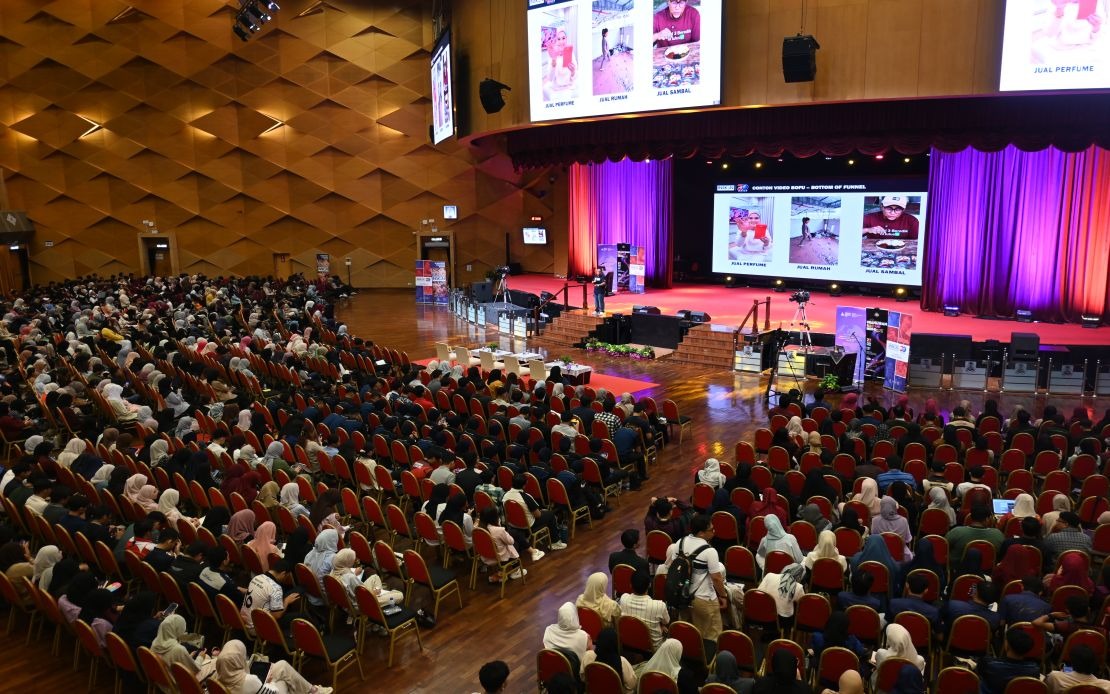
A major push to cultivate entrepreneurial talent among Malaysian university students has achieved record-breaking participation, with nearly 7,000 attendees joining the Usahawan MADANI Mega (SUM MEGA) 2026 seminar both in person and online. The event, held at Dewan Agung Tuanku Canselor in UiTM Shah Alam, earned official recognition from the Malaysia Book of Records for hosting the largest student participation in an entrepreneurship seminar, underlining the scale of institutional commitment to building Malaysia's next generation of business leaders.
The seminar was orchestrated through a partnership between the National Entrepreneurship Institute (INSKEN), the Malaysian Academy of SME and Entrepreneurship Development (MASMED), and Universiti Teknologi MARA (UiTM), drawing participants from across the country. The collaborative approach reflects a strategic alignment among government bodies, academic institutions, and entrepreneurship agencies to create a unified ecosystem for nurturing business talent. Beyond simply delivering lectures, the programme incorporated hands-on knowledge-sharing sessions, capacity-building workshops, and networking opportunities designed to help students transition from classroom learning to practical entrepreneurial practice.
The impressive turnout carries deeper significance for Malaysia's economic strategy. Datuk Mohamad Alamin, deputy minister for Entrepreneur and Cooperatives Development, highlighted that the strong attendance demonstrates how entrepreneurship has evolved from a niche interest into a mainstream career aspiration among young Malaysians. This shift in perception is critical for the nation's long-term competitiveness, as startup founders and small business operators increasingly become engines of job creation and innovation in the regional economy.
Within Malaysia's broader economic context, the government's emphasis on entrepreneurship development has intensified as the nation seeks to diversify revenue streams and reduce dependency on traditional sectors. The Ministry of Entrepreneur and Cooperatives Development (KUSKOP) has positioned SMEs and entrepreneurship as cornerstone elements of the MADANI administration's growth agenda. Through initiatives spanning capacity building, access to financing, market penetration support, digital transformation, and business advisory services, the ministry recognises that entrepreneurs are fundamental to creating employment, anchoring local supply chains, driving technological innovation, and ultimately bolstering the nation's economic resilience in an increasingly volatile global marketplace.
The seminar's content delivery incorporated the MOFA framework, an approach centring on four critical business dimensions: marketing strategy, operational efficiency, financial management, and administrative systems. This structured methodology ensures that participants receive practical guidance across the full spectrum of business fundamentals rather than abstract theoretical concepts. For student entrepreneurs and aspiring business founders, understanding how these elements interact within a functioning enterprise provides a foundation that academic curricula alone rarely offer. The MOFA approach directly addresses a common gap between what university graduates learn and what the marketplace demands.
Datuk Mustaffa Kamil Ayub, chairman of INSKEN's Board of Trustees and a UiTM board member, reframed entrepreneurship beyond career classification, characterising it instead as a mindset and cultural movement capable of driving national development. This conceptual shift is significant for Malaysian policymakers and educators. Rather than viewing entrepreneurship as an alternative path for those unsuited to corporate employment, the seminar positioned it as a proactive choice and a driver of systemic economic change. When entrepreneurship becomes embedded as a cultural value within educational institutions and society broadly, it creates cascading effects: students discuss business ideas more freely, mentorship networks strengthen, risk tolerance increases, and failed ventures become learning opportunities rather than social stigmas.
SUM MEGA 2026 functions as a deliberate policy instrument aligned with Malaysia's National Entrepreneurship Policy 2030, which sets ambitious targets for entrepreneur development and SME growth through the remainder of the decade. By convening government representatives, financial institutions, industry participants, and development agencies within a single forum, the seminar creates opportunities for stakeholders to coordinate efforts and identify gaps in existing support systems. This convergence model proves particularly valuable for addressing financing bottlenecks, regulatory barriers, and market information asymmetries that often impede young entrepreneurs from scaling their ventures.
Beyond the headline-grabbing record participation figure, INSKEN's broader portfolio of programmes demonstrates systematic commitment to entrepreneurship cultivation at different career stages. The INSKEN Masterclass, BANGKIT initiative, and PROTÉGÉ programme operate as complementary pathways, guiding aspiring entrepreneurs from foundational knowledge through advanced mentoring relationships with experienced business leaders. This tiered approach recognises that entrepreneurial capability develops progressively; early-stage founders require different support than those seeking to expand existing operations or transition into leadership roles within established enterprises.
For Southeast Asian context, Malaysia's emphasis on youth entrepreneurship positions the nation competitively within a region increasingly defined by startup ecosystems and digital commerce. Countries like Singapore, Indonesia, and Thailand have invested heavily in entrepreneur support infrastructure, and Malaysia's recent initiatives suggest recognition that capturing young talent early in their entrepreneurial journey creates long-term advantages. The universities functioning as incubation hubs, as demonstrated through UiTM's partnership with INSKEN, mirror successful models globally where academic institutions serve as launching pads rather than endpoints for business-minded graduates.
The record attendance at SUM MEGA 2026 also reflects demographic realities in Malaysia. With a substantial population aged under 35 and increasing digital connectivity enabling online participation, the prerequisite infrastructure for reaching mass audiences exists. The hybrid format—combining in-person and online attendance—proved instrumental in achieving the 6,877 participant figure, suggesting that future entrepreneurship initiatives should maintain this flexibility to maximize accessibility across geographic and socioeconomic divides.
Looking forward, the seminar's success establishes a template for scaling entrepreneurship education across Malaysia's higher education sector. As UiTM students return to their respective campuses and communities, many will likely become peer mentors, sharing insights and encouraging classmates to explore business ventures. This organic diffusion of entrepreneurial thinking through peer networks often proves more persuasive than top-down policy announcements, gradually normalizing business creation as a legitimate post-graduation pathway alongside traditional employment.
The convergence of record participation, government commitment, institutional collaboration, and structured curriculum indicates that Malaysia is advancing from sporadic entrepreneurship initiatives toward a coordinated ecosystem. Whether this translates into measurably higher startup formation rates and accelerated SME growth will depend on sustained funding, regulatory adaptation, and cultural shifts within families and educational institutions. Nevertheless, events like SUM MEGA 2026 signal that policymakers and educators recognise entrepreneurship not as luxury but as necessity within Malaysia's economic future.

