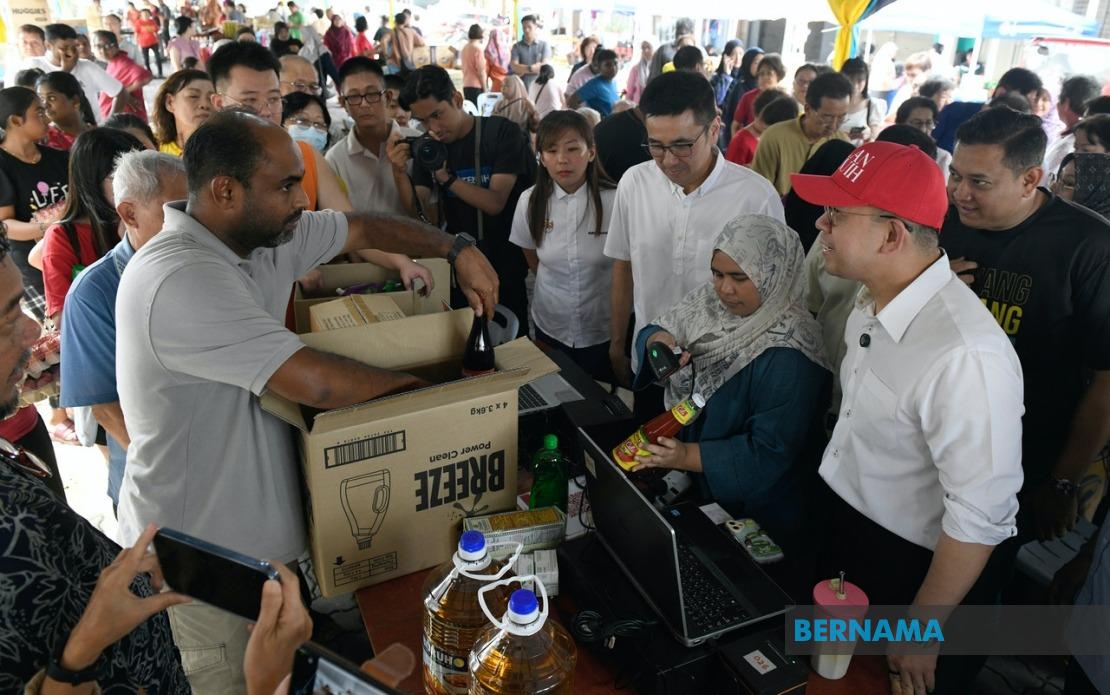
The Ministry of Entrepreneur and Cooperatives Development (KUSKOP) is deepening its commitment to supporting micro, small and medium enterprises across Malaysia's wholesale and retail landscape, signalling a strategic pivot toward embedding local entrepreneurs within the country's fastest-growing commercial sectors. Minister Steven Sim Chee Keong announced the expanded grassroots initiative during an event in Nibong Tebal, underscoring the government's determination to translate macroeconomic gains into tangible opportunities for shop owners, traders, and cooperative members working at the frontlines of Malaysia's domestic economy.
The retail and wholesale sector has become a genuine bright spot in Malaysia's economic portfolio. According to latest data from the Department of Statistics Malaysia, the combined wholesale and retail trade sector generated sales worth almost RM175 billion in April 2026, representing a robust year-on-year expansion of 15.3 per cent. This trajectory reflects far more than seasonal fluctuations—it signals sustained consumer confidence and spending power at a time when many regional economies face headwinds. The momentum underscores how ordinary Malaysians continue purchasing goods and services despite persistent global turbulence, a phenomenon KUSKOP intends to harness for the benefit of small business operators.
The timing of KUSKOP's push comes as Malaysia navigates a complex international environment characterised by trade disputes, tariff uncertainties, and geopolitical friction that threaten to destabilise global supply chains and investor confidence. Yet despite these external pressures, Sim argued that Malaysia's pragmatic approach to managing an open economy—one deliberately exposed to international commerce—has insulated domestic merchants from the worst effects. This resilience, he suggested, stems partly from coordinated efforts between government agencies, the private sector, and community organisations working in concert to restrain living costs, stabilise commodity prices, and bolster household incomes.
The government's determination to share economic benefits more equitably across Malaysian society reflects a strategic recognition that broad-based prosperity proves more politically durable and economically sustainable than concentrated wealth. By channelling KUSKOP's various programmes toward MSMEs and cooperatives, the ministry aims to create pathways for smaller operators to expand their market reach, build customer loyalty, and integrate themselves more deeply into Malaysia's economic network. Such integration matters enormously in Southeast Asia, where informal and formal economies remain intertwined, and where cooperative structures continue to provide crucial infrastructure for rural and semi-urban commerce.
The Jualan MADANI KUSKOP programme—rolled out across constituencies including Jawi—represents the operational expression of this philosophy. Rather than concentrating resources in urban commercial districts, the initiative intentionally traverses grassroots communities, community halls, and suburban markets where ordinary entrepreneurs operate. This approach acknowledges a reality often overlooked in national economic discussions: the prosperity of hawker stall operators, small retail shop owners, and cooperative traders directly influences consumer purchasing decisions, employment patterns, and wealth distribution within local communities. When these small operators thrive, money circulates within neighbourhoods rather than flowing toward distant corporate headquarters.
Sim, who represents the Bukit Mertajam parliamentary constituency, framed the retail sector's expansion as a collective achievement rather than a market phenomenon divorced from policy choices. He credited deliberate government interventions—particularly those targeting cost-of-living pressures—with sustaining the consumer spending that underpins wholesale and retail growth. This framing carries significance for Malaysian policymakers weighing different approaches to economic management. It suggests that demand-side policies maintaining household purchasing power can prove complementary to supply-side measures aimed at attracting foreign investment or expanding manufacturing capacity. In other words, thriving domestic retail need not depend solely on wealthy foreign investors or multinational corporations; it can be substantially sustained by ensuring ordinary workers earn liveable wages and can afford essentials at stable prices.
The ministry's emphasis on supporting local entrepreneurs as "key drivers of the national economy" reflects a subtle but important recalibration of how Malaysia's leadership conceptualises economic development. Rather than viewing small business operators as peripheral actors awaiting occasional government charity, KUSKOP positions them as central to national prosperity. This conceptual shift carries implications for budget allocation, regulatory design, and institutional priority-setting. It suggests that agencies responsible for entrepreneurship development and cooperative affairs warrant upgraded resources and political backing commensurate with their economic significance. For Malaysian entrepreneurs, this philosophical reorientation could translate into more accessible financing schemes, simplified licensing procedures, and targeted technical assistance.
The wholesale and retail sectors also represent accessible entry points for entrepreneurship, requiring relatively modest startup capital and familiar market dynamics compared to manufacturing or technology sectors. This accessibility explains why KUSKOP's focus on supporting MSMEs in these sectors carries broader significance for economic democracy and social mobility. When government agencies actively nurture retail and wholesale participation, they create genuine opportunities for individuals from modest backgrounds to establish independent livelihoods, accumulate capital, and transition from wage labour toward business ownership. Such transitions prove particularly consequential in Malaysia, where middle-income status and economic security remain aspirational for many households.
The 15.3 per cent year-on-year growth recorded in April 2026 also suggests that retail expansion has not reached saturation. Market analysts observe that Malaysian consumers continue diversifying their purchasing patterns, experimenting with new retail formats, and patronising shops reflecting evolving tastes and preferences. This dynamism creates genuine openings for innovative small operators willing to identify niche markets, adopt new technologies, or offer superior customer service. KUSKOP's programming appears designed to equip participating entrepreneurs with precisely these capabilities—providing training in digital commerce, assistance with supply chain logistics, and mentorship connections with experienced business leaders.
From a Southeast Asian perspective, Malaysia's emphasis on supporting SMEs and cooperatives in retail and wholesale sectors carries regional relevance. Comparable economies throughout ASEAN grapple with similar challenges: maintaining employment in traditional retail amid e-commerce disruption, ensuring that economic growth benefits rural communities, and creating sustainable livelihoods for citizens lacking advanced technical credentials. Malaysia's experiments with cooperative strengthening and grassroots entrepreneurship support offer potential lessons for neighbouring governments seeking to balance modernisation imperatives against social cohesion concerns.
Looking forward, the success of KUSKOP's initiatives will likely depend on execution quality and sustained political commitment beyond headline announcements. Entrepreneurs require not merely rhetorical support but concrete assistance: reliable access to affordable capital, transparent information about market opportunities, training in inventory management and customer service, and pathways to supply larger institutional buyers. The ministry's willingness to "go to the ground" represents a promising start, but translating constituency-level events into permanent institutional change requires patience and consistent resource allocation. For Malaysian entrepreneurs and cooperative members, the coming months will reveal whether KUSKOP's expansion represents meaningful transformation or merely expanded visibility for longstanding constraints.

