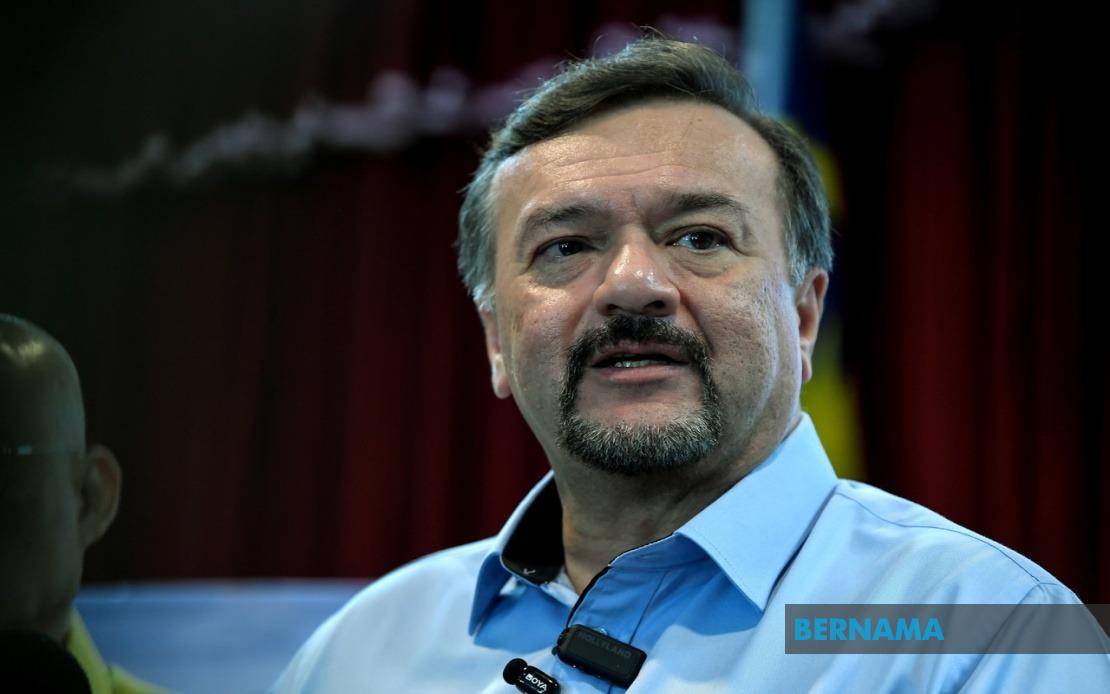
The Malaysian government is accelerating infrastructure and policy initiatives designed to transform Langkawi from a primarily tourism-dependent destination into a diversified economic centre capable of supporting thriving small and medium enterprises. Finance Minister II Datuk Seri Amir Hamzah Azizan outlined this broadened vision during an engagement session with local entrepreneurs, signalling that Putrajaya views the Kedah island not merely as a resort destination but as a strategic platform for regional economic development.
Central to this strategy is a commitment to expand physical connectivity through multiple transport channels. Officials will engage with airline operators to increase flight frequencies serving Langkawi, while parallel efforts will enhance maritime links through ferry services administered by the Langkawi Development Authority (LADA). These transport improvements address a fundamental constraint facing island economies: the cost and inconvenience of moving goods and people to regional markets. Increased connectivity directly translates into lower logistics expenses for exporters and greater accessibility for business visitors and digital economy participants.
During consultations with local business owners, Amir Hamzah identified systemic obstacles hindering SME expansion on the island. Tax administration procedures and import-export documentation requirements emerged as particular pain points limiting entrepreneurs' capacity to compete regionally. Many Langkawi-based producers of handicrafts, food items, and specialty goods find themselves disadvantaged by bureaucratic processes that larger corporations can more easily navigate. The Finance Ministry, working alongside LADA and the Royal Malaysian Customs Department, committed to streamlining these procedures to reduce friction in cross-border commerce.
Simplifying customs and tax frameworks carries particular significance for Southeast Asian SMEs seeking to penetrate markets beyond their home countries. Langkawi producers aspiring to sell across ASEAN face cumulative delays and compliance costs at each border crossing. By removing administrative bottlenecks at the source, Malaysia can position its island entrepreneurs as nimble competitors in regional supply chains. This aligns with broader ASEAN economic integration goals, though it requires sustained interagency coordination.
The government also highlighted microfinancing schemes as essential tools for business expansion. Many Langkawi entrepreneurs, particularly those in handicraft and artisanal food production, lack collateral and credit histories to access conventional bank financing. Government-backed microfinance programmes lower barriers to capital access, enabling owner-operators to invest in equipment, inventory, and marketing. Amir Hamzah's emphasis on communicating these schemes suggests awareness that awareness gaps—not availability—often limit uptake among target SMEs.
Beyond traditional industries, policymakers identified emerging opportunities in the digital economy. Langkawi's natural attractions and relatively affordable cost of living position it to attract digital nomads—remote workers and freelancers seeking appealing destinations with reliable internet connectivity. This cohort generates service sector demand for accommodation, dining, co-working facilities, and entertainment, benefiting hotels, restaurants, and local vendors. Several Southeast Asian destinations, from Thailand's Chiang Mai to Indonesia's Bali, have successfully cultivated digital nomad communities as growth engines for supporting businesses.
The handover of RM700,000 in medical equipment to Sultanah Maliha Hospital underscores government investment in island infrastructure beyond commerce. Improving healthcare accessibility strengthens Langkawi's appeal to both long-term residents and transient digital workers. Quality medical facilities constitute a critical factor in attracting remote professionals and their families to relocate, even temporarily, to island economies.
Amir Hamzah's dual role as Finance Minister II and LADA co-chairman positions him to drive cross-departmental alignment on Langkawi development priorities. Successful island economic transformation requires coordinated action across aviation, maritime, customs, taxation, and health sectors—domains typically operating through separate bureaucratic channels. Centralised leadership increases likelihood that strategic initiatives will be implemented coherently rather than fragmenting across competing institutional interests.
The emphasis on locally manufactured products—handicrafts, processed foods, and specialty items—reflects recognition that Langkawi's competitive advantage lies in authentic, place-based goods rather than mass manufacturing. Such products command premium pricing in regional and international markets when properly branded and marketed. Digital platforms and e-commerce channels enable small producers to reach affluent consumers globally without establishing physical retail presence.
For Malaysian policymakers, Langkawi represents a testbed for island economic development models applicable to other archipelago regions. Success in diversifying Langkawi's revenue base beyond tourism could inform strategies for Sabah and Sarawak coastal communities, Penang's outer islands, and similar jurisdictions seeking sustainable growth. The focus on SME empowerment, infrastructure connectivity, and regulatory simplification constitutes a replicable framework.
Regional observers will assess whether Malaysia follows through on these commitments with concrete outcomes. Transport frequency increases, customs procedure reforms, and microfinance disbursements remain measurable. The coming months will reveal whether engagement sessions translate into actual implementation or represent rhetorical exercises. International investors and multinational enterprises considering regional supply chain hubs will monitor Langkawi's trajectory closely, as improved connectivity and streamlined procedures would enhance the island's attractiveness as a distribution or assembly centre.

