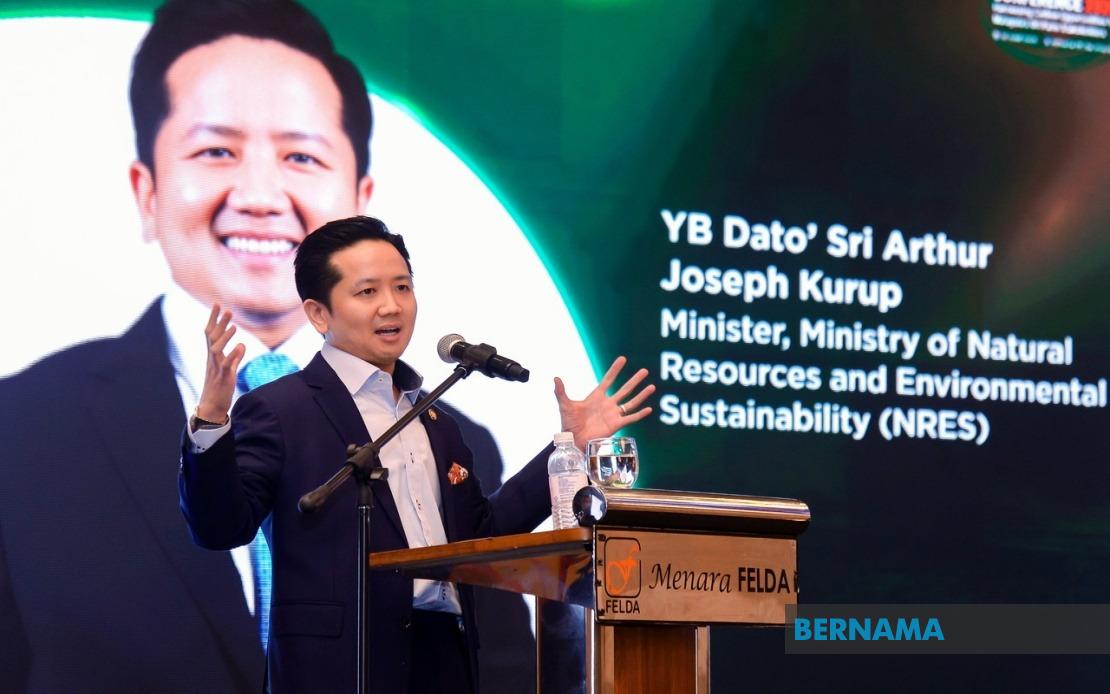
The Malaysian government continues to develop its carbon tax framework, with no firm implementation date yet confirmed, said Natural Resources and Environmental Sustainability Minister Datuk Seri Arthur Joseph Kurup during remarks at the Malaysia Palm Carbon Conference 2026 in Kuala Lumpur. While the broad policy direction remains intact, officials are still calibrating the technical details and considering industry preparedness before formal rollout, reflecting a measured approach to one of Asia's most significant environmental policy initiatives in recent years.
The carbon tax scheme has been the subject of careful deliberation within government circles, with policymakers weighing competing priorities between climate action and economic stability. Arthur explained that the timing of implementation would be determined only after thorough assessment of readiness across affected sectors and completion of the underlying policy architecture. This cautious stance aligns with Malaysia's broader positioning as a developing nation seeking to balance environmental commitments with industrial competitiveness in a volatile global marketplace.
Minister Arthur made clear that the intended purpose of the carbon tax differs markedly from mere revenue extraction or punitive enforcement. Instead, the mechanism is designed to serve as a positive incentive structure, encouraging businesses to adopt cleaner technologies and operational methods that reduce their carbon footprint. This framing is significant for Malaysian companies, particularly in energy-intensive sectors like palm oil production, cement manufacturing, and construction, which have expressed concerns about cost burdens.
The government is simultaneously examining how revenues generated from the carbon tax would be allocated, with several competing proposals under review. Preliminary discussions centre on channelling collected funds towards climate adaptation initiatives, forest protection programmes, and sustainable land management practices. This revenue recycling approach addresses a common criticism of carbon pricing schemes, which have historically faced opposition from industry stakeholders who view them purely as tax increases without corresponding environmental benefits.
Arthur underscored that this allocation strategy serves a dual purpose: it ensures that revenue supports Malaysia's broader sustainability agenda while simultaneously bolstering the nation's capacity to withstand climate-related impacts. For a country vulnerable to flooding, drought, and agricultural disruption, climate resilience investments represent economically rational expenditure that extends beyond traditional environmental concerns into national security and economic stability considerations.
In April, the minister had signalled potential delays to the original implementation timeline, citing the global energy crisis and geopolitical uncertainties as complicating factors. Originally envisioned as a 2024 initiative targeting specific sectors including steel, cement, and construction, the scheme faced pressure from industry representatives concerned about added operational costs during a period of economic instability. This recalibration demonstrates official recognition that climate policy, while essential, must be sequenced carefully to avoid destabilising vulnerable industrial sectors.
The decision to defer formal implementation reflects sophisticated policymaking that acknowledges the interconnection between environmental objectives and broader economic management. Malaysia's manufacturing and construction sectors remain important employment generators and export contributors, and officials are conscious of the potential ripple effects from abruptly introducing new costs without adequate preparation periods for compliance and technology adoption.
Beyond the carbon tax itself, the government is advancing complementary climate legislation that will provide the governance framework necessary for comprehensive climate action. Arthur indicated that the National Climate Change Bill would be presented to the Dewan Rakyat during the current parliamentary session. This legislative measure is intended to strengthen Malaysia's institutional capacity for climate governance and position the country as a serious participant in global climate discussions, particularly important as international scrutiny of emerging market environmental performance intensifies.
The bill's introduction represents a significant procedural step, establishing statutory obligations and institutional mechanisms for coordinating climate policy across government agencies and ensuring accountability for environmental targets. For Malaysian businesses with international operations or supply chain dependencies, such legislative clarity provides essential regulatory certainty and signals official commitment to environmental compliance, potentially benefiting companies already investing in sustainable practices.
The convergence of carbon tax implementation and new climate legislation creates a policy environment where Malaysian enterprises will face increasingly structured expectations regarding carbon management. Companies operating in targeted sectors should use the remaining development period to audit their current emissions profiles, identify cost-effective reduction opportunities, and explore available green technologies. The government's emphasis on incentive structures rather than punitive measures suggests that early movers adopting cleaner practices may position themselves favourably as the tax architecture takes final form.
Felda chairman Datuk Seri Ahmad Shabery Cheek's presence at the Malaysia Palm Carbon Conference underscores the significant implications of carbon policy for Malaysia's plantation sector, a cornerstone of national economic output. The palm oil industry's substantial carbon footprint and international scrutiny regarding sustainability practices make it a natural focal point for carbon management discussions. Government officials are clearly signalling that the sector should prepare for emerging carbon accountability standards while maintaining commercial viability.
The timing and design of Malaysia's carbon tax framework will substantially influence regional climate policy trajectories, as neighbouring countries monitor implementation details to inform their own environmental governance decisions. Malaysia's approach, balancing climate responsibility with developmental needs, offers a model that resonates throughout Southeast Asia where similar tensions between environmental protection and economic growth exist. The success or challenges encountered in Malaysian implementation may therefore influence climate policy evolution across the entire region.