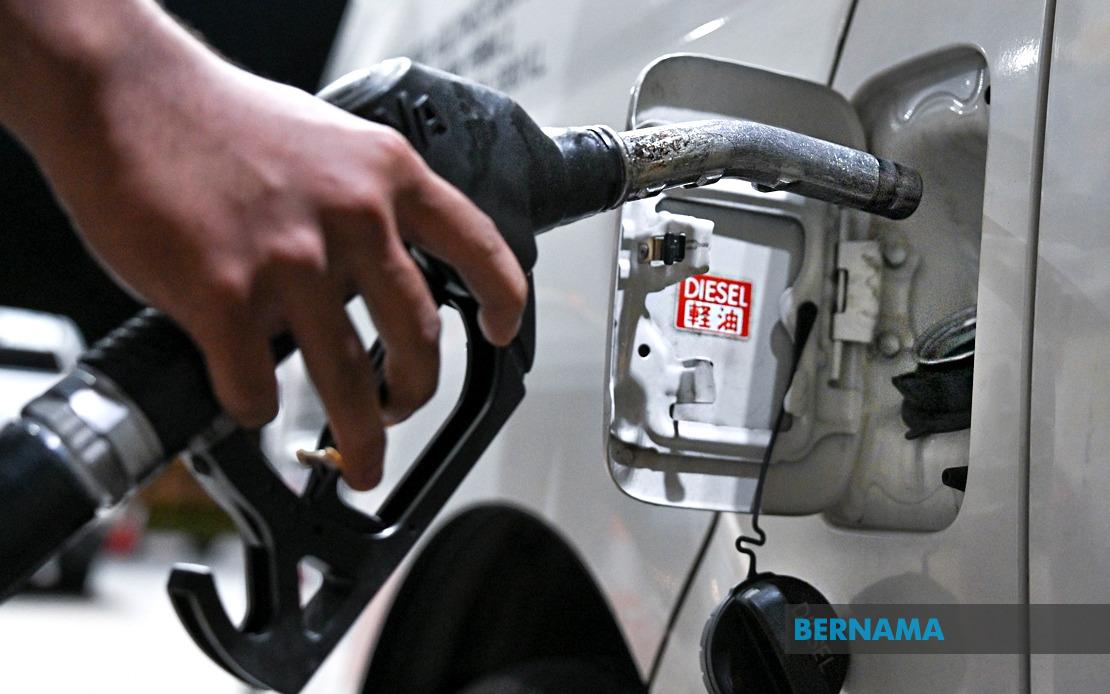
Malaysia's government will introduce a new targeted diesel subsidy scheme from July 1 designed to plug a significant drain on public finances caused by fuel smuggling and misuse of subsidy channels. The BUDI MADANI Diesel programme will fix the subsidised price at RM2.10 per litre for eligible Malaysian vehicle owners, with Second Finance Minister Datuk Seri Amir Hamzah Azizan declaring that the reform could generate annual savings of up to RM2 billion while simultaneously addressing chronic supply disruptions affecting domestic markets.
The programme represents a major overhaul of how Malaysia distributes diesel support. Rather than offering blanket fuel subsidies to all consumers, the government will employ a verification mechanism using MyKad identity cards at petrol stations nationwide, similar to the existing BUDI RON95 system for petrol. This approach ensures that assistance reaches only those genuinely eligible whilst maintaining the government's commitment to keeping fuel prices stable for the population. Some 700,000 private diesel vehicle owners will qualify for the reduced price, fundamentally reshaping the landscape of fuel procurement across the nation.
The financial urgency behind this reform is substantial. Until recently, the government's monthly subsidy burden for combined petrol and diesel hovered around RM800 million, an already significant expenditure reflecting Malaysia's commitment to affordable fuel. However, global oil price volatility severely strained these allocations, with monthly commitments skyrocketing to RM4.7 billion in March and RM4.9 billion in April. These sharp increases exposed the fragility of an undifferentiated subsidy system and prompted officials to fundamentally reconsider how fuel support is distributed across the population.
The core problem driving this reform centres on massive and persistent leakages from Malaysia's fuel subsidy apparatus. Diesel consumption surged abnormally from approximately 624 million litres per month to nearly 1.2 billion litres per month, a near doubling that far exceeds what normal economic activity and population growth would justify. This dramatic jump unmistakably points to systematic abuse of the subsidy system, including cross-border smuggling to neighbouring countries where unsubsidised fuel commands significantly higher prices, as well as fraudulent claims by commercial operators and affluent individuals who should be purchasing full-price diesel but instead access government-subsidised supplies intended for ordinary motorists.
Regional consumption patterns reveal the scale of the challenge with particular clarity. Sabah and Sarawak, Malaysia's easternmost states, currently consume approximately two billion litres of diesel annually despite genuine local demand estimated at merely one billion litres yearly. This one-billion-litre annual discrepancy represents some of the most glaring leakage, with substantial quantities crossing maritime boundaries to Indonesian and Philippine markets where they command premium prices, or being diverted to illegal commercial operations. Addressing this regional imbalance has become a priority for treasury officials struggling to justify mounting subsidy expenditures to an increasingly concerned public.
The mechanics of the BUDI MADANI Diesel system operate straightforwardly but represent a technological and administrative advancement for Malaysia's fuel distribution infrastructure. Participating vehicle owners will register their details using their MyKad identity card, allowing petrol station operators to verify eligibility at the point of sale. This real-time verification prevents the exploitation tactics that have historically plagued undifferentiated subsidy schemes, where organised smuggling networks and well-connected operators could accumulate subsidised fuel in bulk and transport it across borders for illicit profit. The system creates a transparent audit trail whilst maintaining consumer convenience through automatic eligibility verification.
Existing beneficiaries of the BUDI Diesel Individual scheme will transition smoothly into this new arrangement without requiring additional paperwork or applications. Previously, these recipients received RM400 monthly in cash assistance, which they could spend according to personal circumstances. The government will now redirect this support into direct diesel price reductions available through MyKad authentication, ensuring that assistance is specifically deployed towards fuel consumption rather than potentially being diverted to other expenditures. This shift maintains the underlying support for eligible groups whilst tightening the system's resistance to leakage and abuse.
The timeline for implementation includes an early access phase commencing June 27, 2026, for eligible private diesel vehicle owners in Peninsular Malaysia, allowing the government to identify and resolve technical issues before the nationwide July 1 rollout. This phased approach reflects administrative prudence, given the complexity of integrating MyKad verification systems across thousands of petrol stations whilst managing the transition from cash assistance to direct price subsidies. The staggered launch provides an opportunity to train petrol station staff, test database connectivity, and educate motorists about the new mechanism before full-scale deployment.
For the Malaysian economy broadly, the implications of this reform extend beyond simple accounting adjustments. Fuel subsidy spending represents one of the largest government budget items, directly competing with allocations for healthcare, education, and infrastructure development. By saving RM2 billion annually through reduced leakages, the government can theoretically redirect these funds toward pressing development priorities or reduce fiscal deficits that constrain growth. The scheme also addresses supply security concerns, as rampant smuggling of subsidised diesel to neighbouring countries has occasionally created domestic shortages and price volatility in vulnerable regions.
From a regional perspective, Malaysia's fuel subsidy reforms carry implications for Southeast Asian trade and energy markets. The BUDI MADANI Diesel programme represents an attempt to maintain domestic fuel affordability whilst preventing the subsidy arbitrage that has historically driven smuggling across the porous Malaysia-Indonesia and Malaysia-Thailand borders. If successful, the system could provide a template for other regional governments struggling with similar subsidy leakage problems. However, organised smuggling networks have demonstrated considerable adaptability, and the government's success will ultimately depend on enforcement capacity and border security coordination with neighbouring nations.
The RM2.10 per-litre subsidised price represents a deliberate policy choice balancing multiple objectives. The rate remains substantially below global market prices, maintaining the government's commitment to affordable fuel whilst being high enough to discourage wholesale diversion to neighbouring markets where unsubsidised diesel typically commands prices significantly above this level. This pricing strategy differs from approaches in other countries that have abandoned fuel subsidies entirely or restricted them to narrower population segments, reflecting Malaysia's particular political economy and emphasis on broad-based affordability.
Minister Datuk Armizan Mohd Ali, overseeing domestic trade and cost of living matters, alongside Treasury Secretary-General Tan Sri Johan Mahmood Merican, participated in the policy announcement, underscoring the cross-departmental coordination required for successful implementation. This collaborative approach indicates that Malaysian officials recognise the programme's complexity and the necessity of coordinated action spanning finance, trade regulation, and retail fuel distribution networks. The involvement of senior treasury officials particularly signals the government's focus on fiscal sustainability and long-term budget management rather than temporary political considerations.

