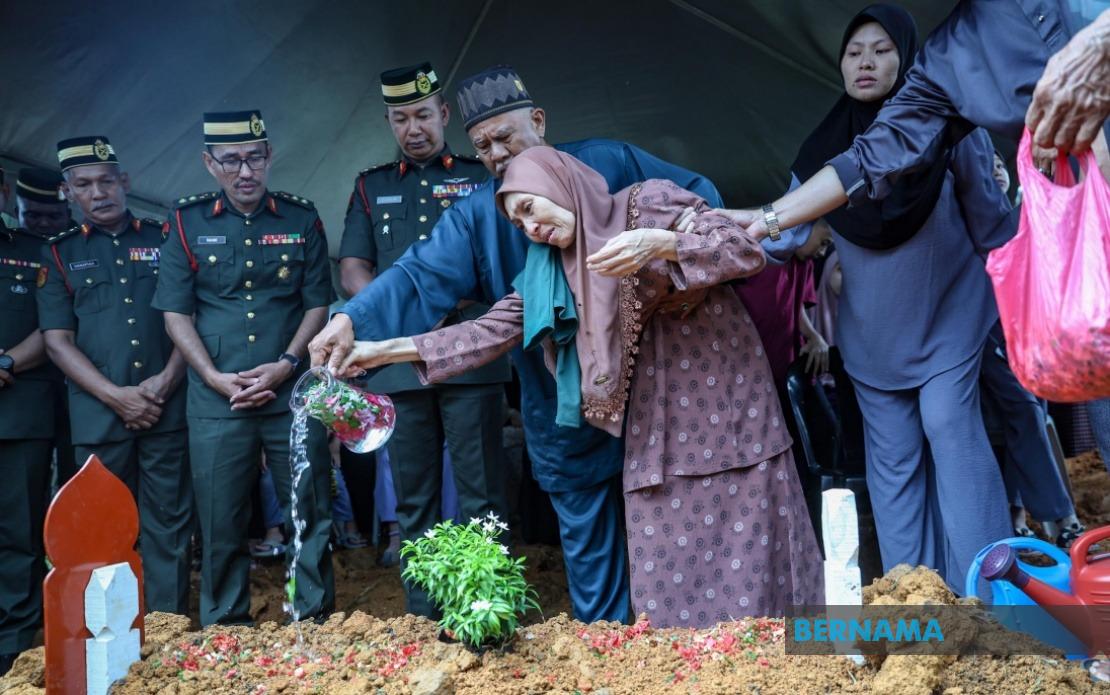
Private Siti Khadijah Sungip, a 24-year-old soldier with the Malaysian Army's First Squadron of the Royal Engineer Regiment, was buried on June 17 at Taman Sri Lambak Muslim Cemetery in Kluang. Her funeral came less than a day after she died in a catastrophic training accident at Hobart Camp in Gurun, Kedah, where an explosive device detonated while she was undergoing grenade-throwing instruction. The tragedy claimed a second life as well, marking one of the most significant losses experienced by Malaysia's armed forces in recent memory.
The incident unfolded at 10.57 am on June 16 at the camp's target range, where personnel from multiple military units were participating in routine combat training exercises. Siti Khadijah and Corporal Norazmi Abu Bakar, serving with the Sixth Battalion of the Royal Malay Regiment, both sustained catastrophic injuries from the explosion. Both soldiers were rushed toward Sultan Abdul Halim Hospital in Sungai Petani but succumbed to their wounds en route, with medical teams unable to stabilise them despite emergency intervention. The nature of their injuries—described as severe by military authorities—suggested the blast was of considerable force.
Siti Khadijah's body underwent post-mortem examination at Sultanah Bahiyah Hospital in Alor Setar, which was completed at approximately 2.30 am on June 17. The formal repatriation process began with her remains being transported to her family home in Taman Sri Lambak by her First Field Troop Leader, Lieutenant Muhammad Lutfil Hadi Osman, accompanied by four soldiers from her regiment. The cortege arrived at her residence at 12.10 pm before the body was conveyed to Darul Iman Mosque for final religious rites, reflecting the established protocols observed when military personnel fall in service.
The funeral ceremony itself became a significant gathering of mourners spanning both family networks and the military establishment. Alongside her immediate family—her father Sungip Jais, 65, and other relatives—dozens of friends and fellow soldiers assembled to pay respects in a solemn demonstration of institutional solidarity. The military's presence underscored the bond that exists within armed forces communities, particularly when members are lost under tragic circumstances. The cemetery atmosphere reflected the weight of the moment, with the gathering maintaining the quiet dignity expected in such circumstances while acknowledging the loss of a young life.
Brigadier General Datuk Zulhelmy Masdar, who commands the 7th Malaysian Infantry Brigade from Mahkota Camp, officiated a symbolic handover of the national flag, the Jalur Gemilang, to Siti Khadijah's father. This gesture carries profound significance within Malaysian military tradition, representing both the nation's recognition of sacrifice and the family's status as inheritors of the soldier's honour. The ceremony emphasised that her service and the circumstances of her death would be remembered as part of Malaysia's military heritage. Major Mohd Azlan Shah Abdul Razak, serving with the TDM Field Engineering Institute, led the funeral prayer, ensuring the religious solemnities were conducted with appropriate authority and reverence.
The deaths have raised questions about training safety protocols at military installations across Malaysia. Grenade-throwing exercises, while essential for infantry readiness, carry inherent risks that demand rigorous oversight and adherence to established safety procedures. The incident involved personnel from different military branches—the Royal Engineer Regiment and the Royal Malay Regiment—suggesting that inter-unit training exercises or joint operations were underway. Such collaborative training is standard practice in modern militaries, but accidents underscore the perpetual tension between operational necessity and personnel protection.
For Malaysia's military establishment, the loss represents not merely a statistical casualty but the removal of trained personnel in whom substantial investment has been made. Siti Khadijah's service as an engineer soldier placed her in a technically specialised role critical to military infrastructure and support operations. The loss of such personnel, coupled with the trauma experienced by colleagues who witnessed the accident, carries ripple effects throughout the affected units. Investigation into the precise cause of the explosion—whether stemming from equipment malfunction, procedural error, or other factors—will likely inform future safety reviews across the service.
The incident also carries broader implications for military families across Southeast Asia, many of whom accept the inherent dangers associated with armed service. In Malaysia's context, where mandatory military service remains under periodic policy discussion and women's integration into combat roles continues evolving, Siti Khadijah's death underscores the real vulnerabilities that personnel face regardless of gender or specialisation. Her presence in a frontline engineering role reflected modern military trends toward diversified recruitment and role distribution.
Beyond the immediate tragedy, the incident highlights how quickly routine operations can transform into disasters, reminding both military leadership and civilian populations of the costs embedded in defence readiness. The thoroughness of the funeral arrangements—involving senior commanders and ceremonial protocols—affirmed institutional recognition of Siti Khadijah's sacrifice while simultaneously confronting families and colleagues with the finality of loss. As investigations proceed, the circumstances that led to the explosion at Hobart Camp will likely inform revised training procedures, equipment inspections, and supervision protocols across Malaysian military facilities, ensuring that procedural knowledge extracted from tragedy serves to protect those who continue serving.